John Mahoney is an American artist and designer who fell in love with Japanese textiles when he visited Japan for the first time in 1993.
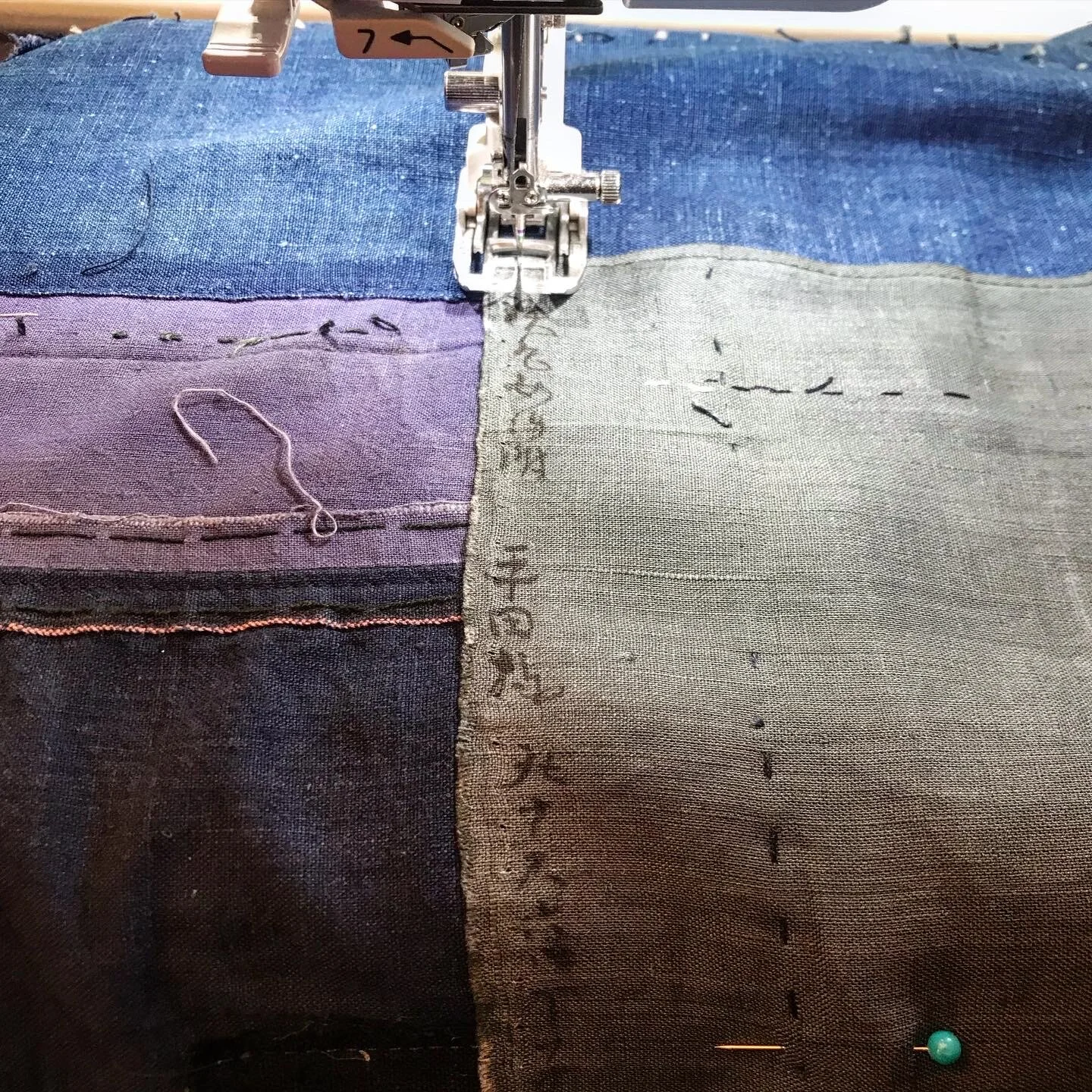
it wasn’t until 2016, when he wanted to make a kimono-style coat out of a US Army blanket from WW2, that he taught himself how to sew, later learning to make his own patterns. This began a journey of making garments and accessories using vintage Japanese fabrics, shapes, and ideas. Every piece is one of a kind, each produced from up-cycled or dead stock materials in his studio in upstate New York.
He calls it Nippon West.


J10 - $2,900 - SOLD
John’s notes:
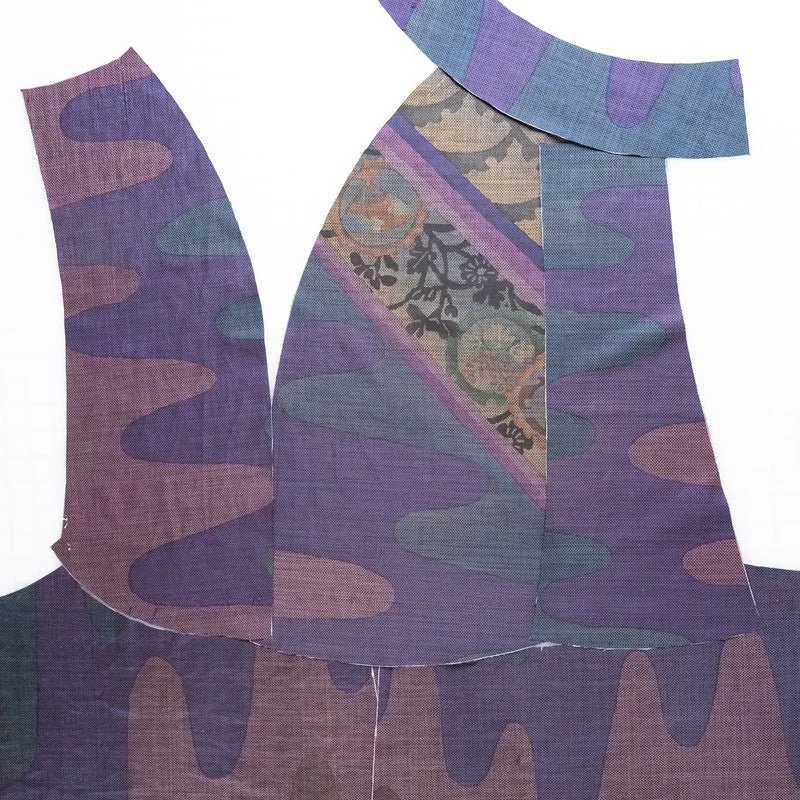
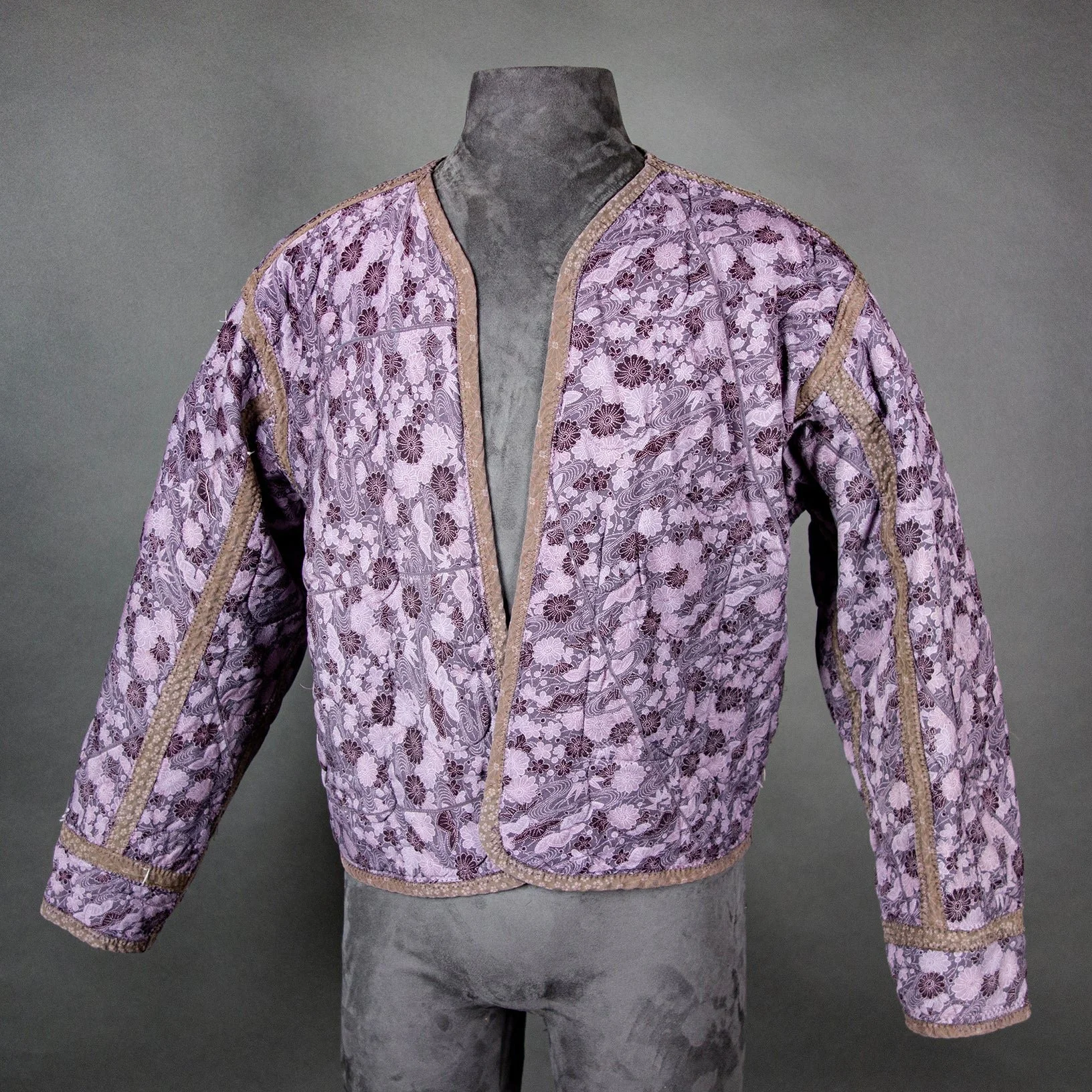
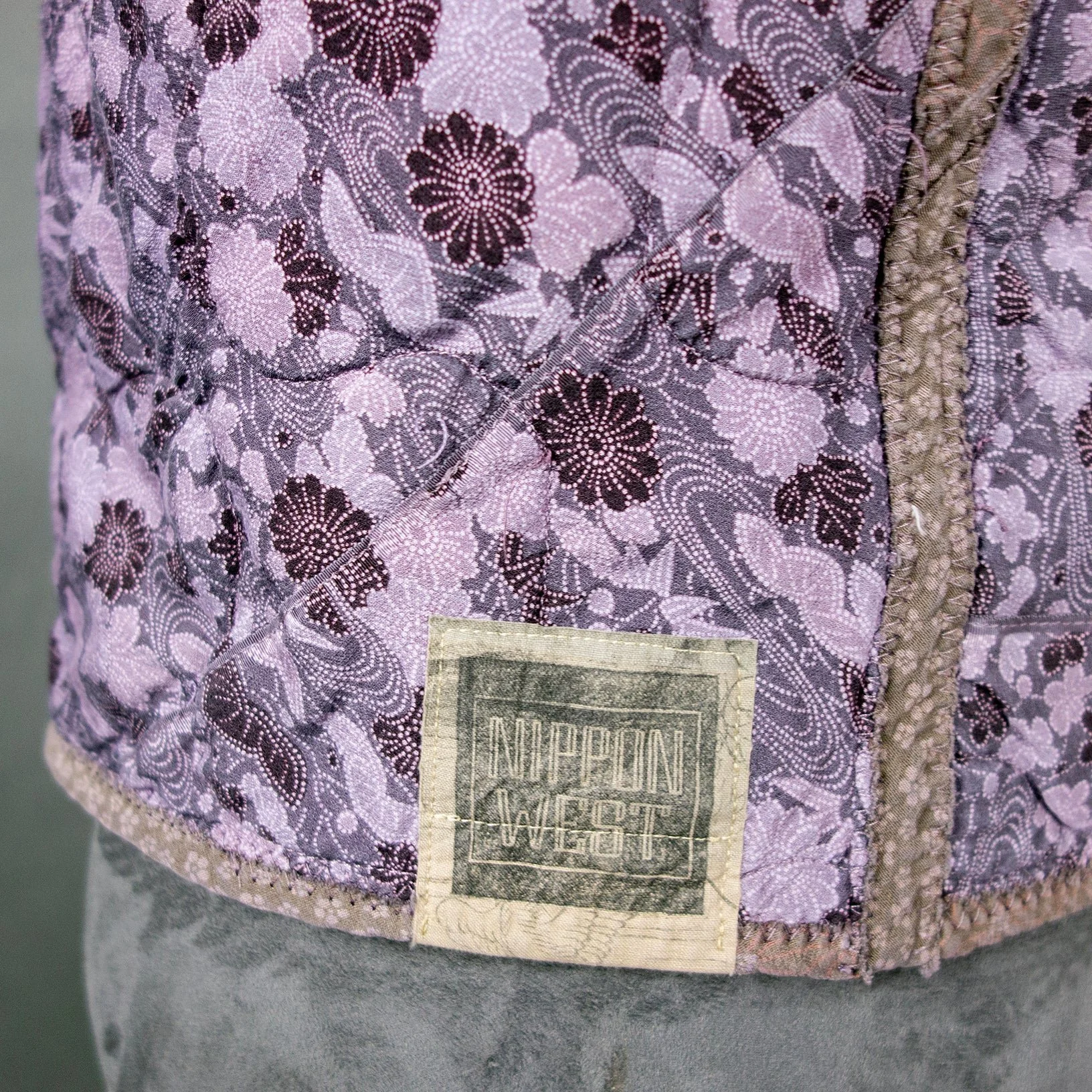
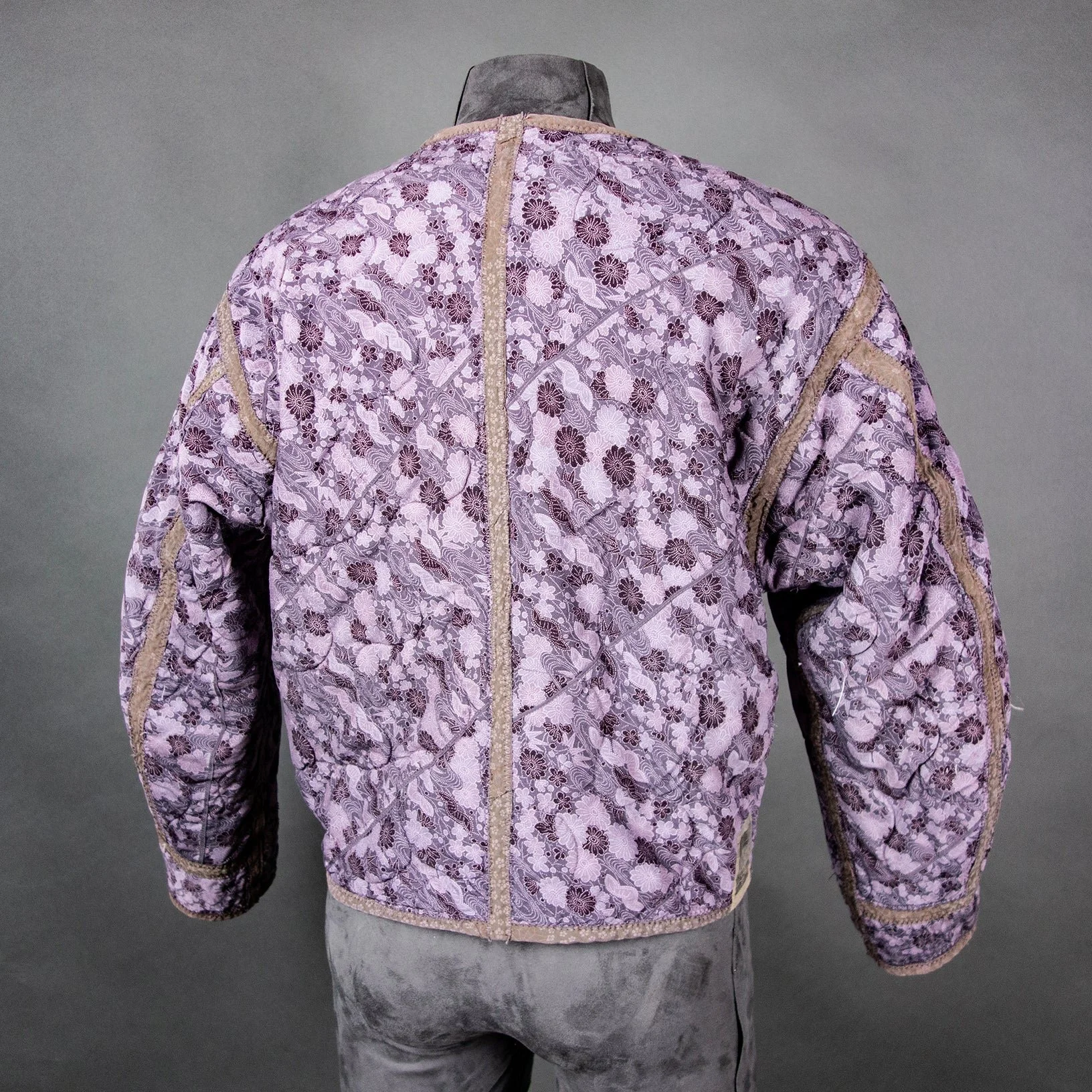
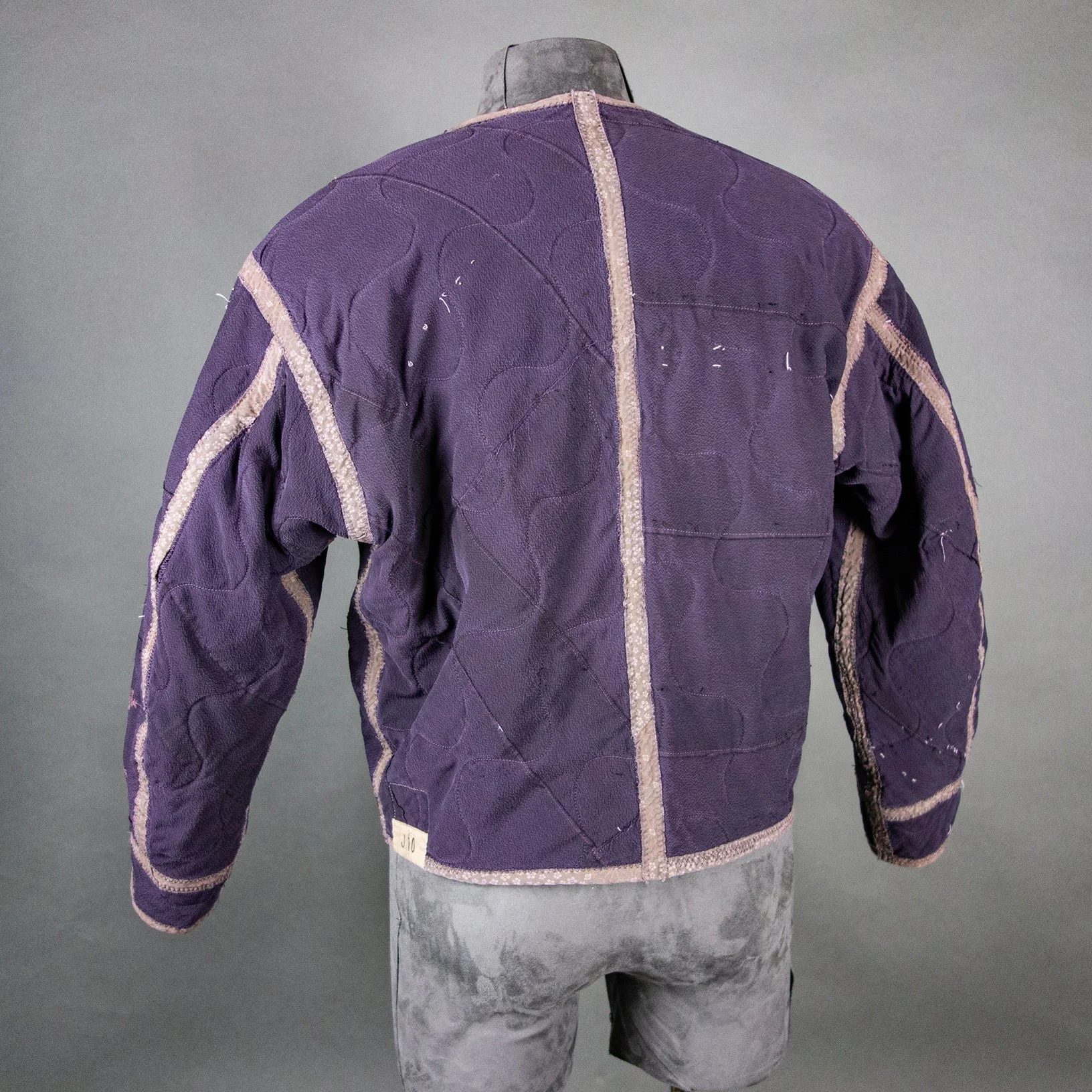
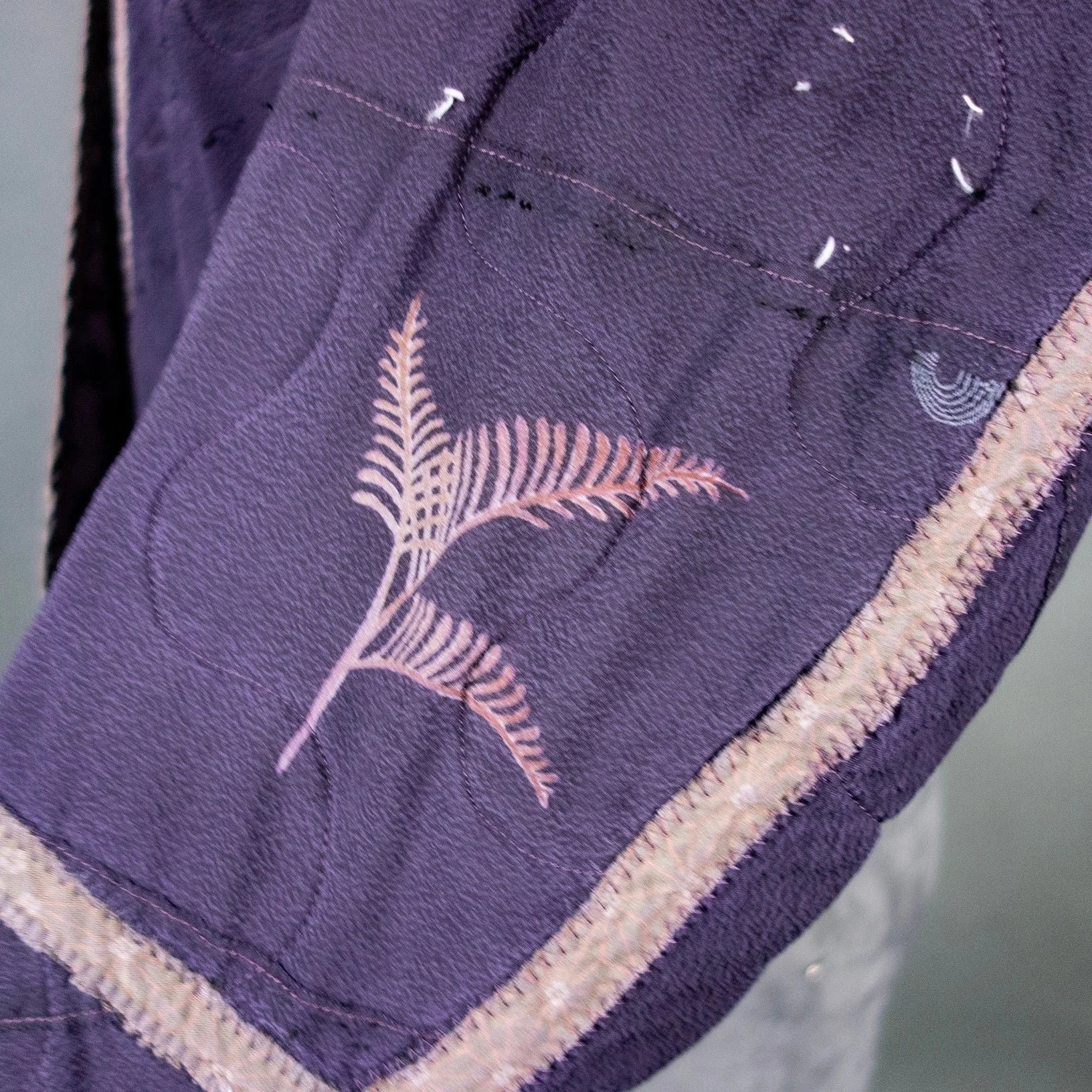
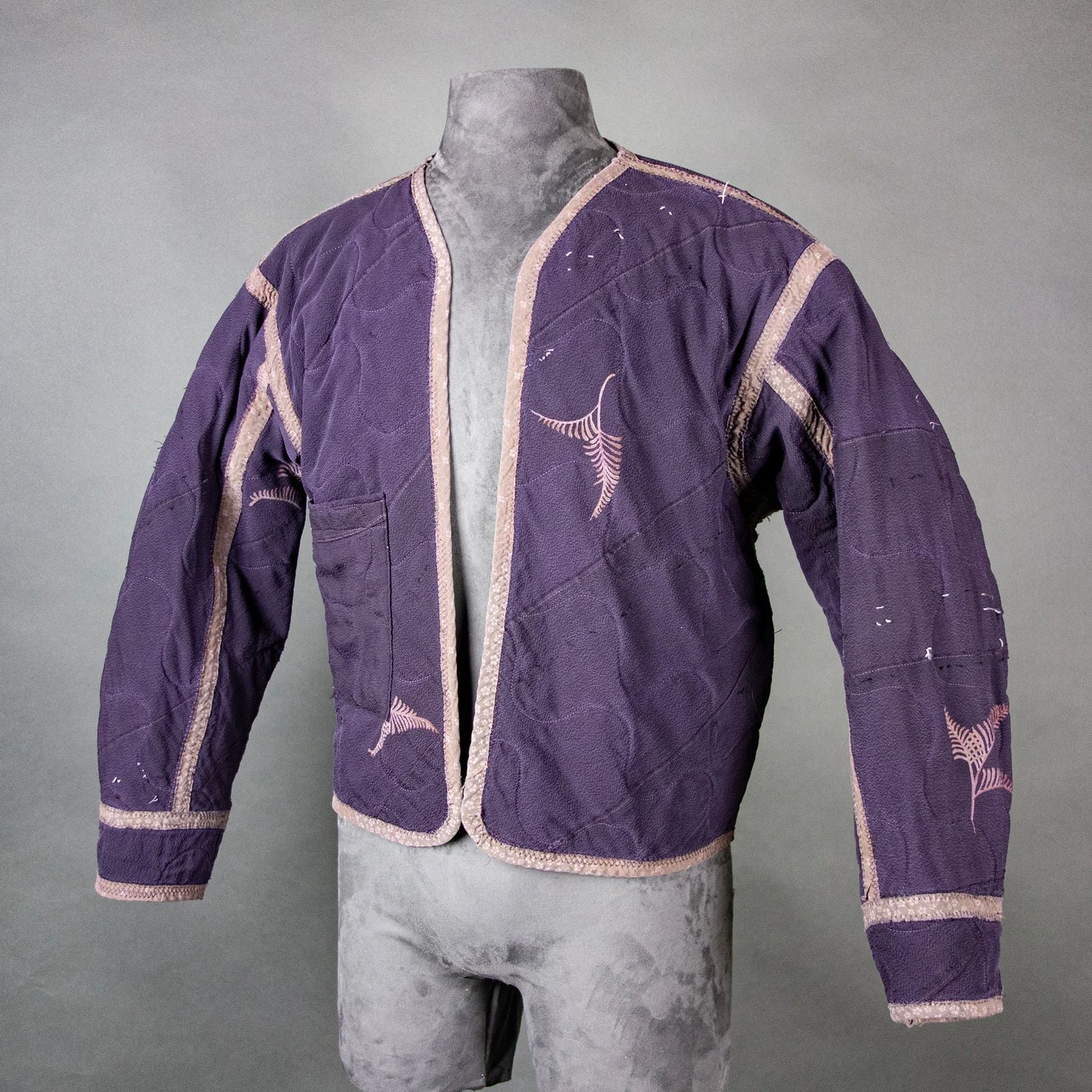
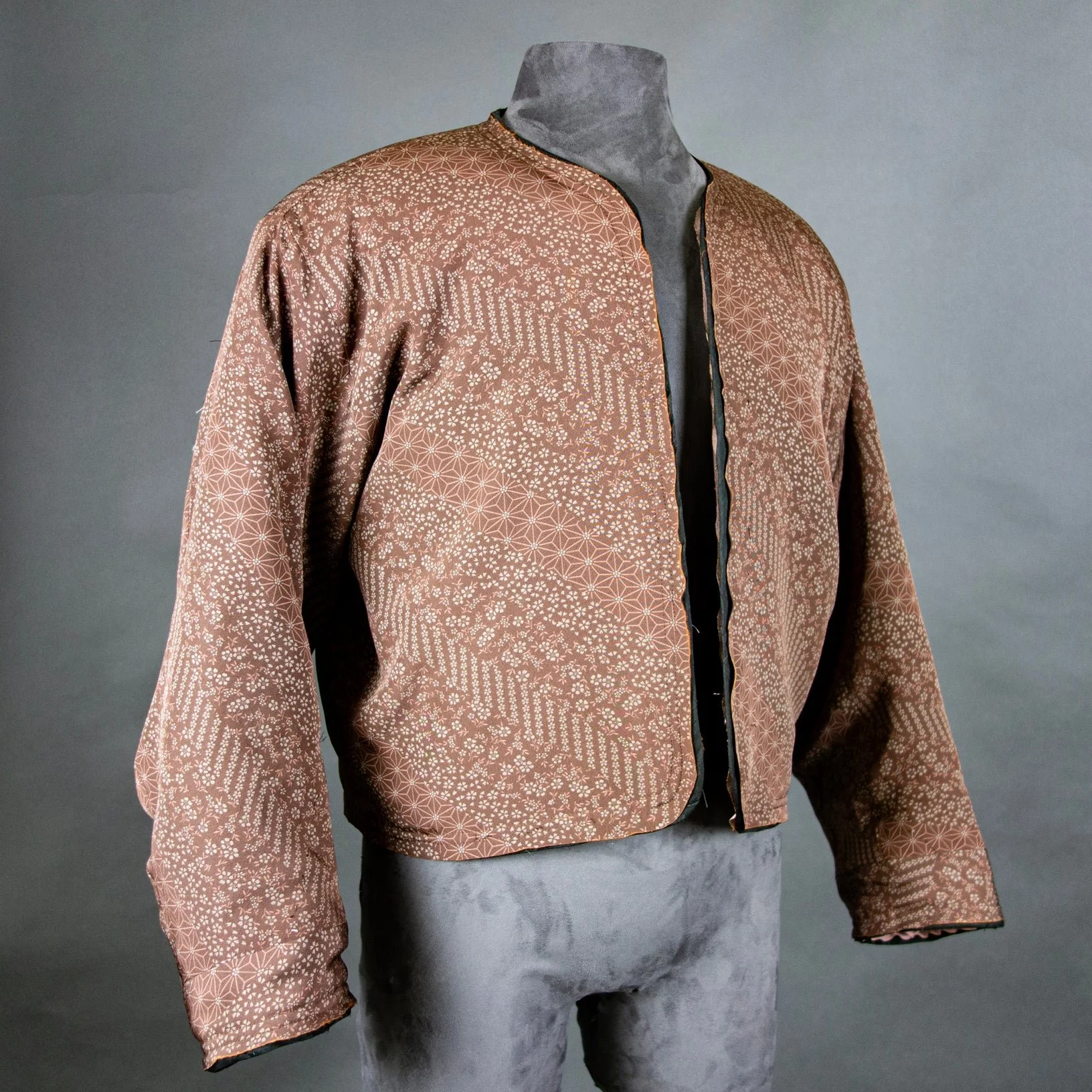
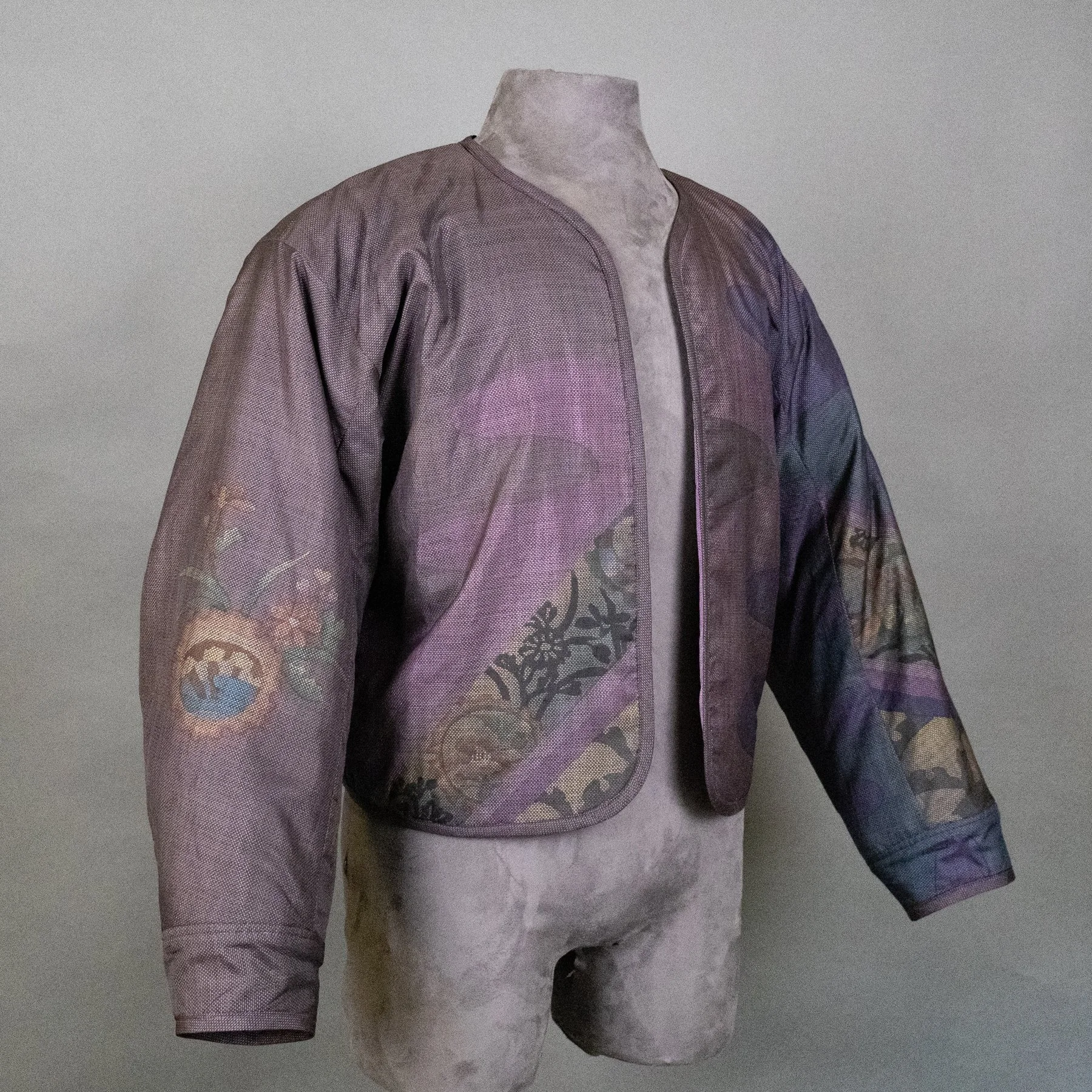
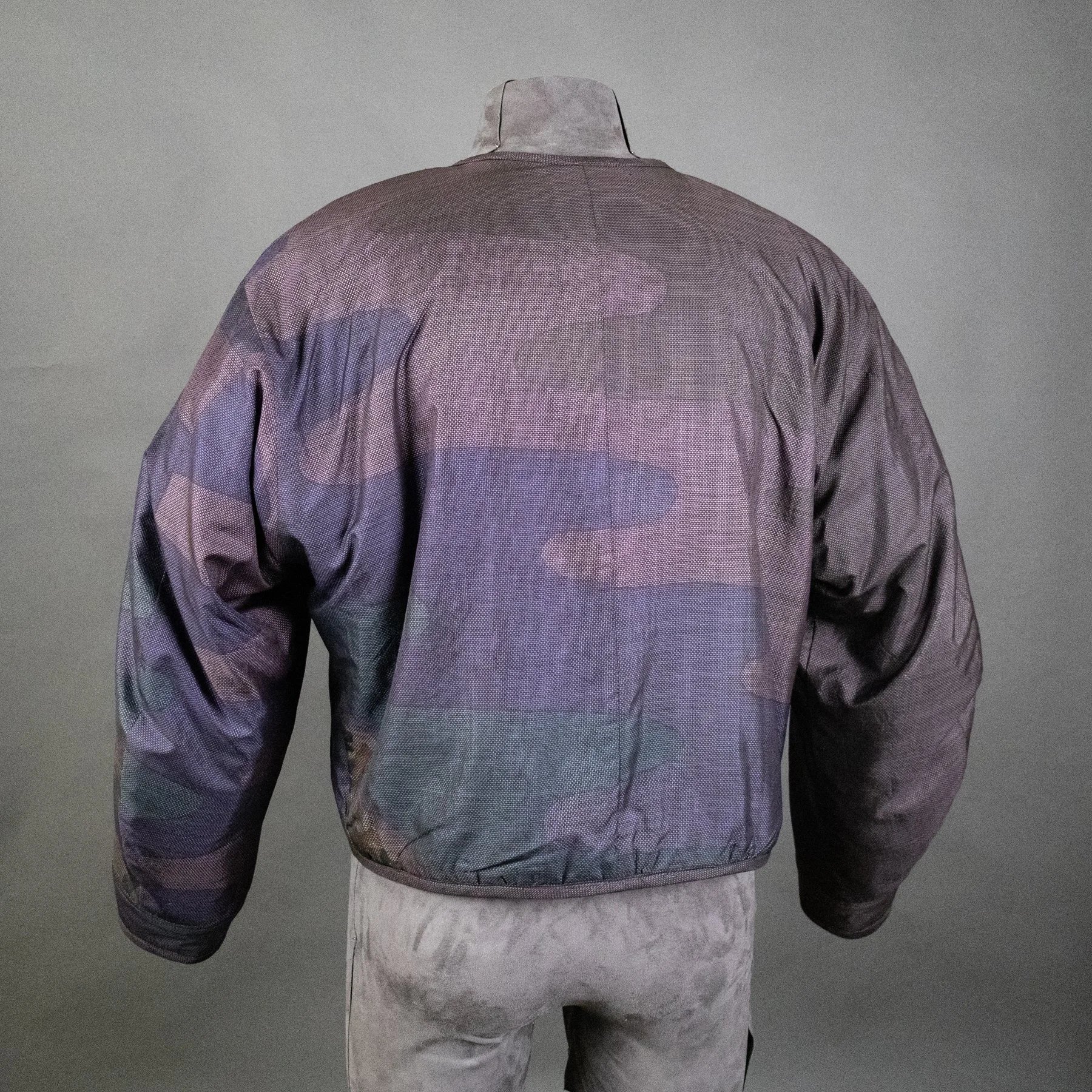
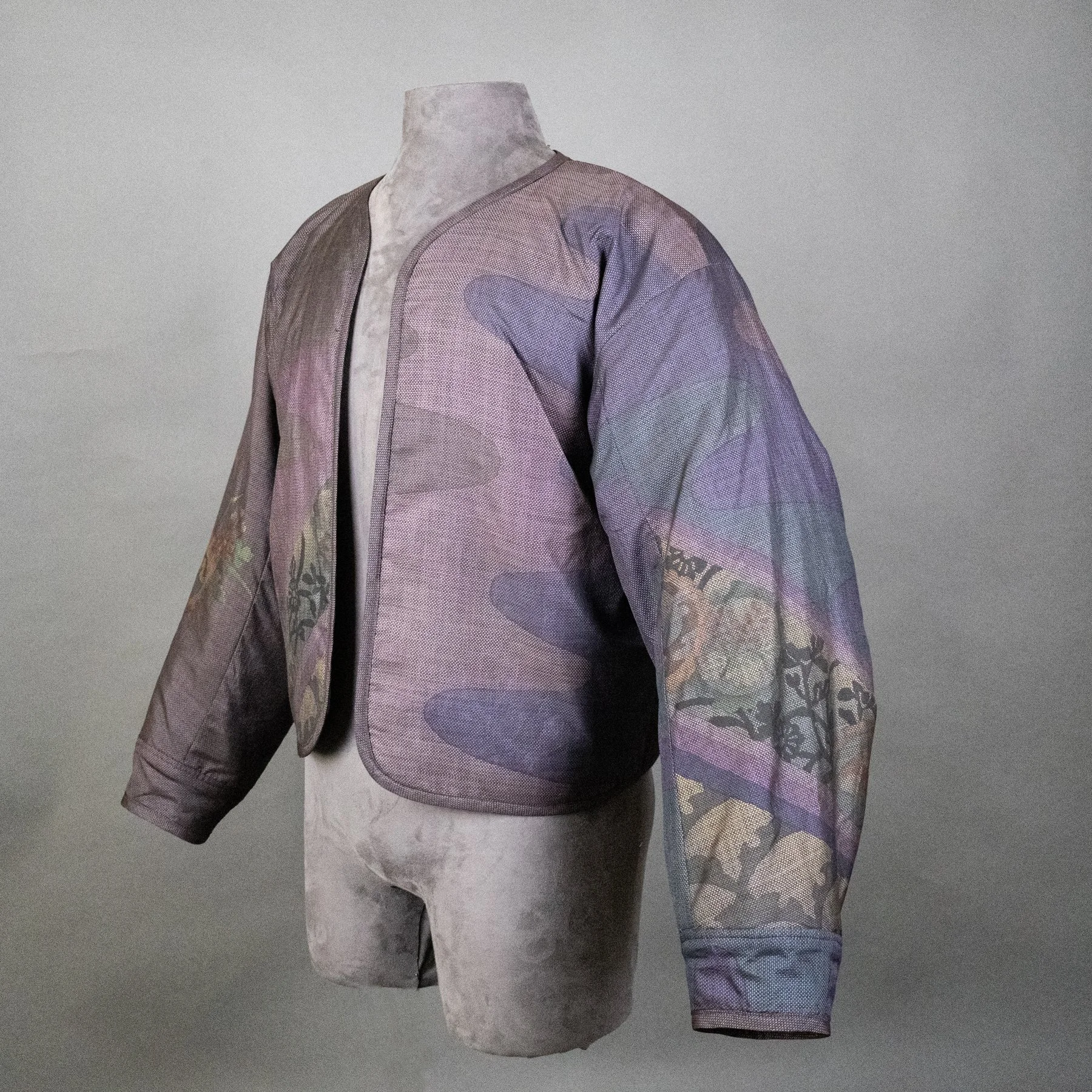
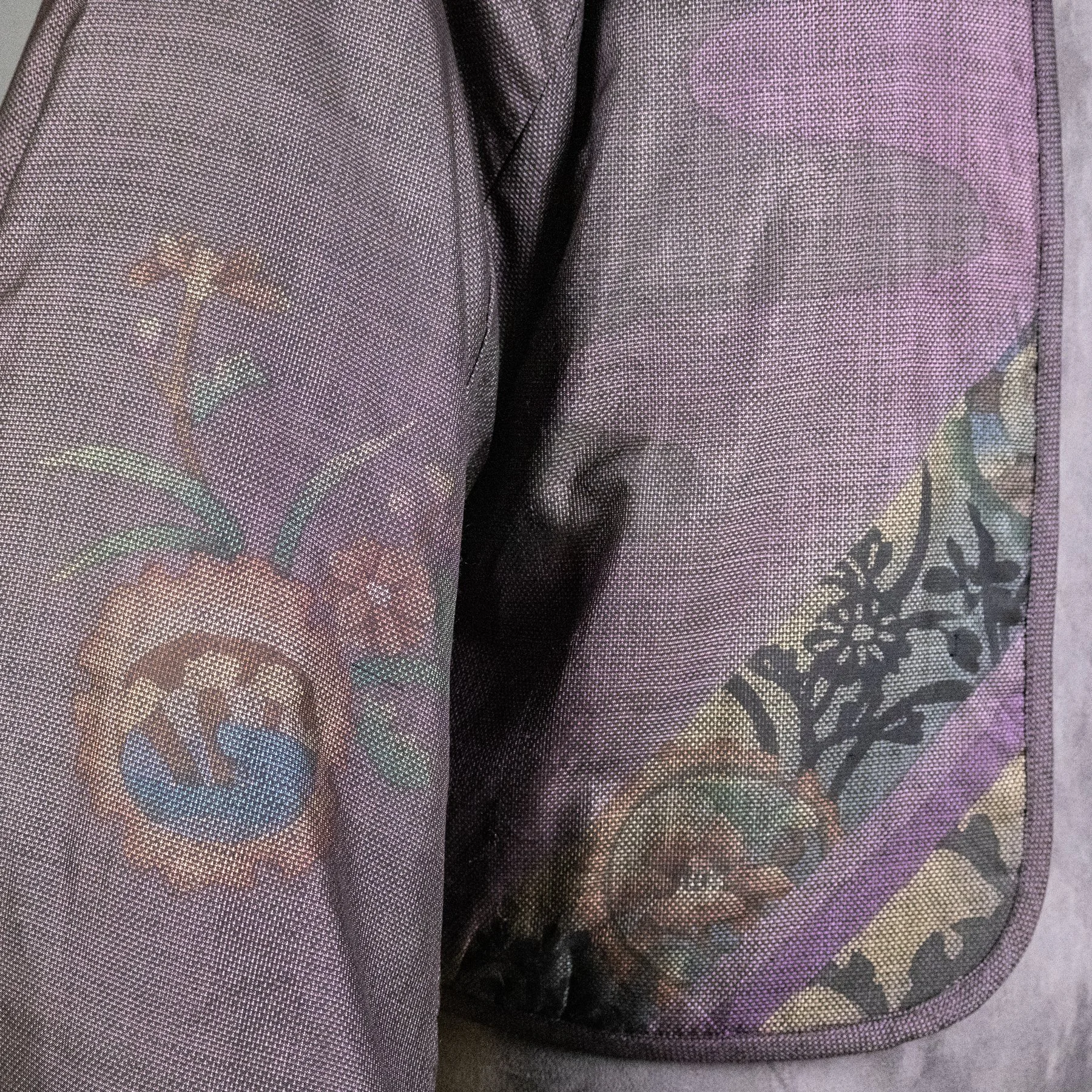
The second reversible coat I made, Item J10 has quilted silk on the inside and outside, using fabric from two vintage kimonos I deconstructed. Because kiku komon (small pattern chrysanthemums) is my favorite Japanese pattern, and purple is my favorite color, this jacket holds a special place in my heart. The taupe silk taping on the seams also features tiny pink cherry blossom petals.
There is one pocket on the purple side, and the label wraps around the bottom hem. Stray, cut threads from the original kimono seams appear throughout. Sleeves are 30" and the body is 23" long. Size is equivalent medium-large.
J14 - $1,900
John’s Notes:
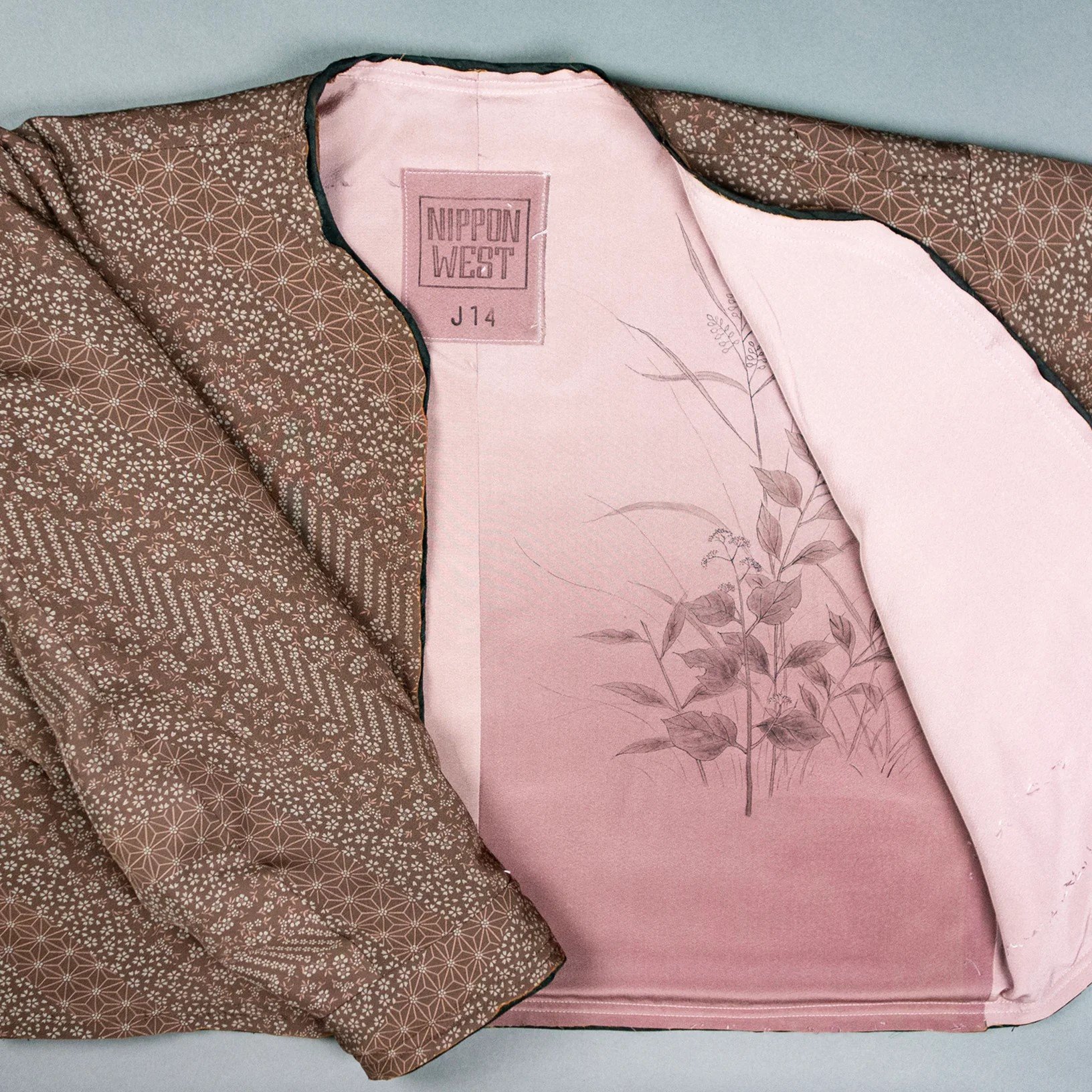
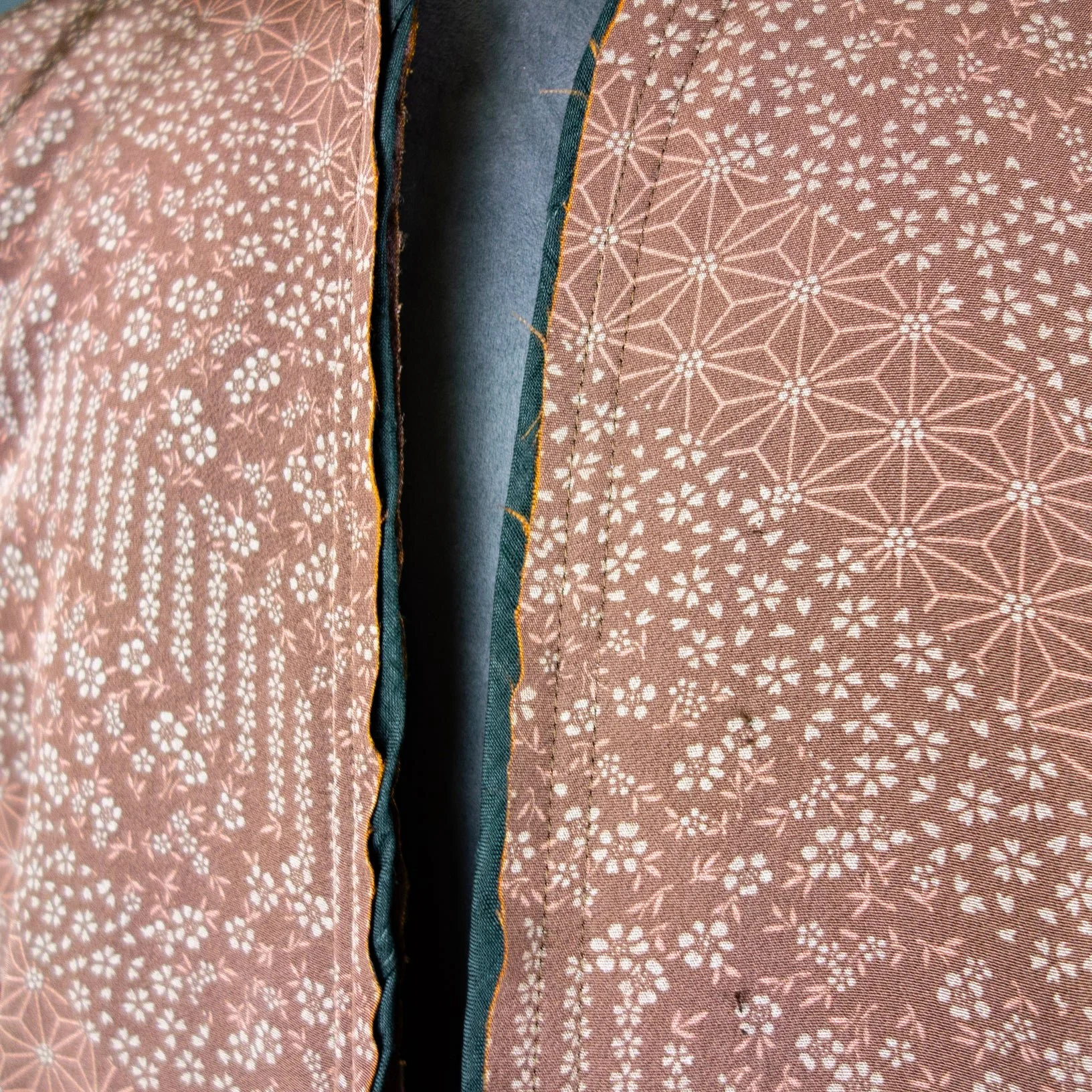
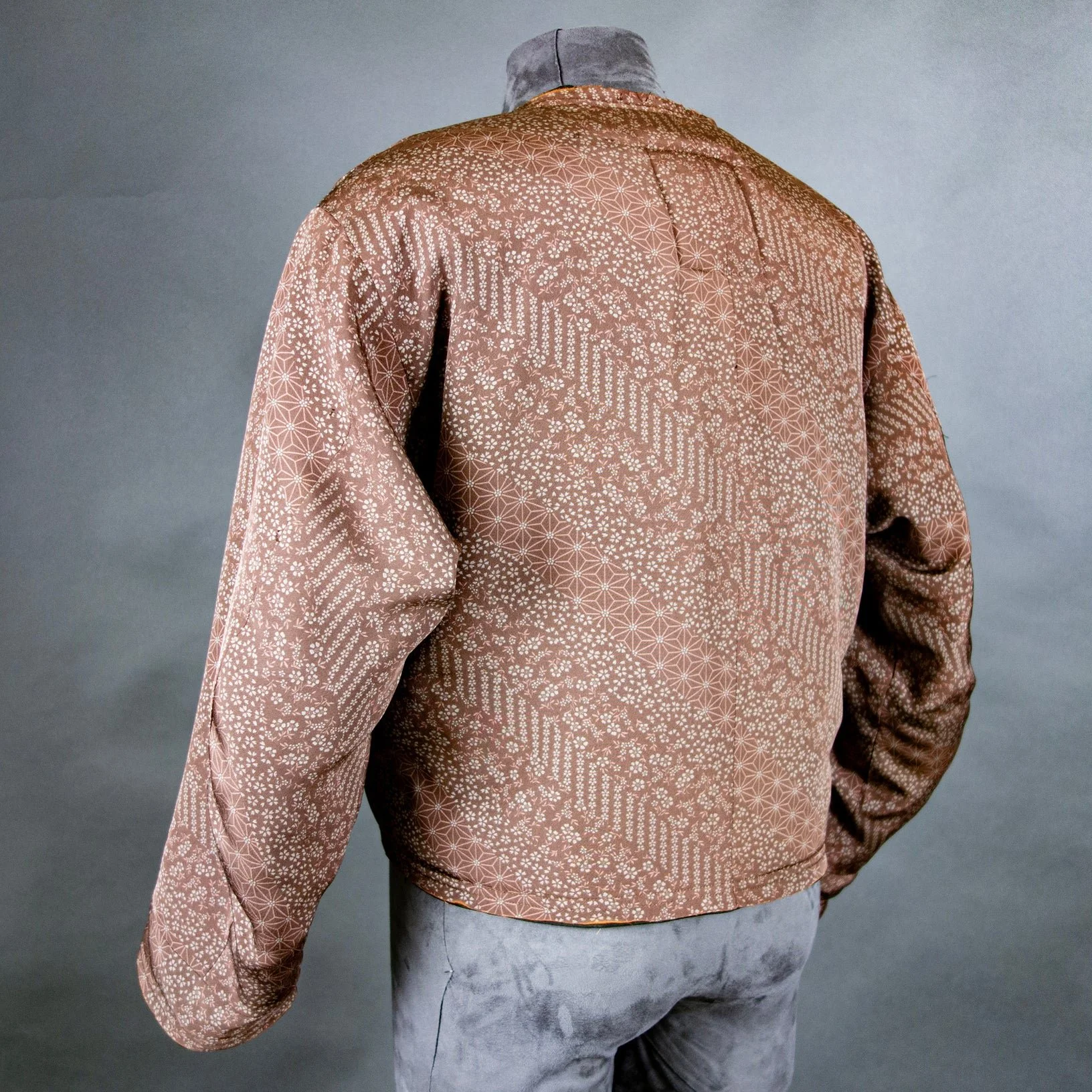
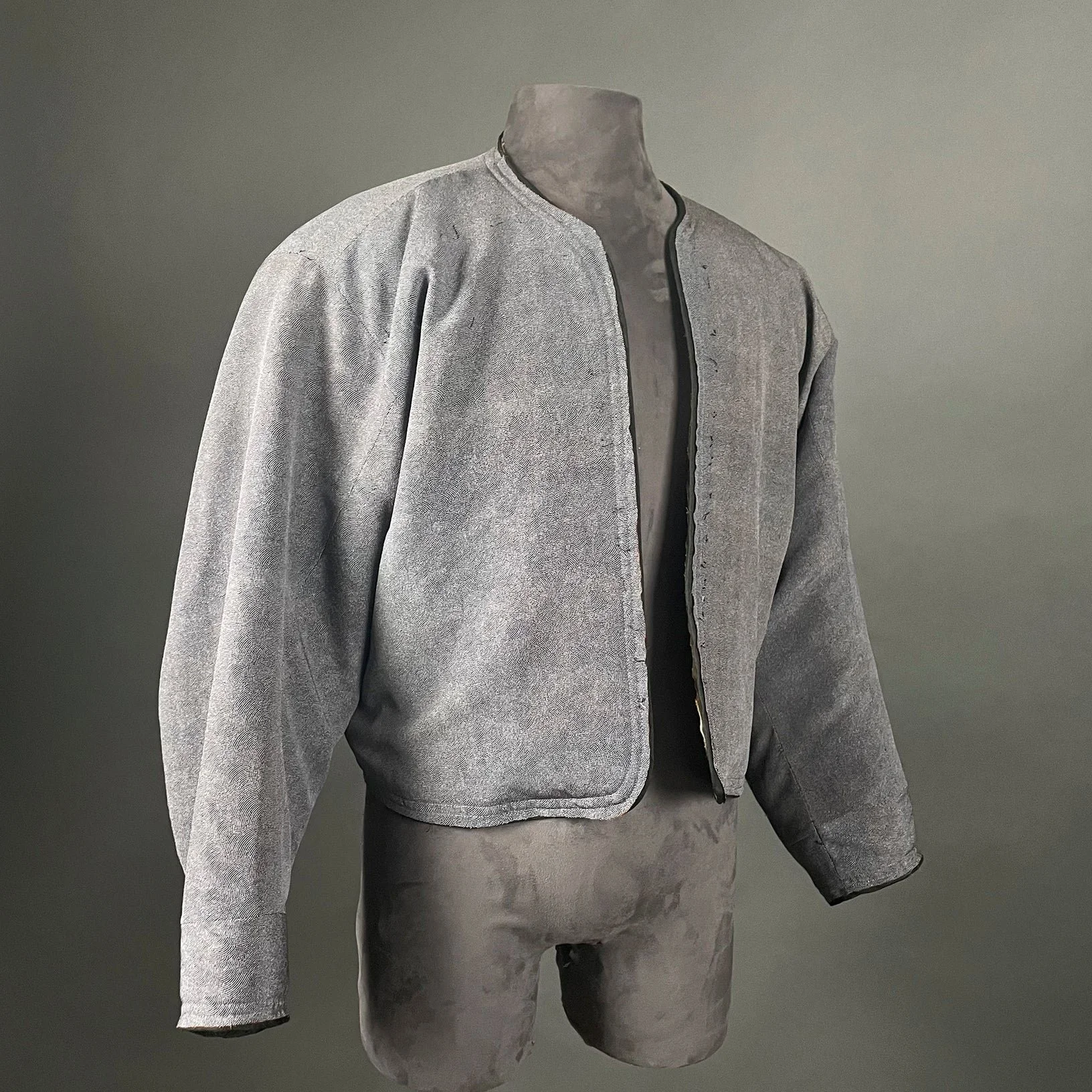
This is the second (successful) all-silk bomber jacket that I have made. The fabric for the outer layer comes from a vintage Japanese silk kimono that I deconstructed. Stenciled on silk crepe, the small, all-over komon pattern features geometric and floral motifs. The fabric for the inner layer comes from another kimono that I deconstructed. This one features stenciled and hand-painted autumn plants and grasses, some of which have leaves partially eaten by insects.
I singed the raw silk edges of this jacket with a candle flame, which will reduce, but not eliminate, fraying at the edges. Loose threads from the original, hand-sewn seams of the vintage kimonos are scattered throughout. The length is 24," the sleeves are 31." and the dress form has a 40" chest.
j15 - $1,800 - Sold
John’s Notes:
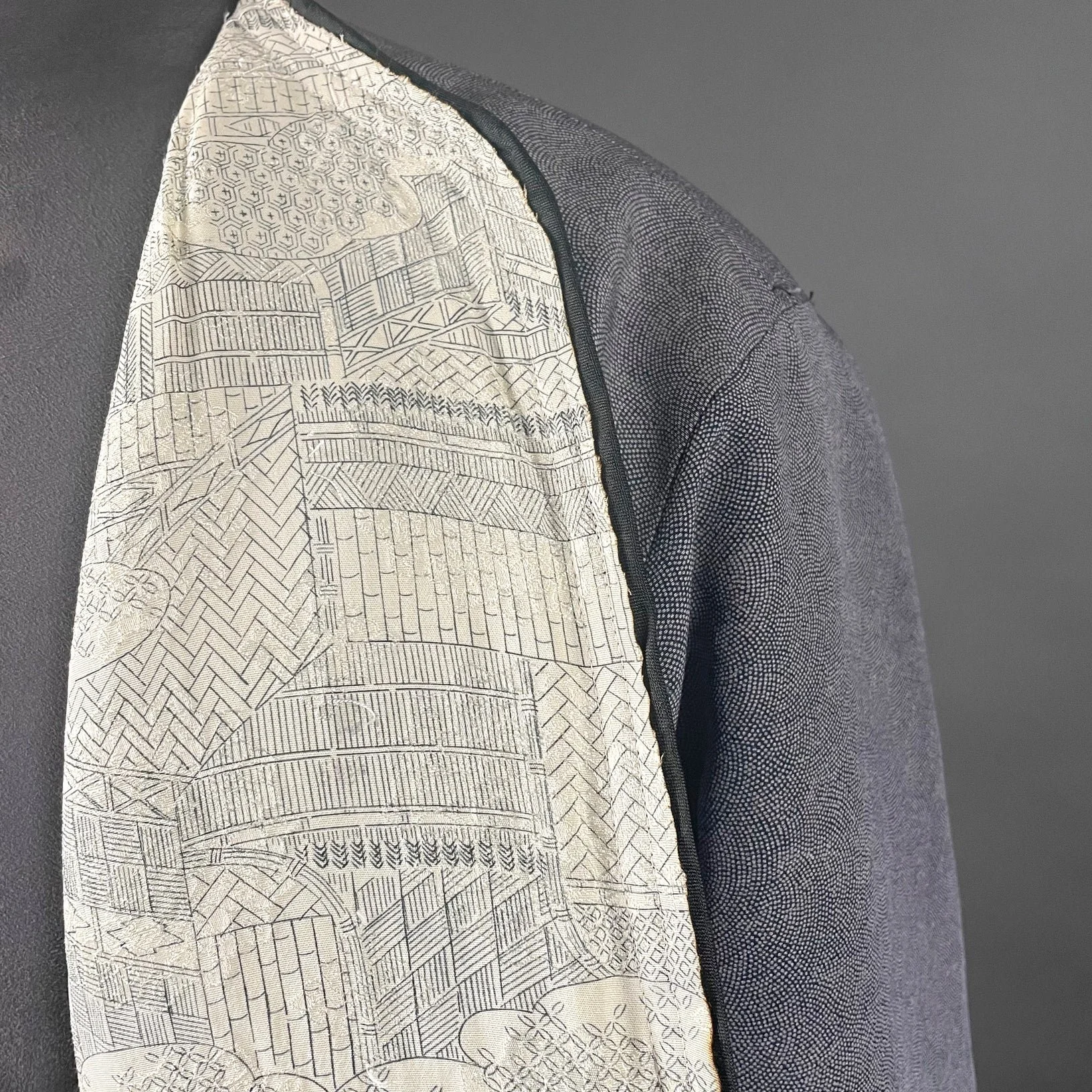
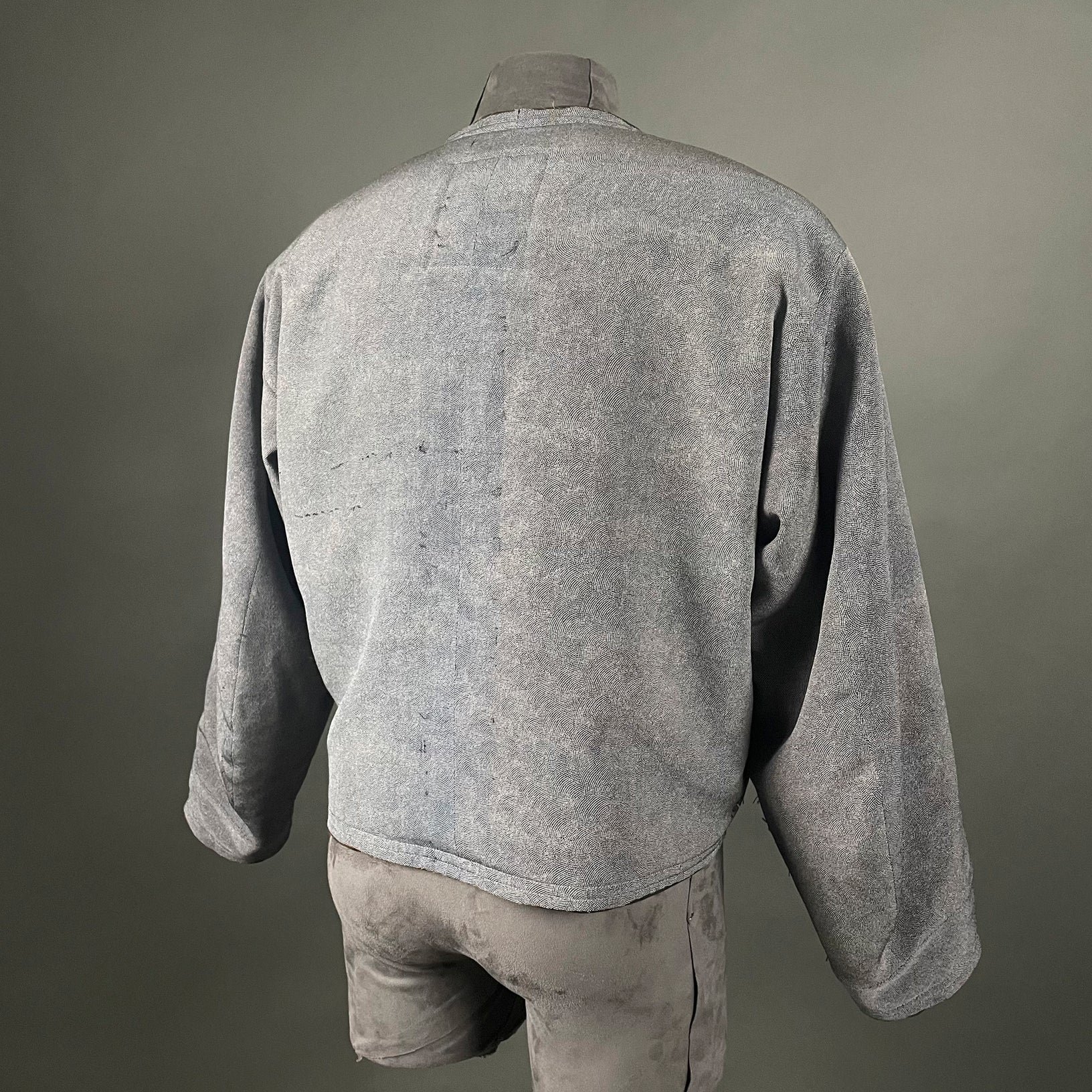
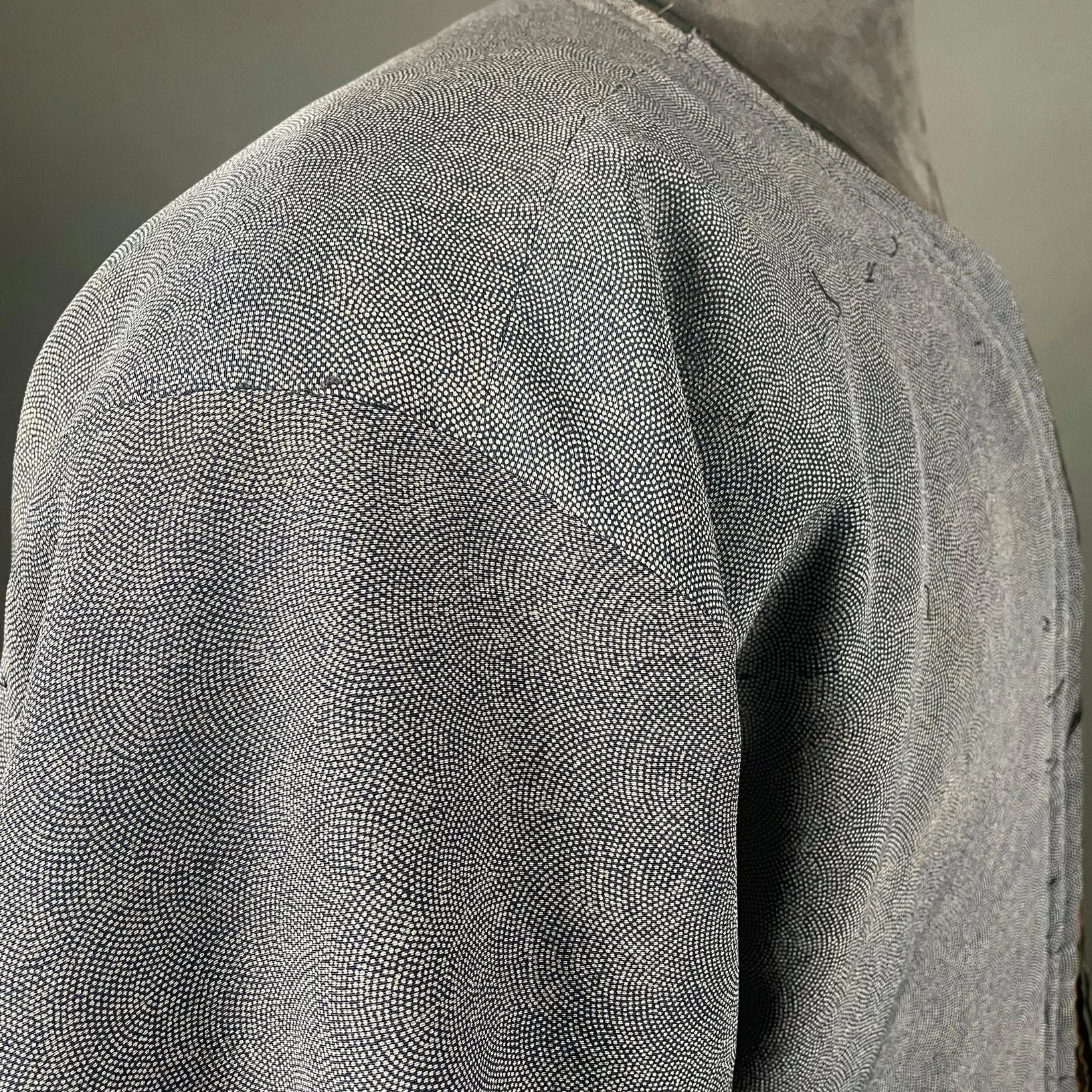
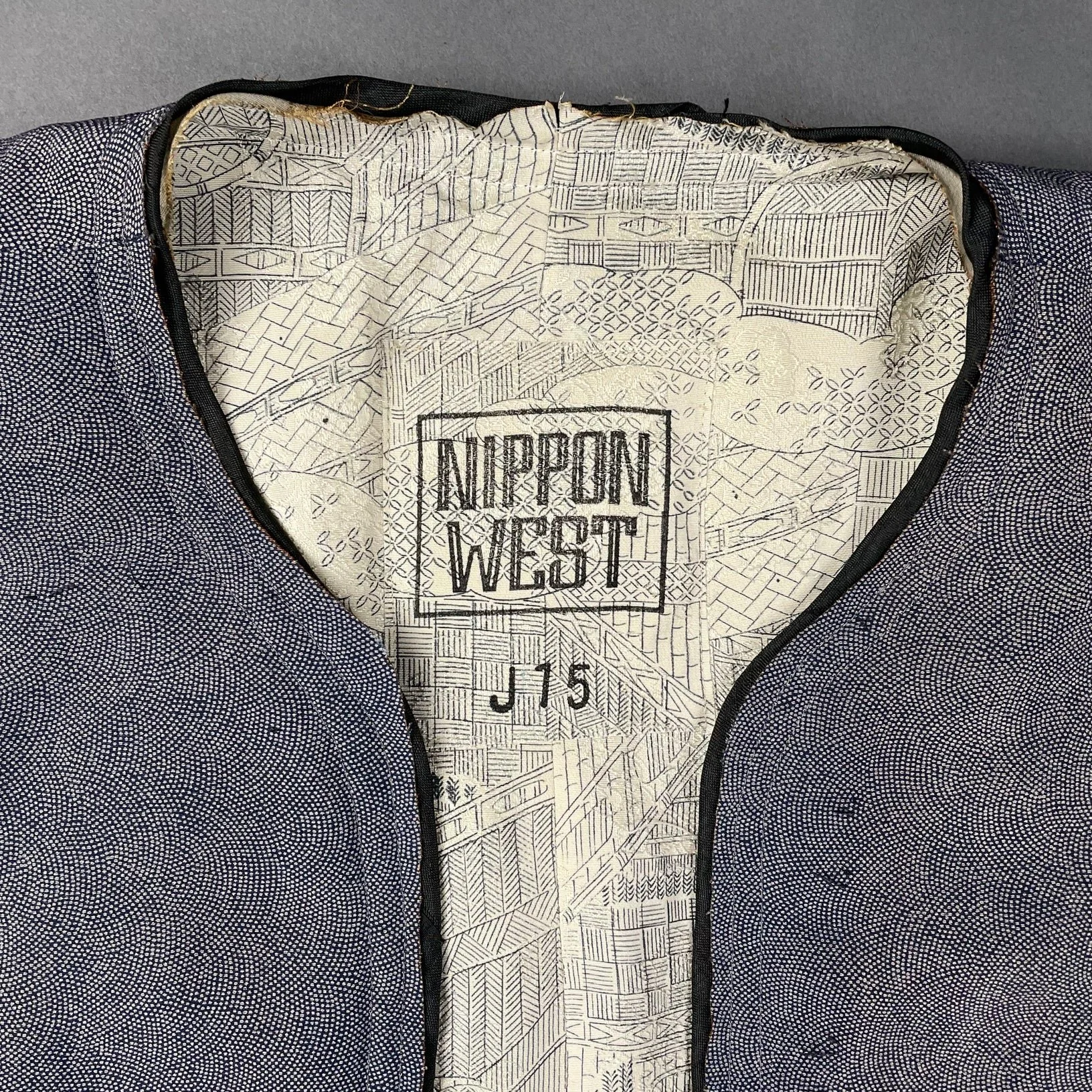
I made this bomber jacket from a vintage silk kimono in a komon (small pattern) style. This sharkskin motif showcases the dyer's art, because even the tiniest misalignment in the stencil repeat is immediately perceived by the eye. The heavyweight silk crepe shows subtle discoloration from age, and many of the cut silk threads from the original kimono seams remain.
The lining comes from another vintage kimono with a komon pattern depicting garden landscapes with fencing, railings, and cloud forms with geometric infills. It is resist-dyed on a damask silk that gives additional texture and complexity to the pattern.
I singed the silk edges at the collar and hems with a candle flame to reduce fraying, but the edges are raw and will unravel. Gentle hand washing is ok, and steam, but do not heat press, to avoid compressing the lightweight fill.
J19 - $2,000
John’s Notes:
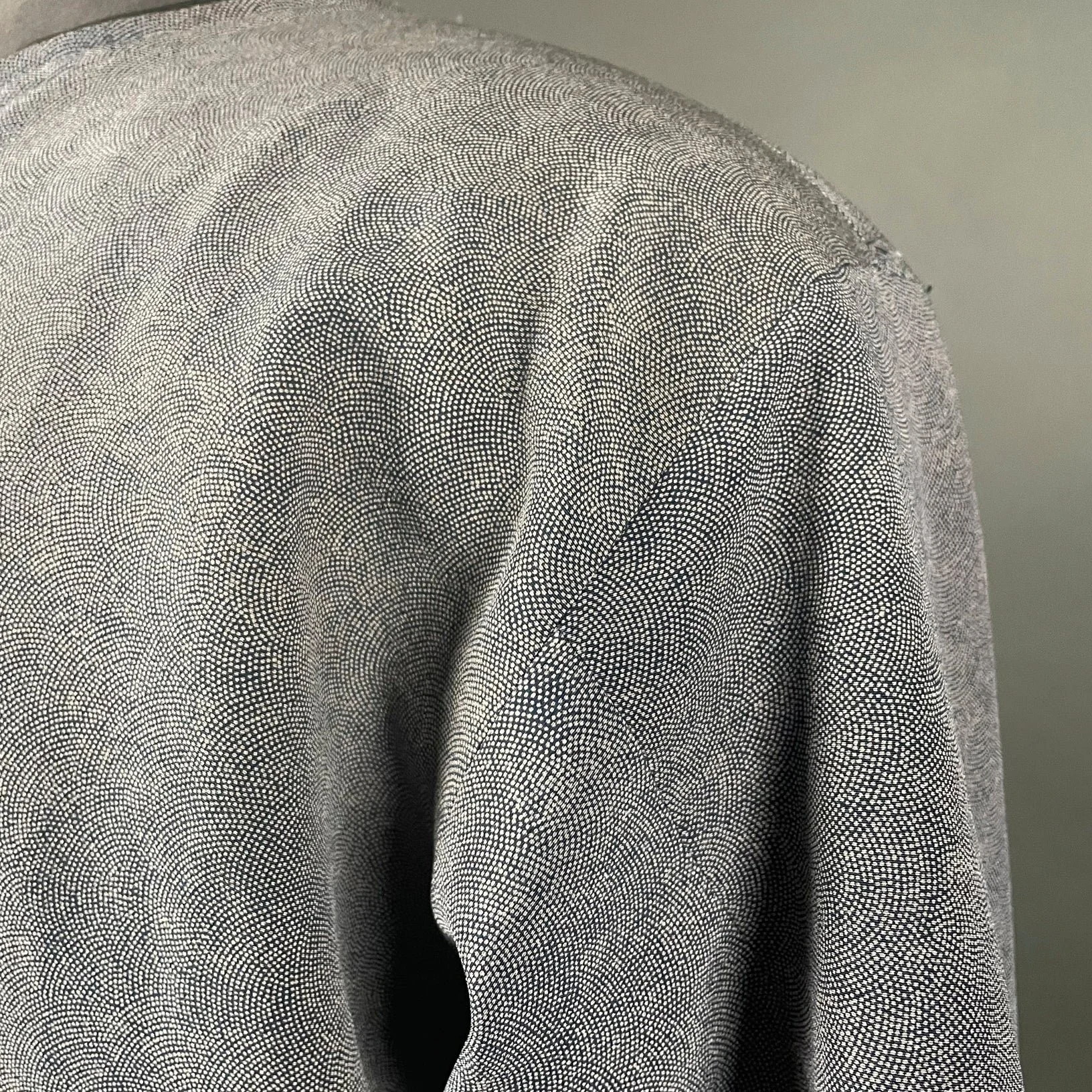
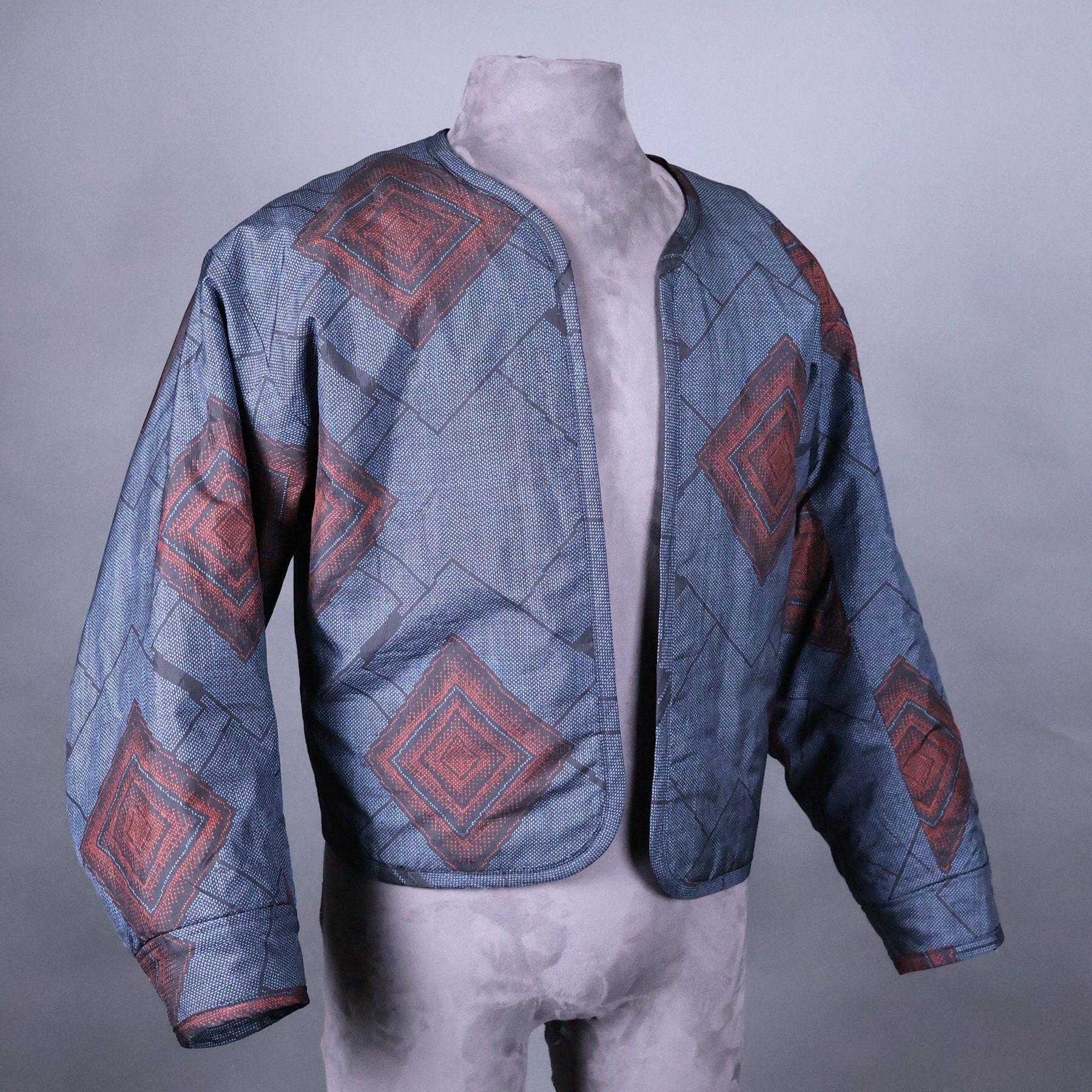
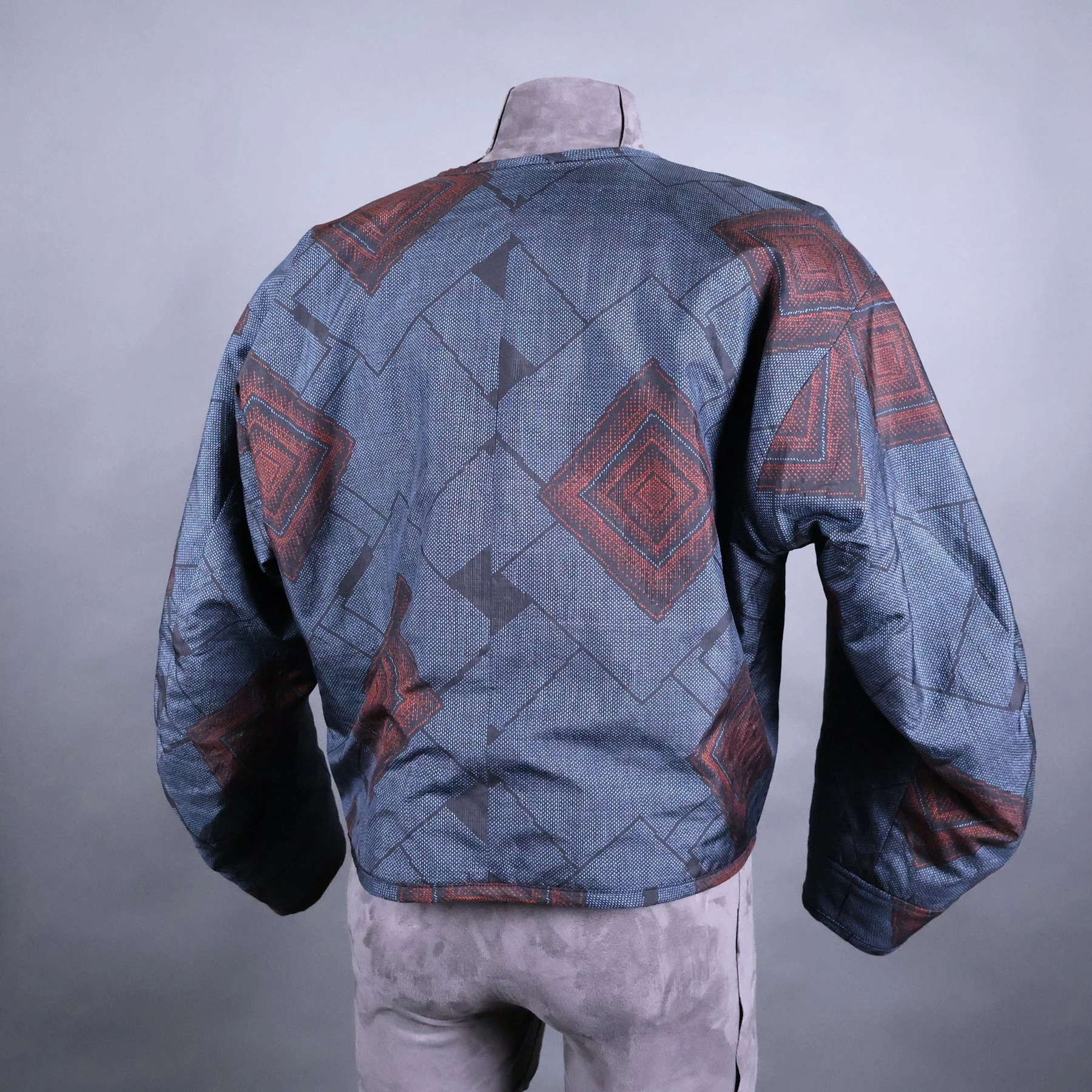
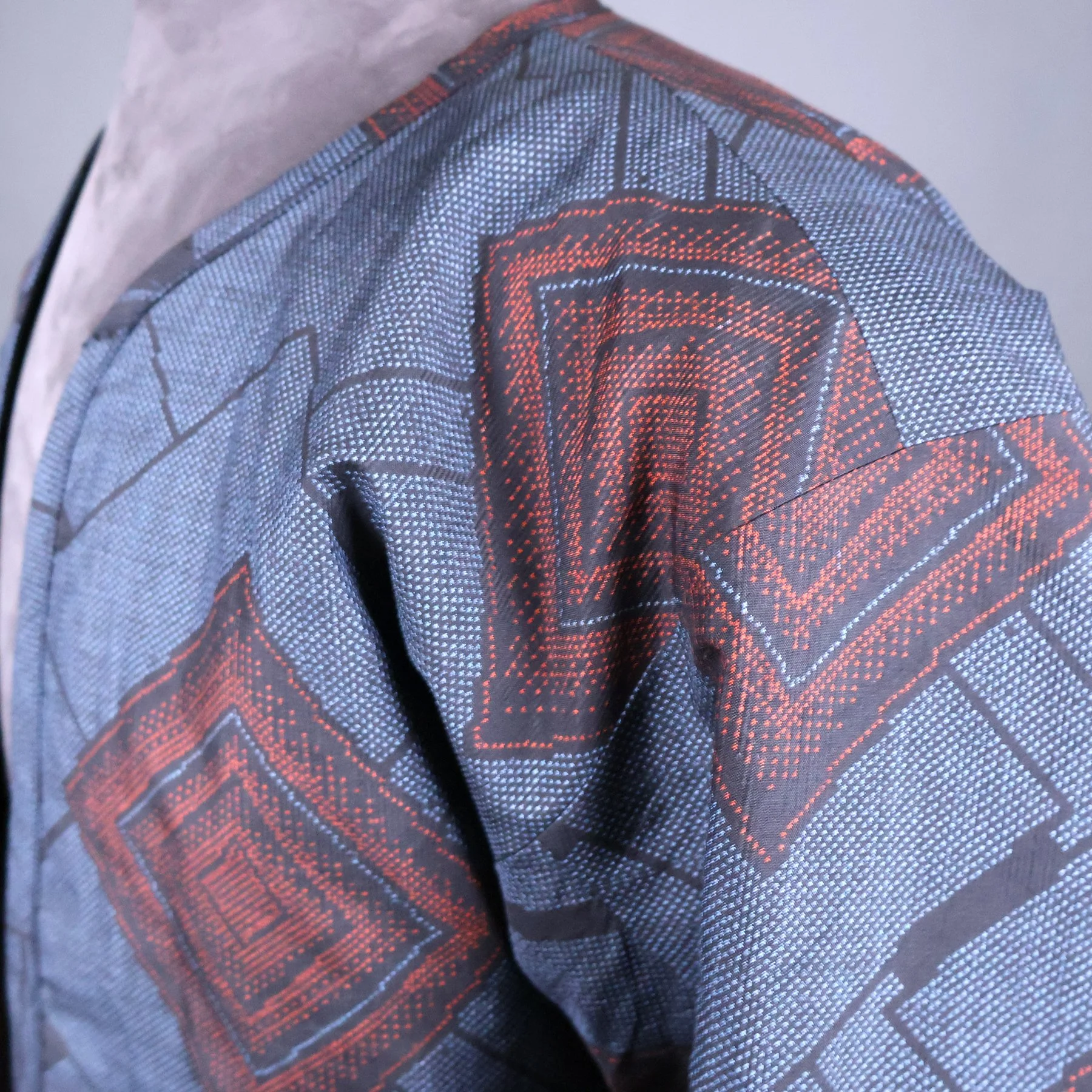
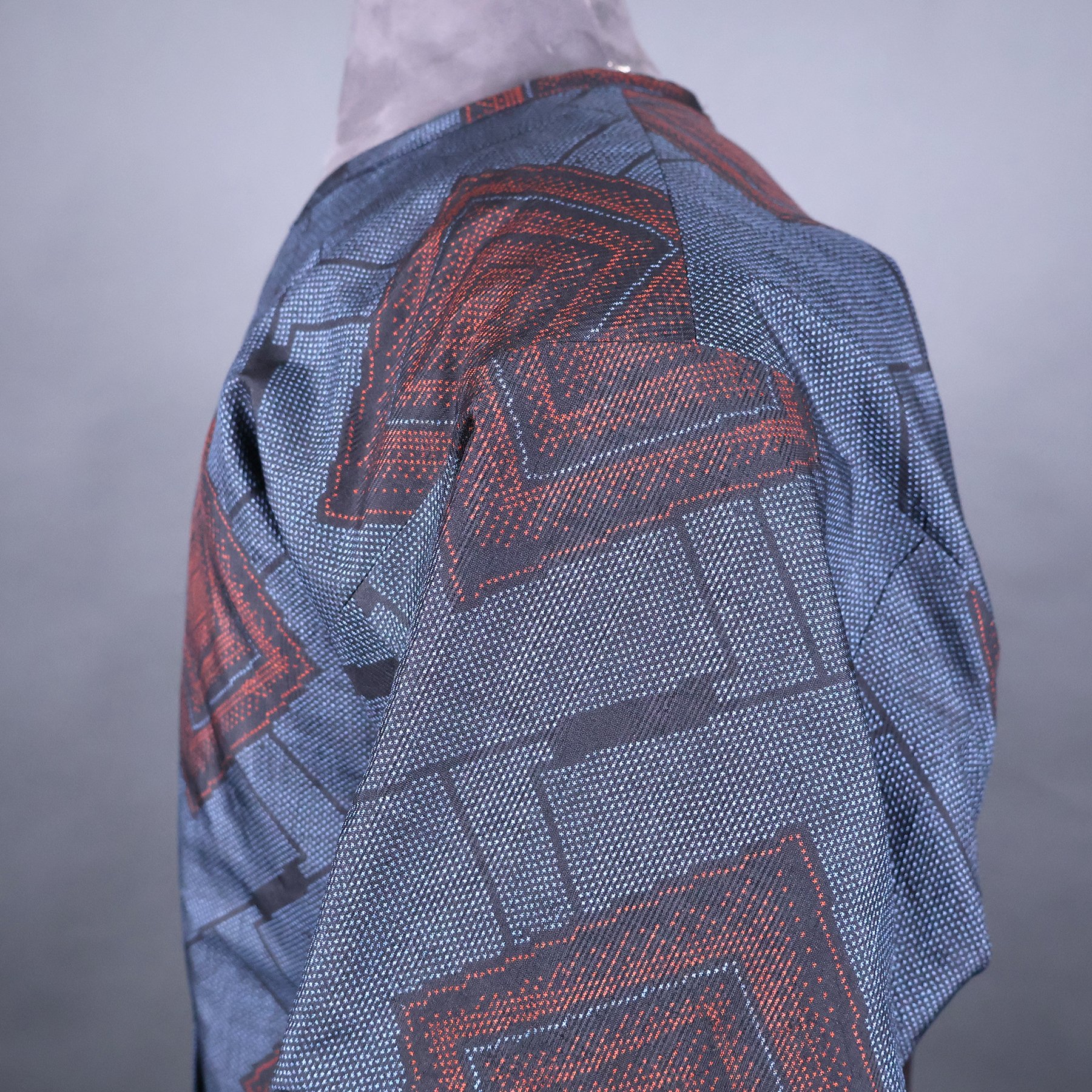
Japanese kimono fabrics are woven on narrow looms, and patterns with repeats were never designed to match at the seams. The standard formula for kimono construction, however, involves highly visible seams, and so a large pattern such as this one creates random junctions when the fabric panels meet. Further adding to the dynamism of this pattern are off-kilter diamond motifs that serve to reinforce an edgy, wobbly element.
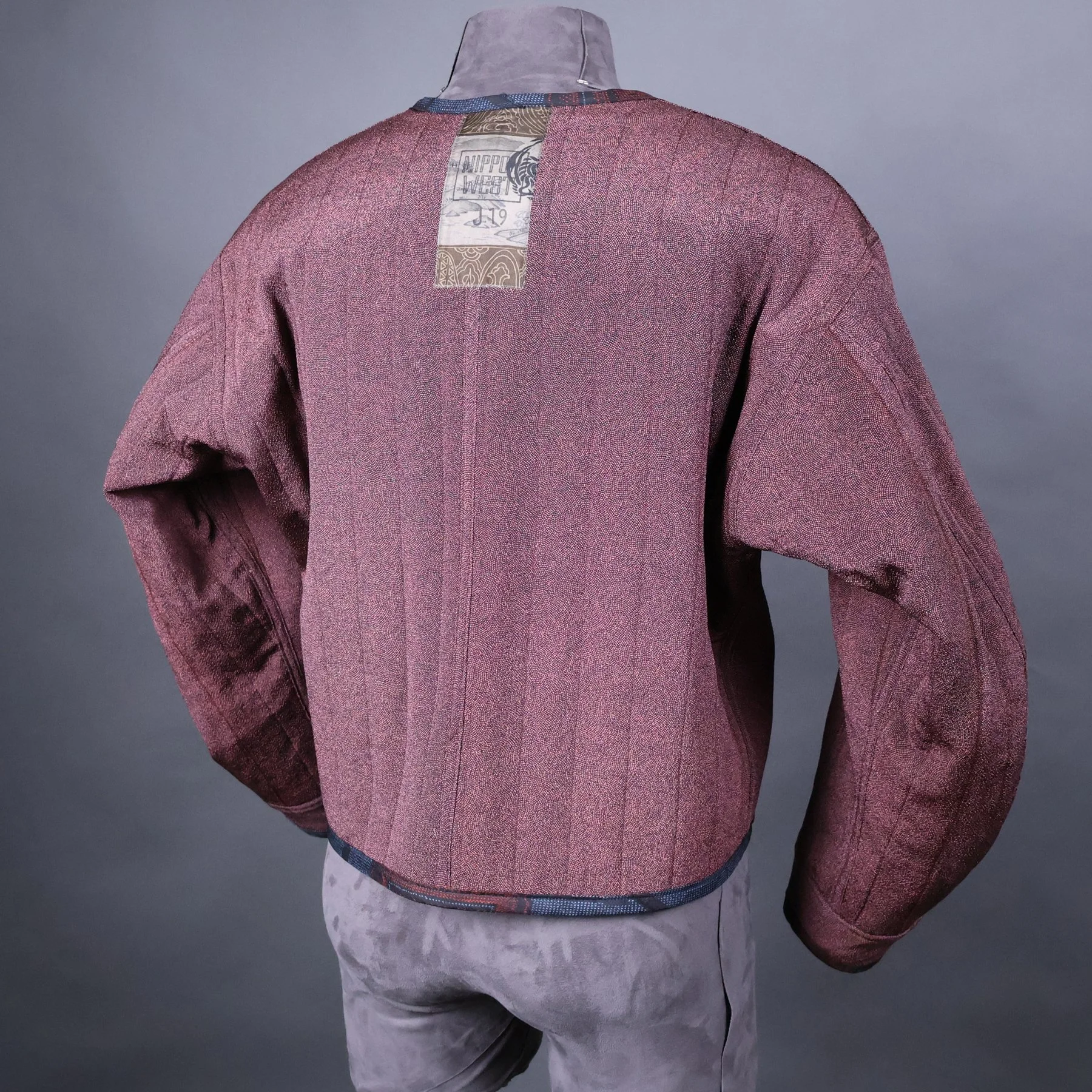
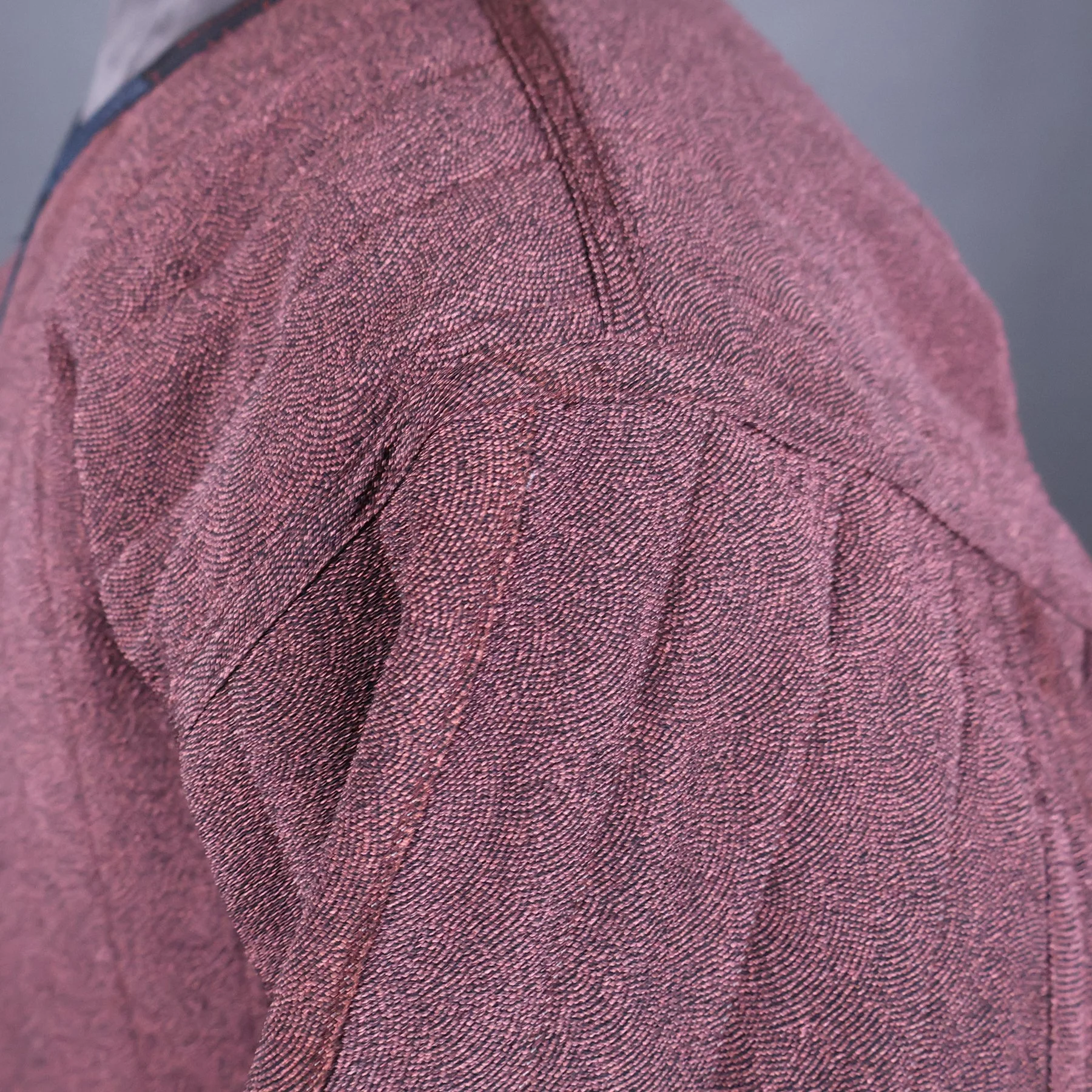
The polished, shiny silk fibers of the exterior are a total contrast with the cozy silk crepe weave on the lining. The lining fabric features a traditional Japanese dot pattern that imitates sharkskin. Because of the exacting intricacy of the stencil used to make this pattern, it is one of the most highly valued fabric patterns.
Both of the silks come from vintage kimonos that I sourced, deconstructed, washed and rehabilitated.
The dress form has a size 40 chest, and the sizing is equivalent to a medium-large.
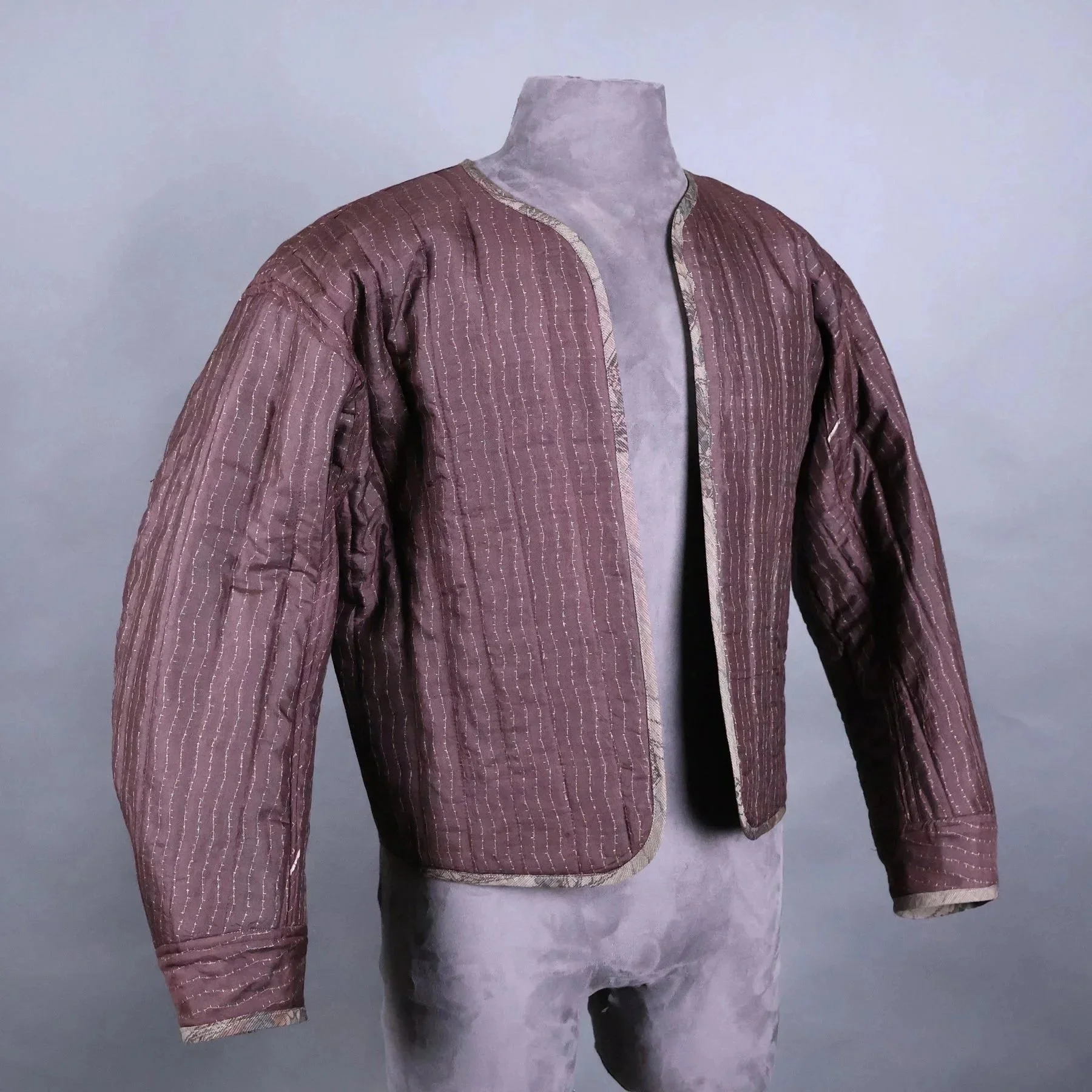
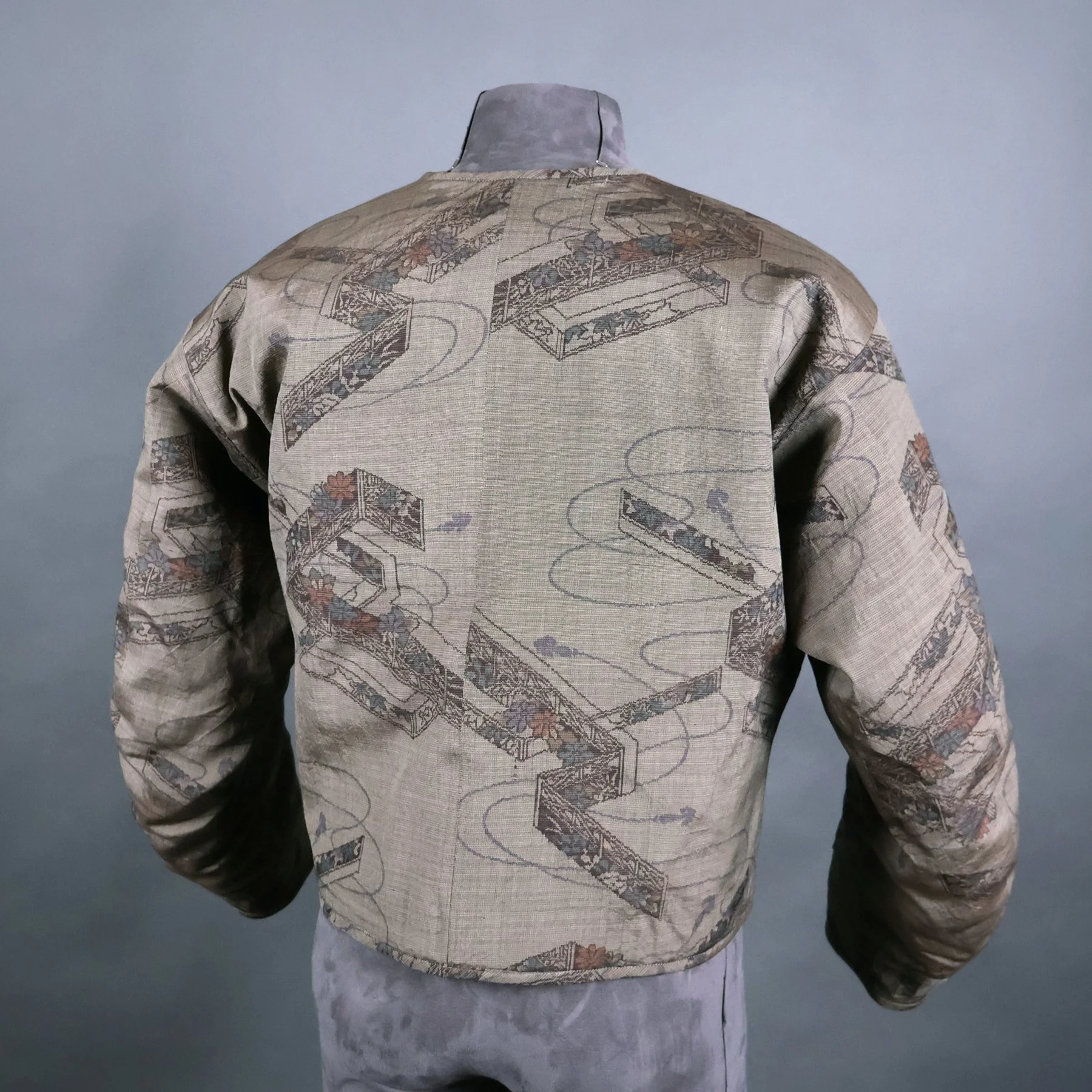
J20 - $2,400
John’s Notes:
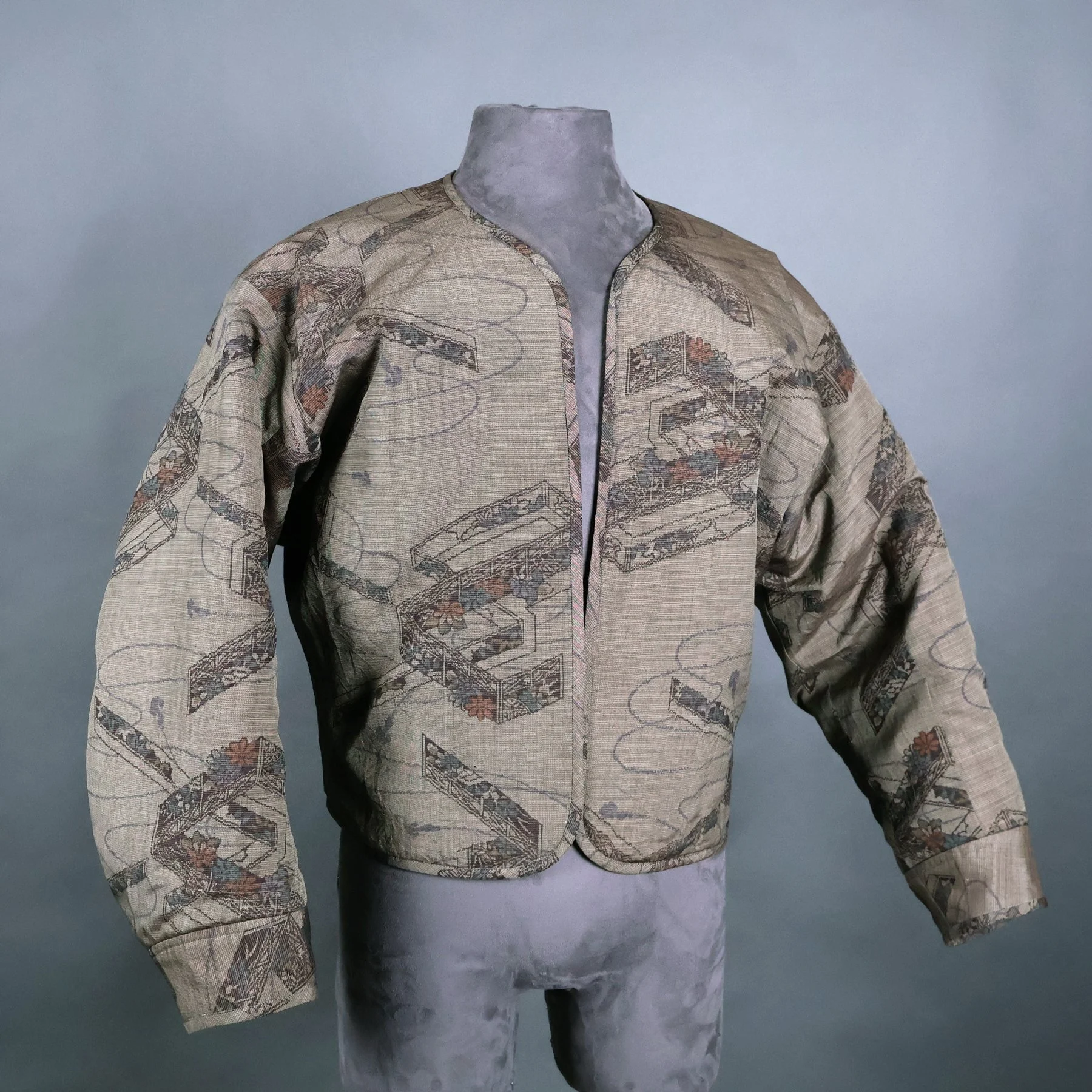
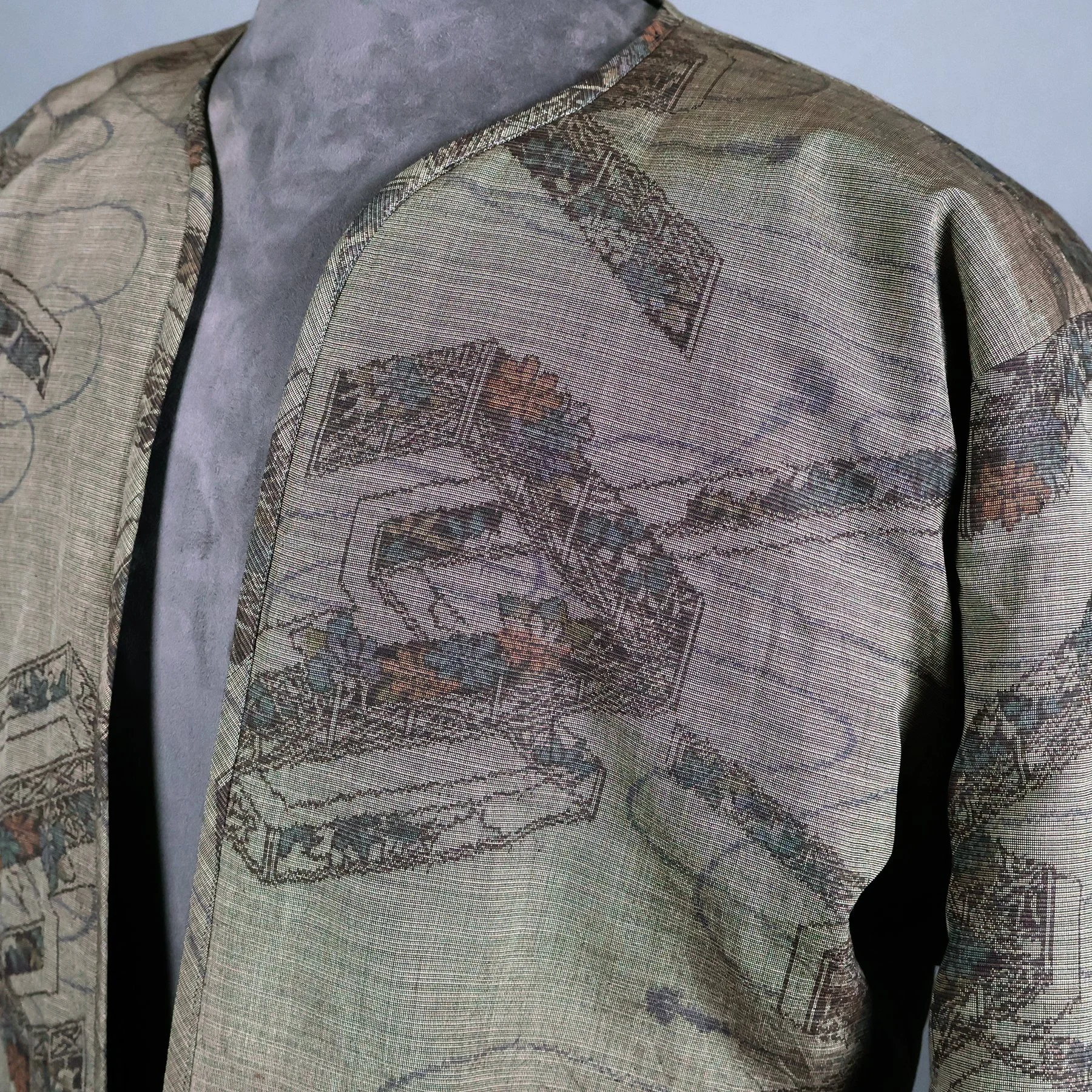
The vintage silk used for the shell of this jacket has a lyrical quality that is difficult to achieve in a woven fabrics. Most Japanese tsumugi kimonos have strong horizontal and vertical motifs, because they’re easier to weave. This pattern depicting garden fencing and flowers, however, becomes a medley of overlapping diagonals rendered in traditional Japanese isometric perspective. The combination of smokey grays and browns with soft pastels represents a particularly Japanese color palette. The silk fibers are rough spun with tiny slubs, and the fabric has a has a nice stiffness that made it a pleasure to work with. I made the lining using a lightweight silk fabric from a man’s vintage nagajuban (under kimono) that I deconstructed.
The dress form has a size 40 chest, and the size is equivalent to a Medium/ Large.
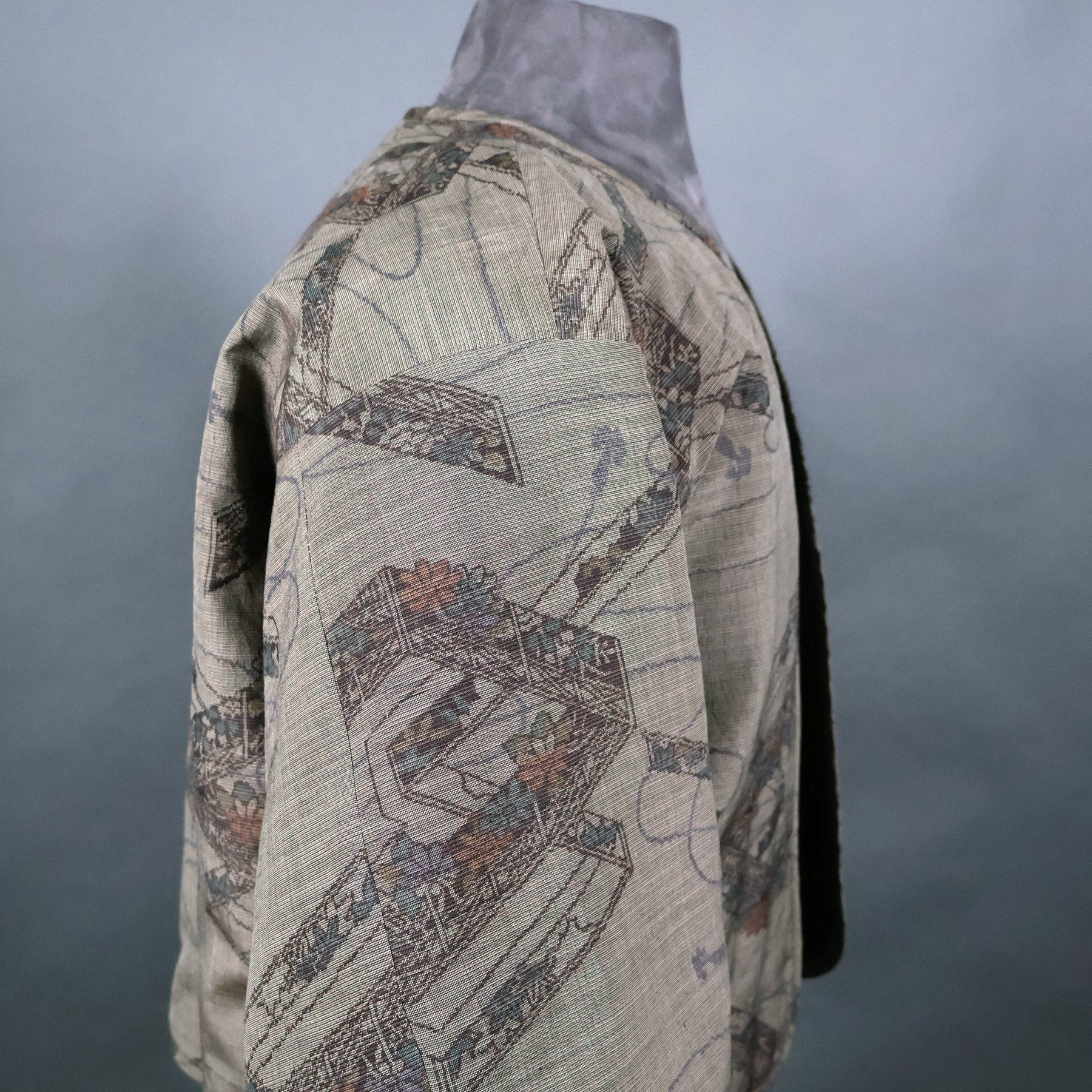
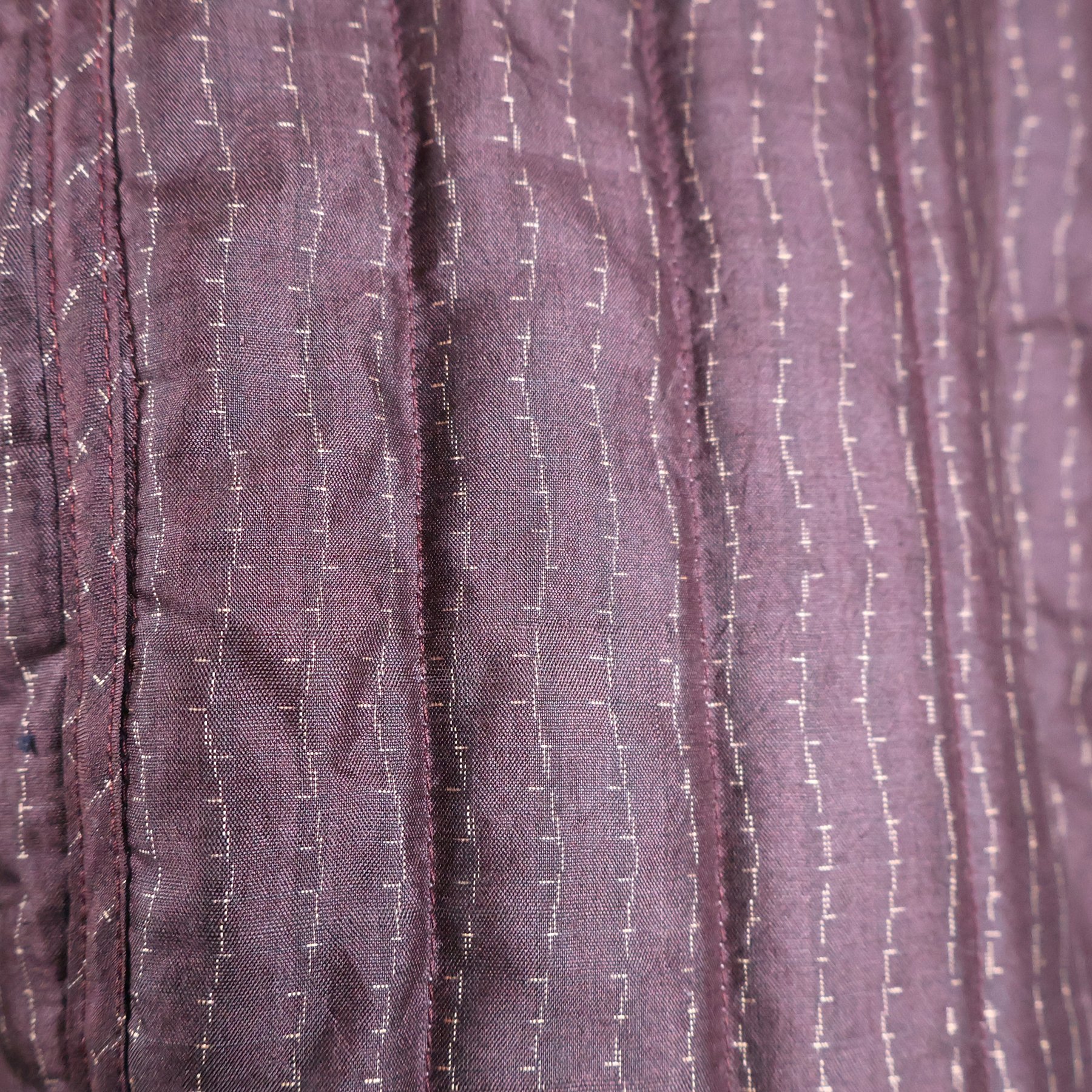
J21 - $2,300 - Sold
John’s notes:
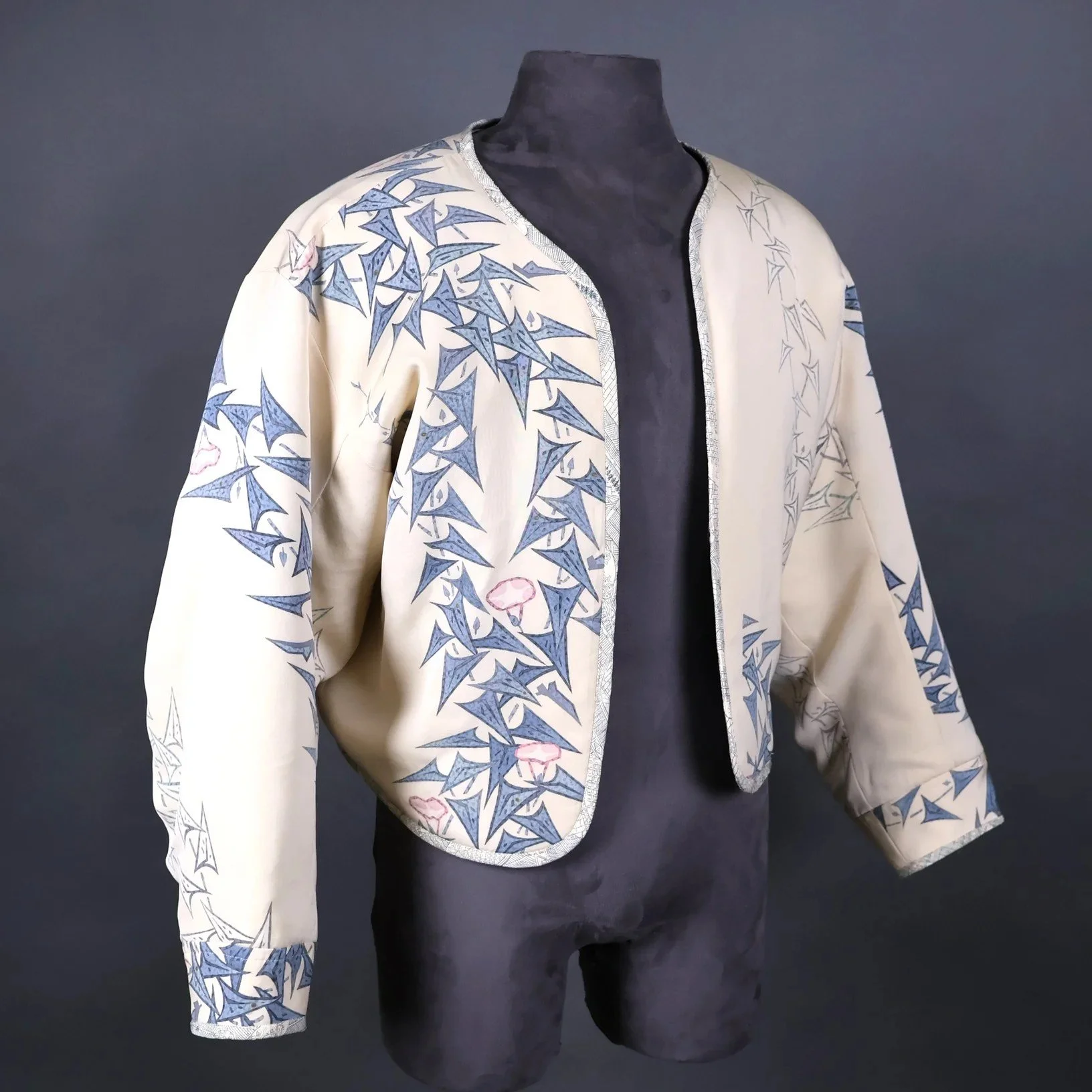
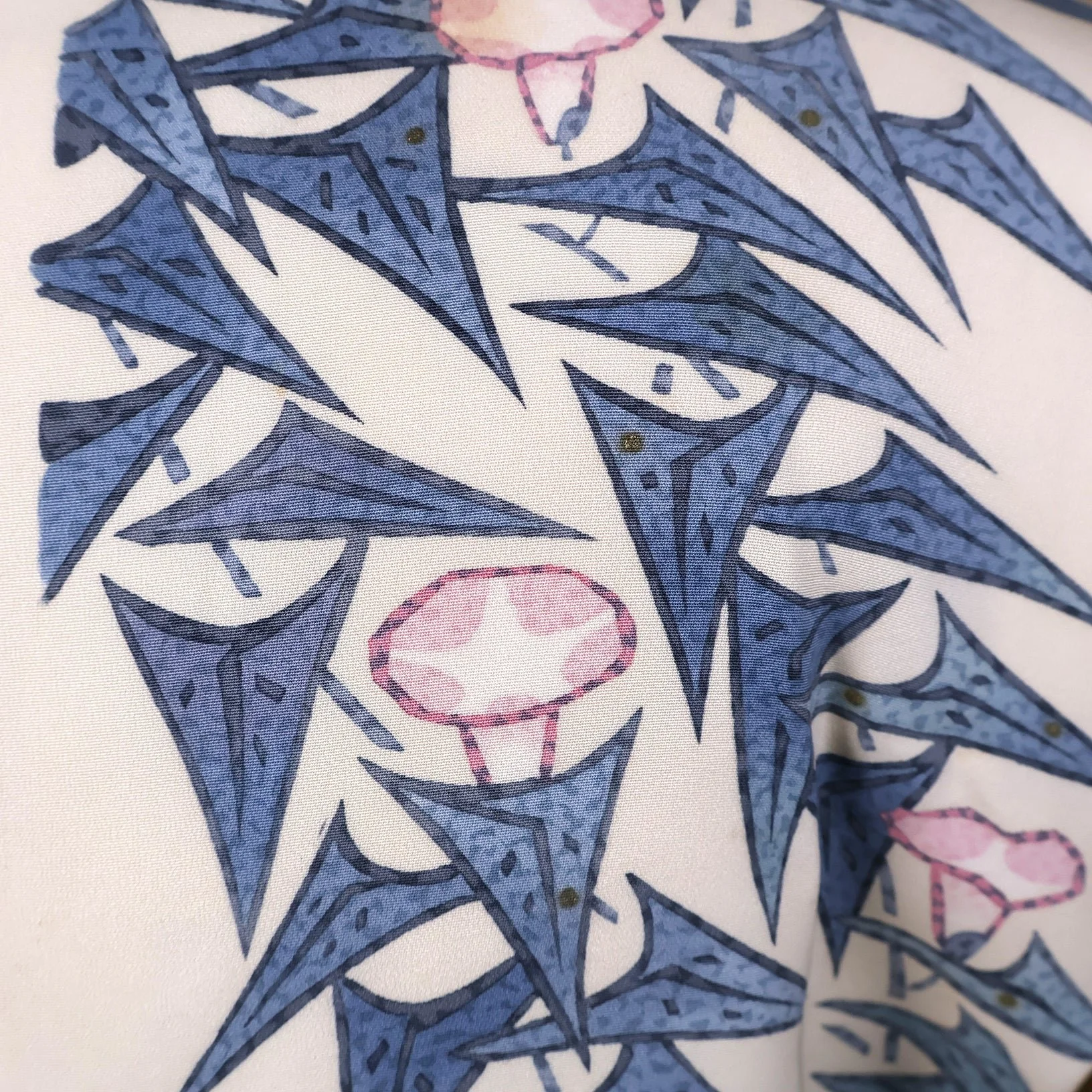
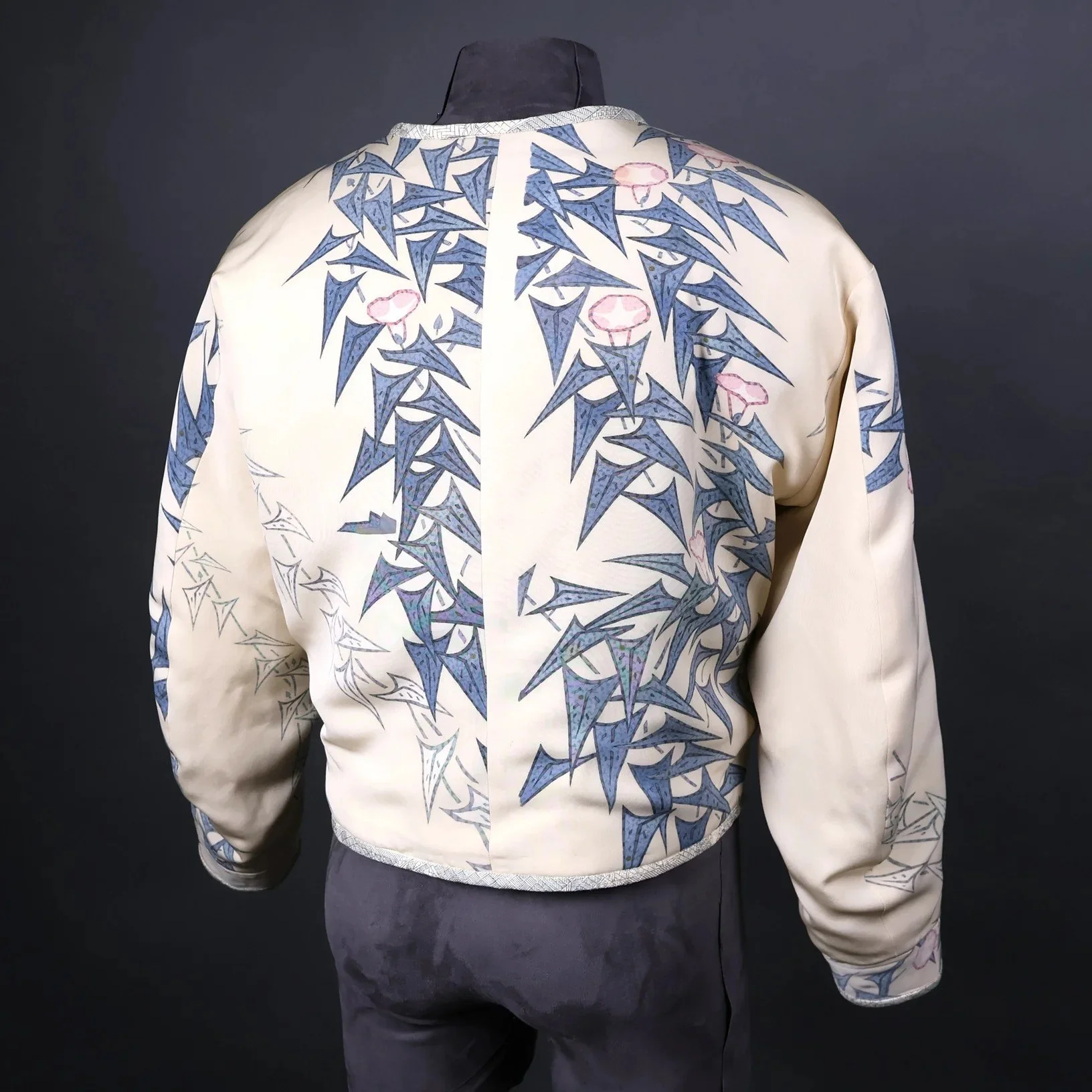
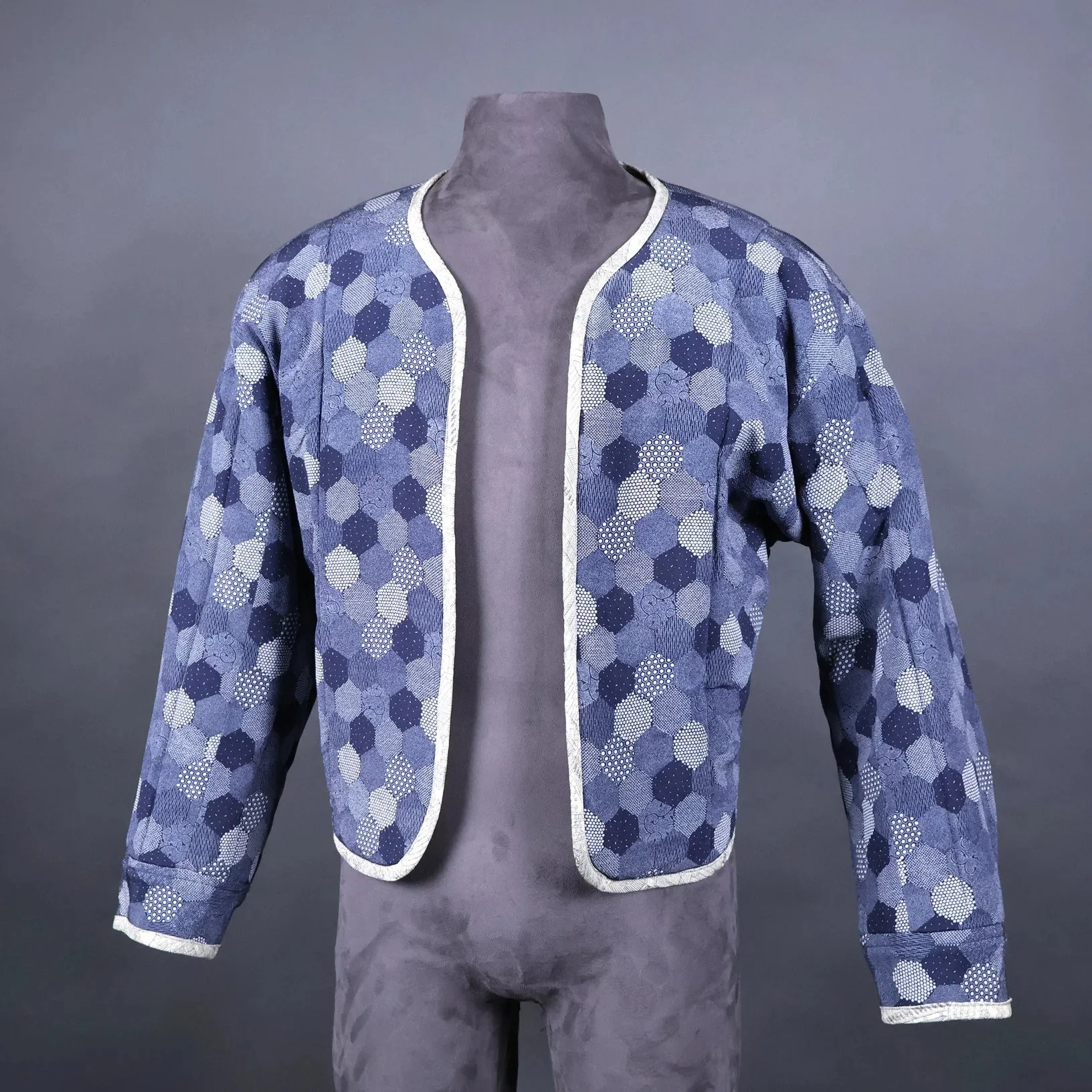
Among the thousands of kimonos I've seen over the years, there is nothing even remotely similar to this very artistic interpretation of morning glory – featuring bold, blue leaves. To achieve the subtle speckles on the leaves and blossoms using stencils requires a special talent. Faded gold metallic pigmented dots are also sprinkled throughout the pattern for extra dazzle. A very bold statement even for kimono, this artistic silk is the only one of its kind.
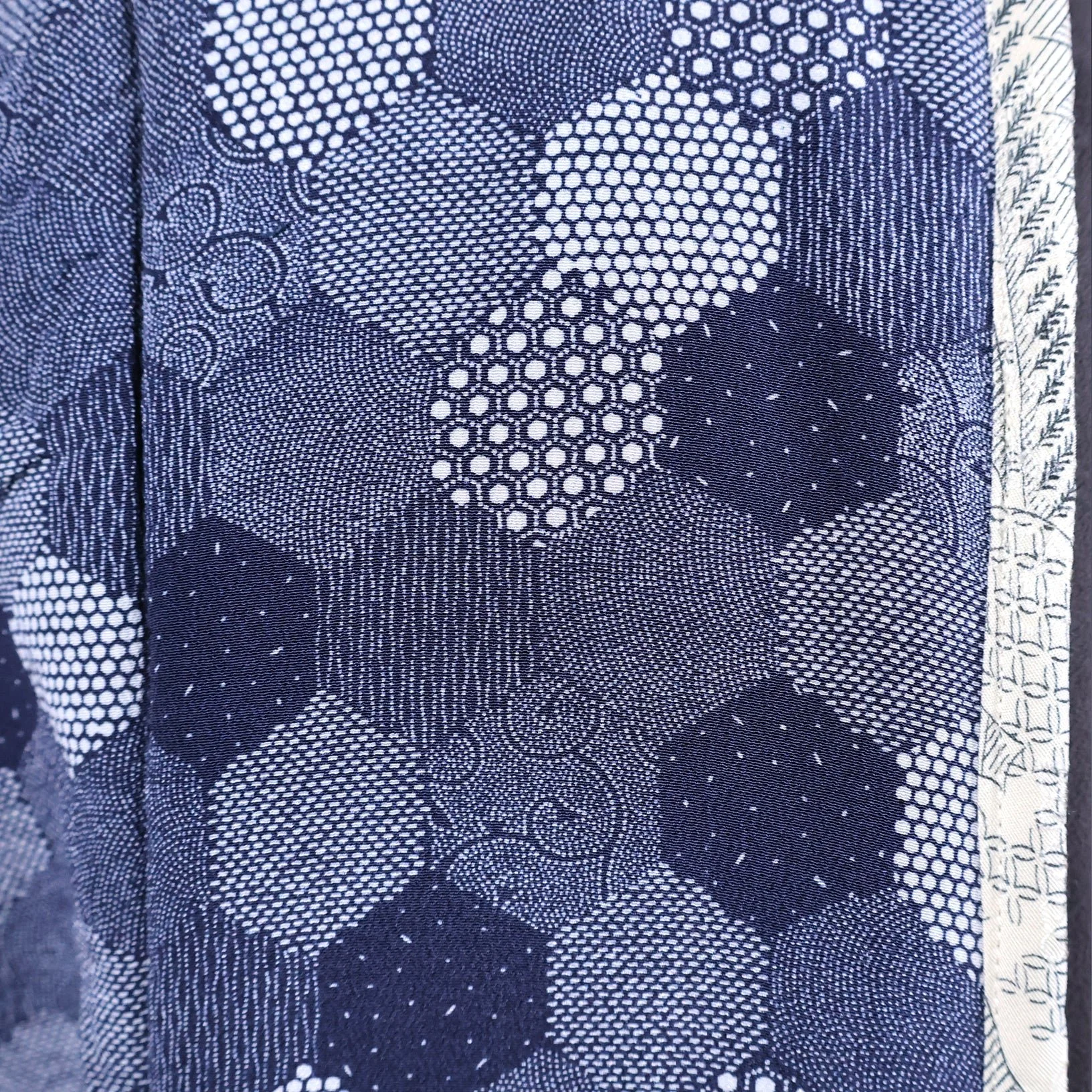
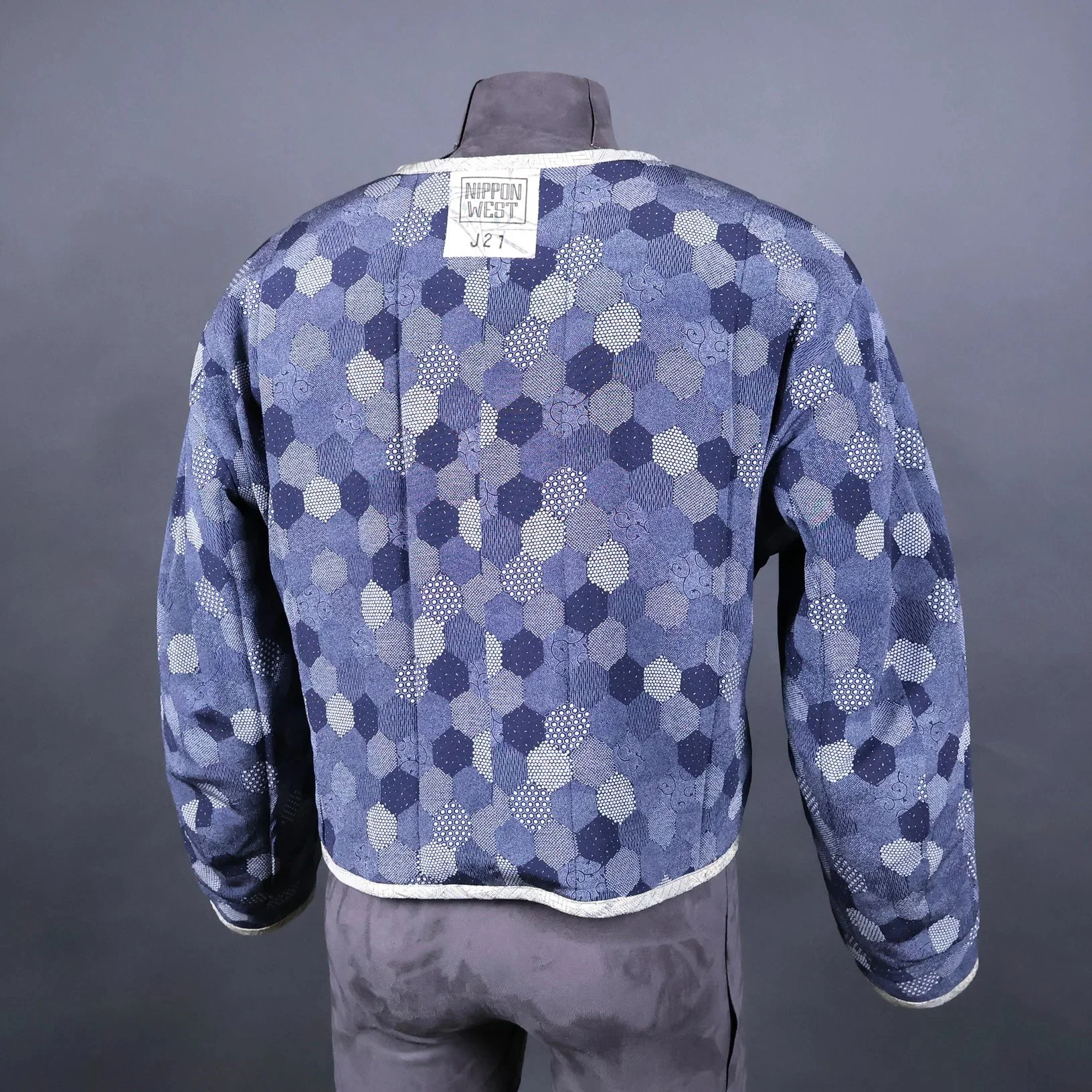
Also stenciled onto silk crepe, the lining features a small scale komon pattern. The intricate blue and white patchwork of hexagons contains a glossary of traditional Japanese komon motifs. Though in a completely different vein than the outer fabric, the lining also showcases the stencil-cutter's art with its intricacy and precision.
Both of these silks come from vintage kimonos that I sourced and deconstructed. And the pattern for the bomber jacket is one that I have been developing for a few years. The dress form has a size 40 chest, and the sizing is equivalent to medium-large.
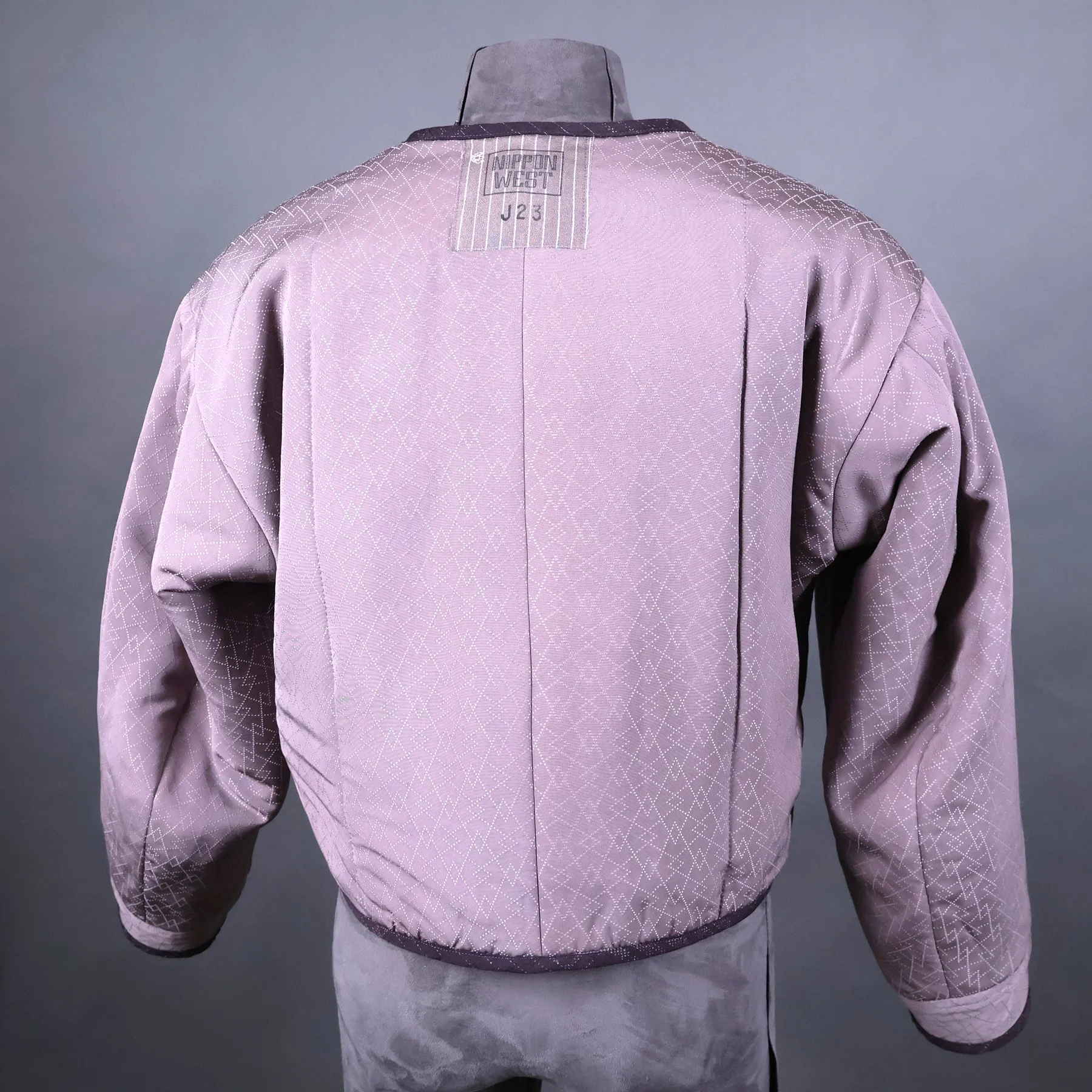
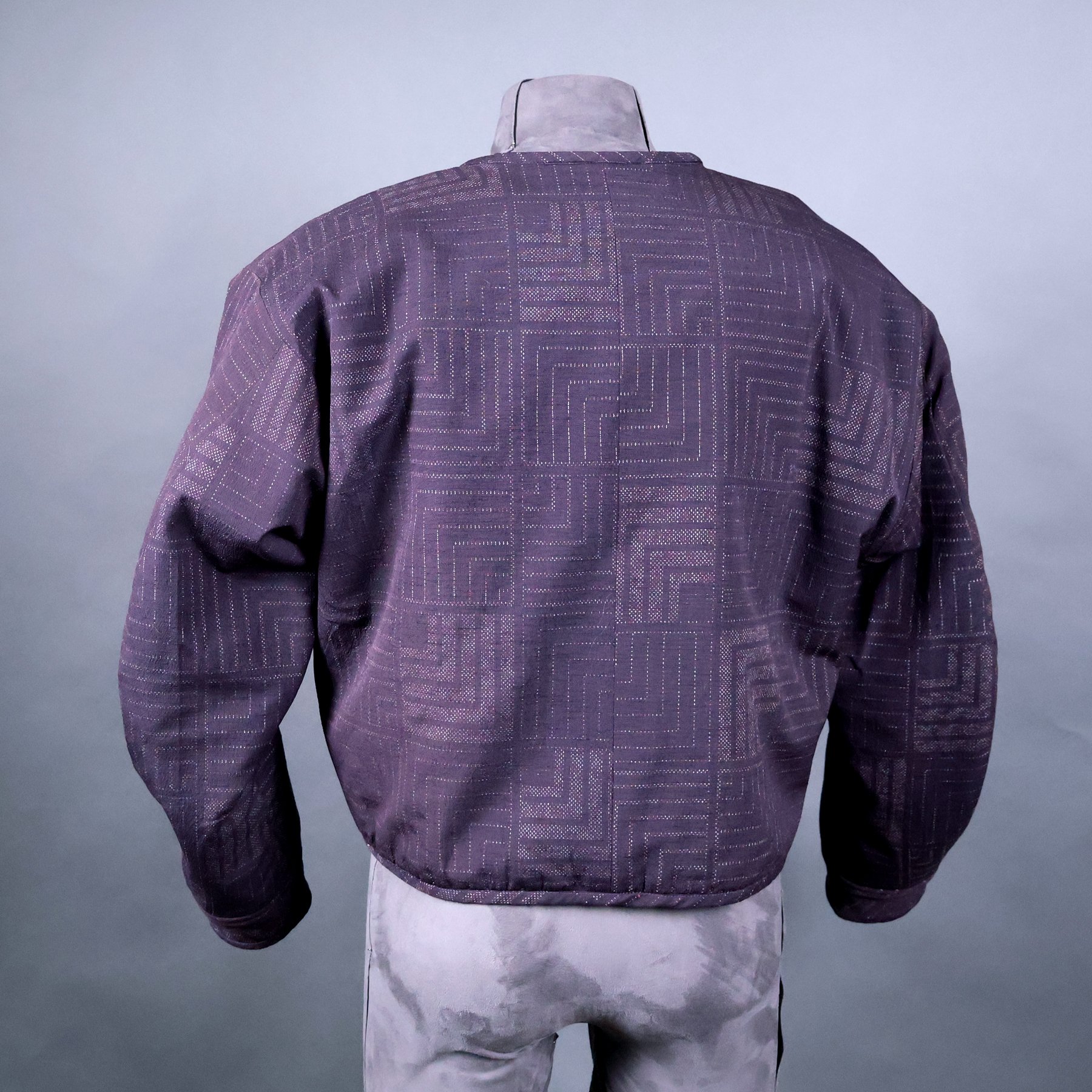
j23 - $2,600
John’s Notes:
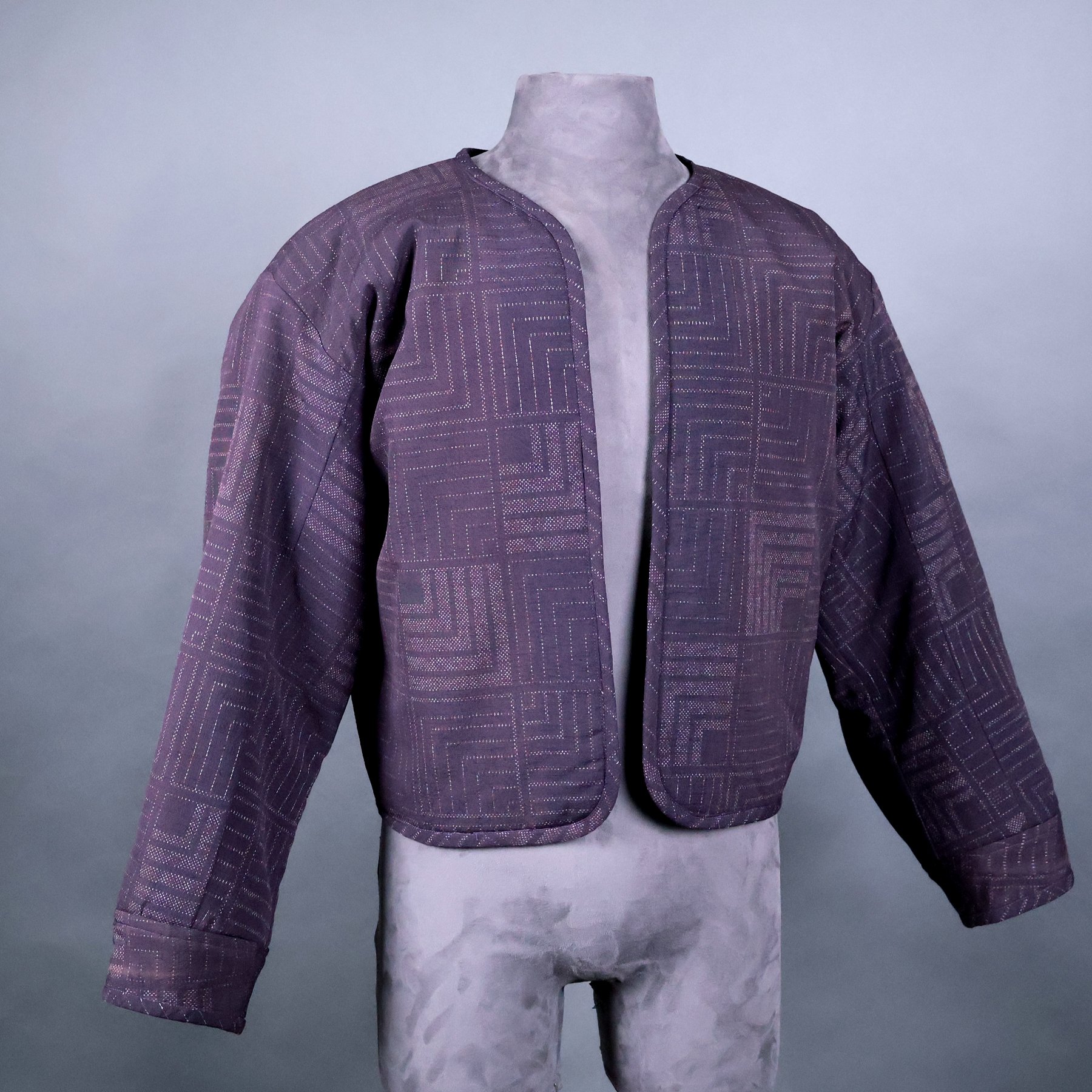
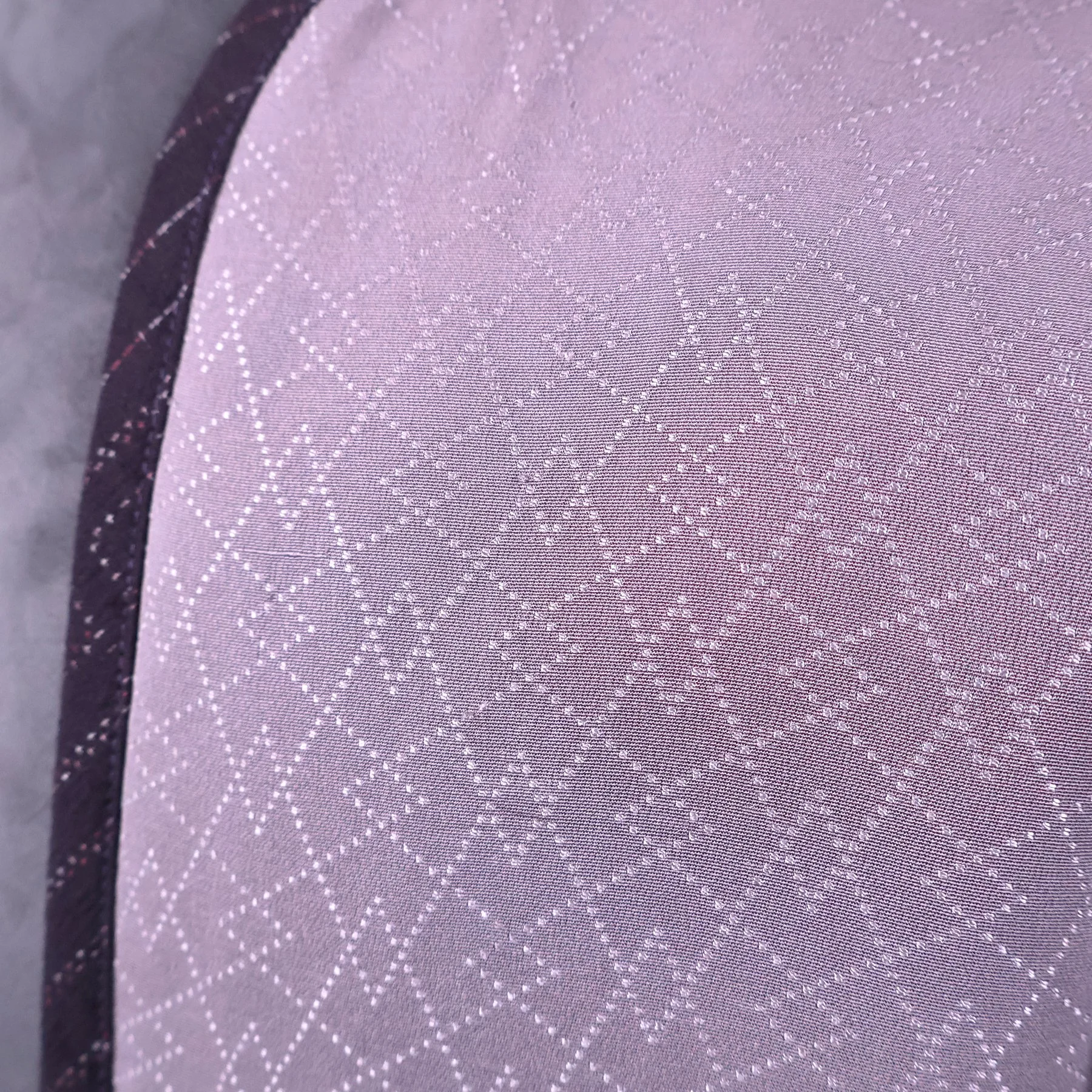
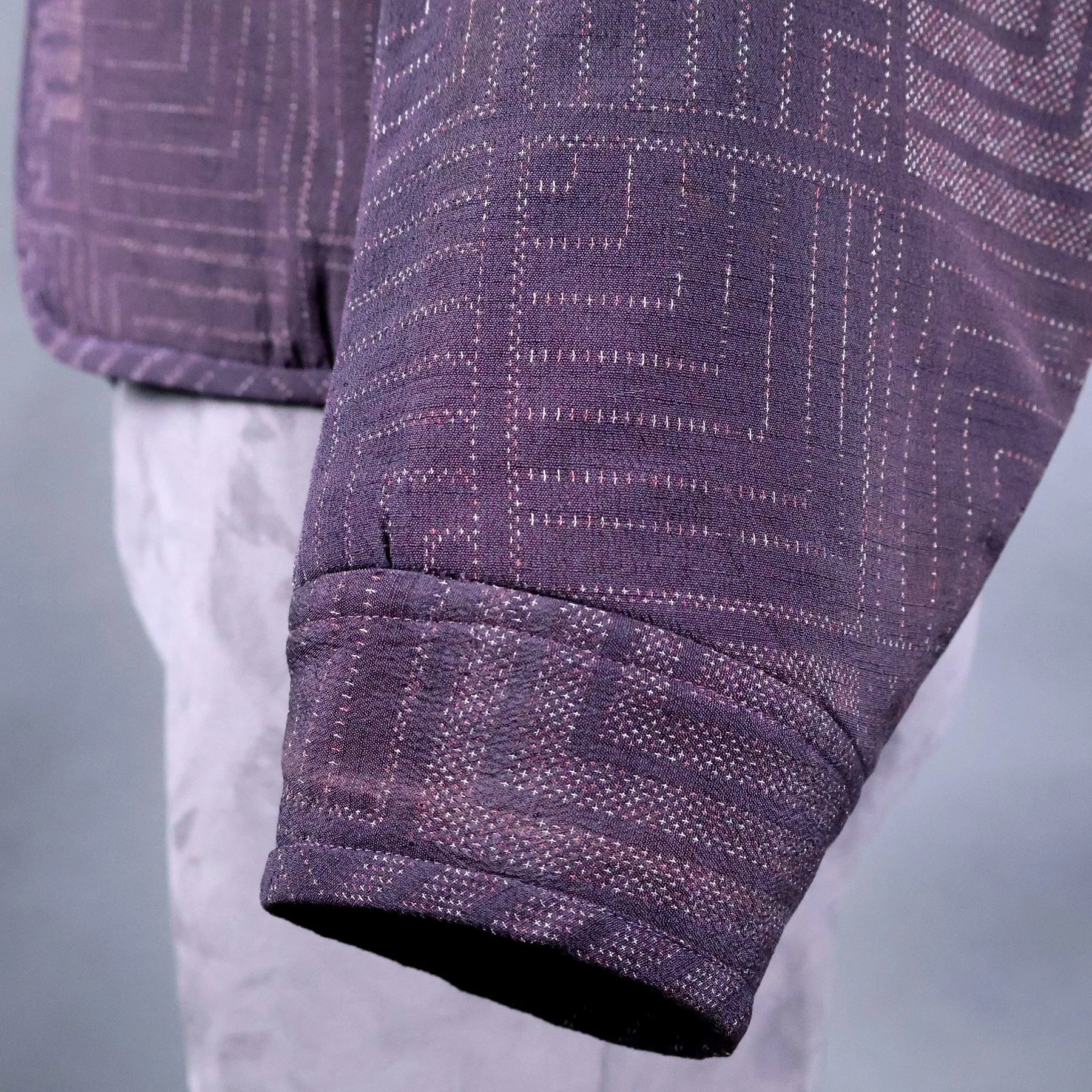
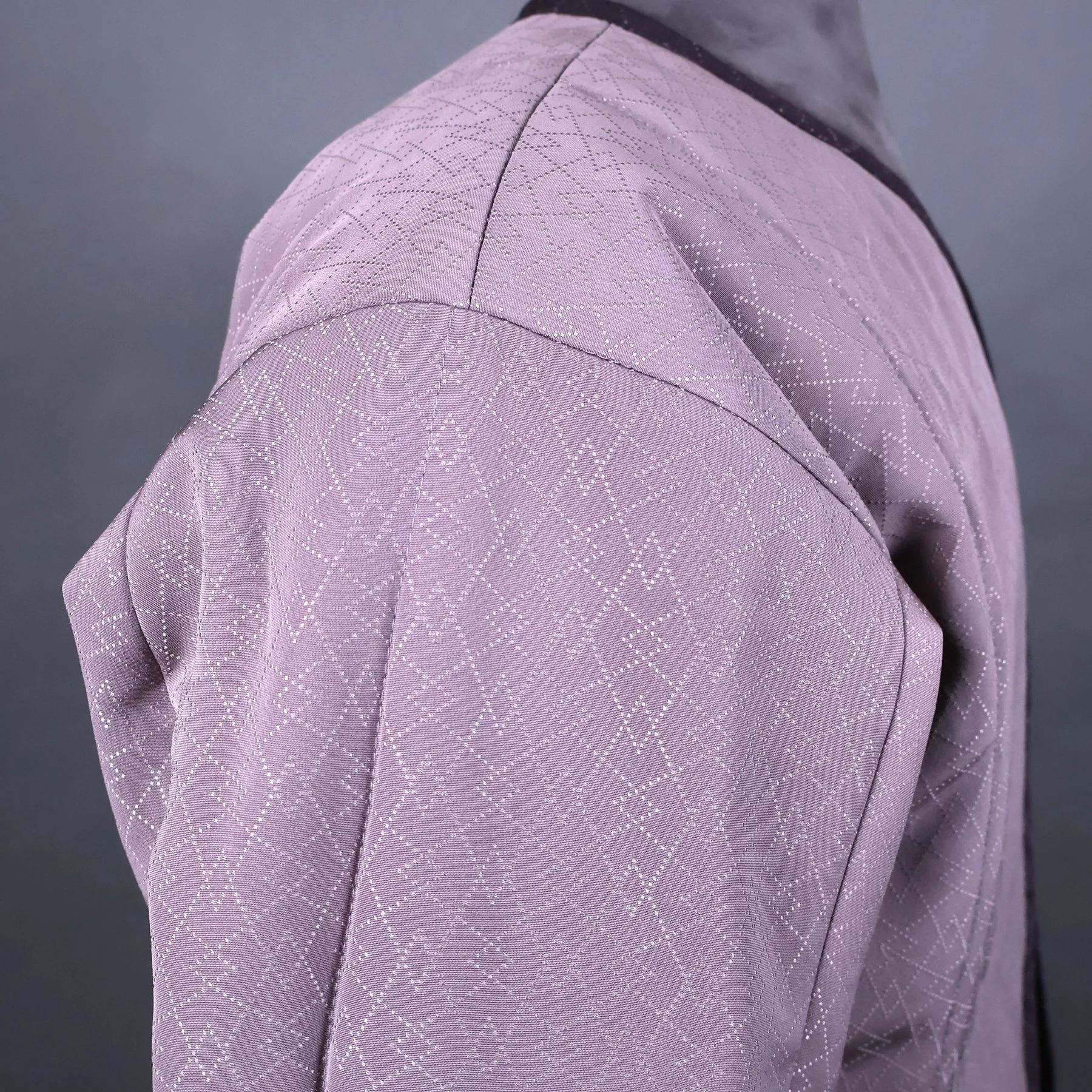
I like this heavyweight woven silk for the diagonal elements that emerge from a strictly horizontal and vertical design. Producing this very rational pattern in a moody violet and aubergine palette, however, feels very Japanese to me. The variegated colors in the warp yarns and the slubs in the weft give the design a natural, organic feel that softens the geometry of the weave pattern.
The lining comes from another vintage kimono that I disassembled, and has a wonderfully shiny luminescence. This woven damask silk also has a very smart, modern geometric design that telegraphs an edgy confidence on the part of the wearer.
The batting is wool; the dress form has a size 40 chest; and the sizing is equivalent to a medium-large. This iteration of my bomber jacket pattern has some gathering at the hips, and minimal quilting on the interior.
J24 - $2,800
John’s Notes:
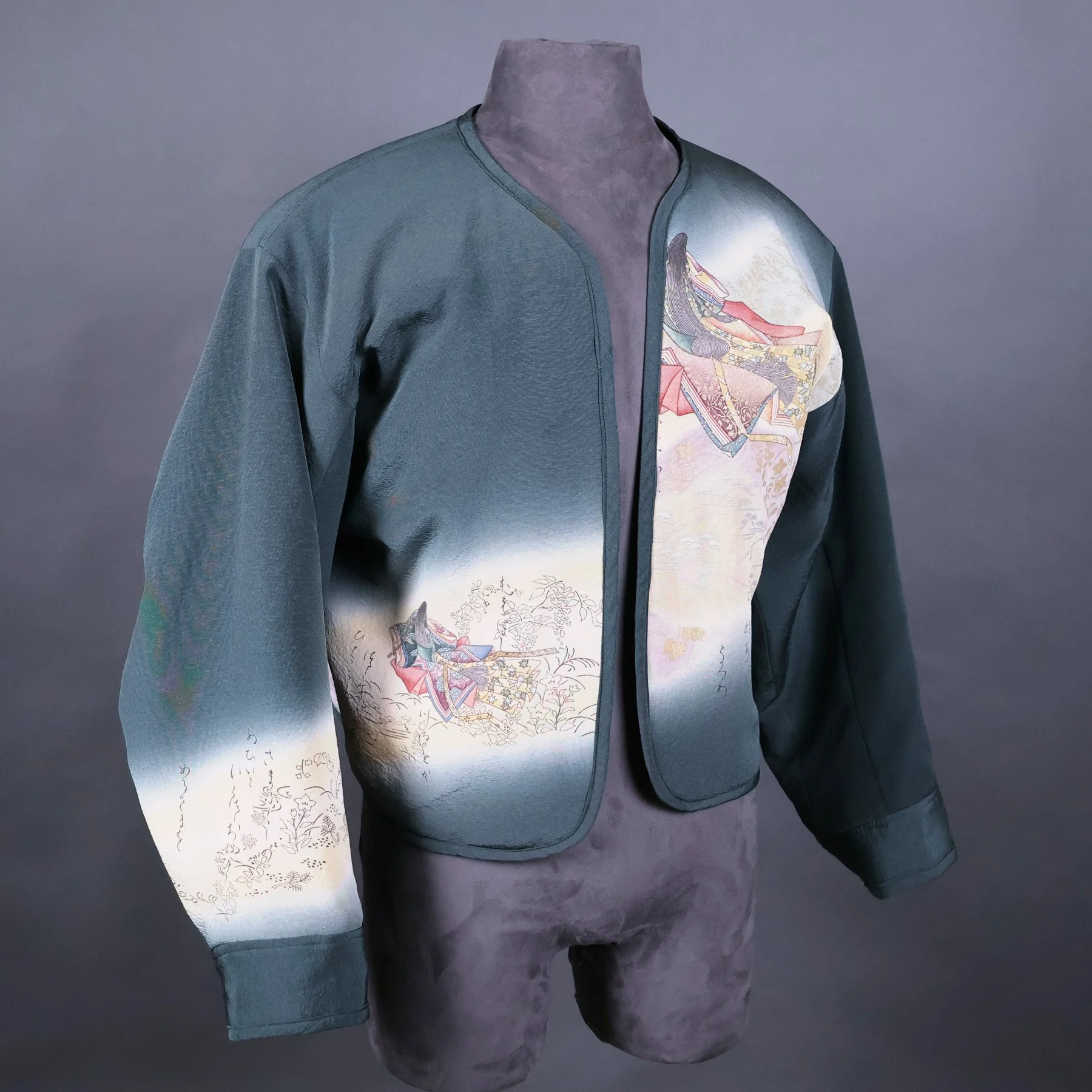
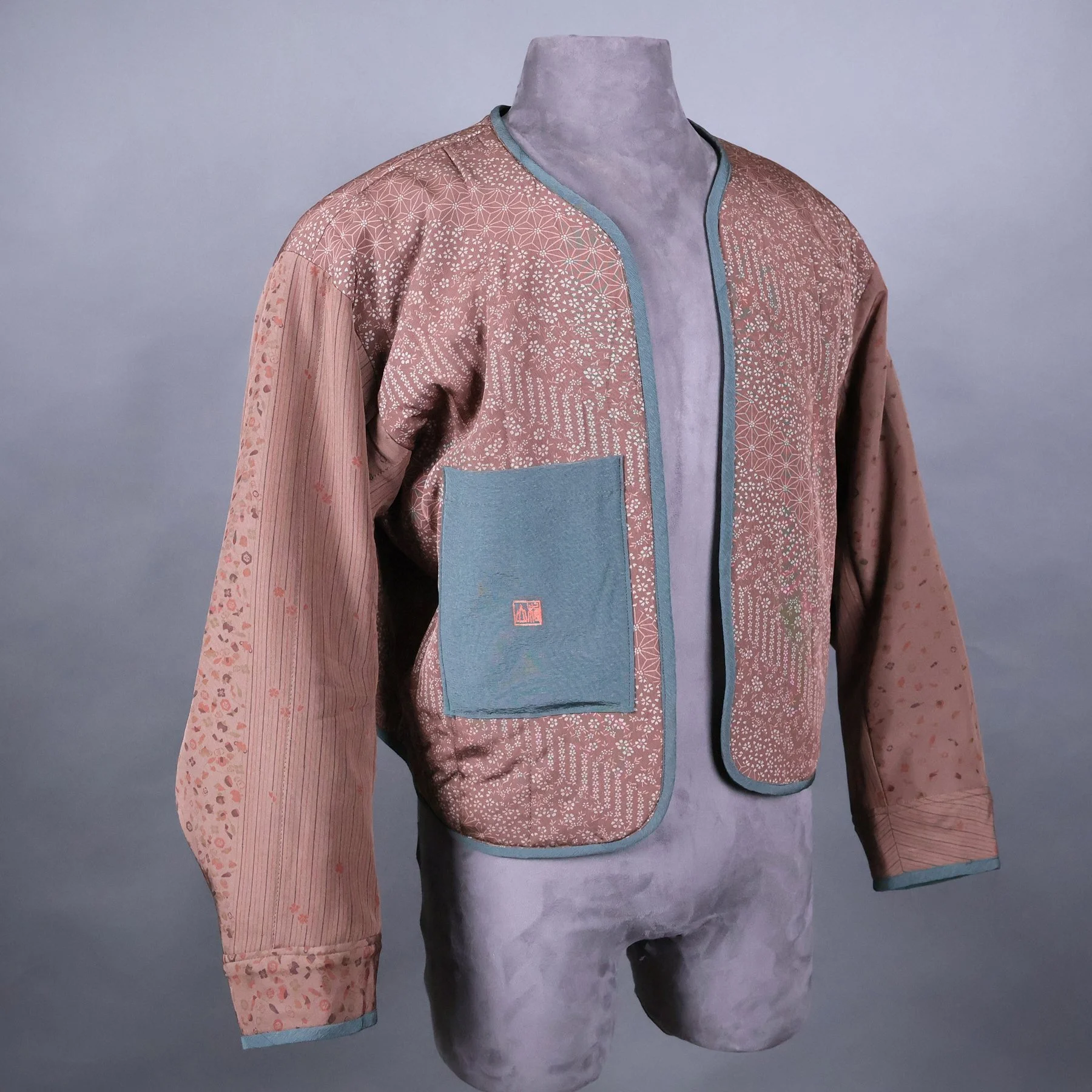
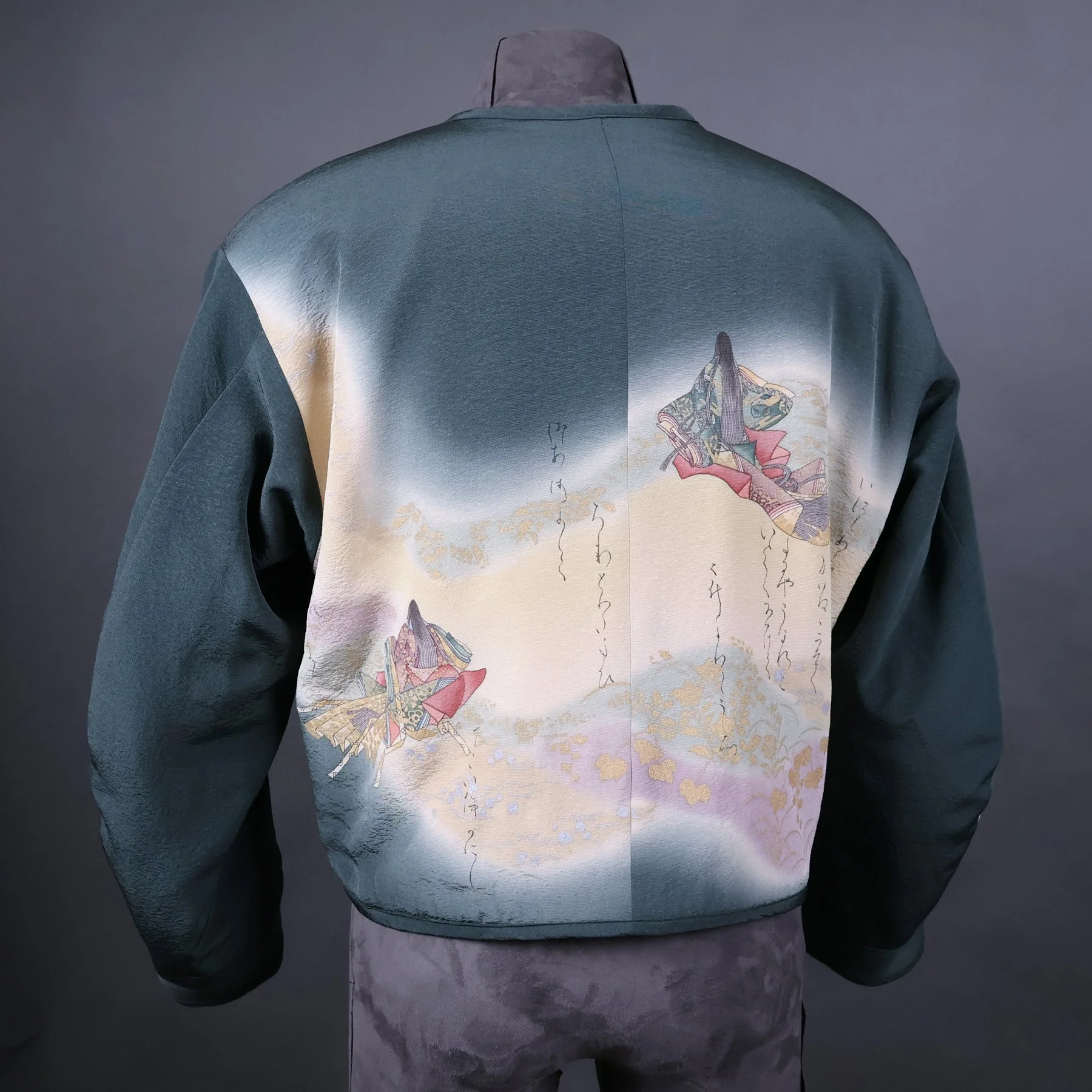
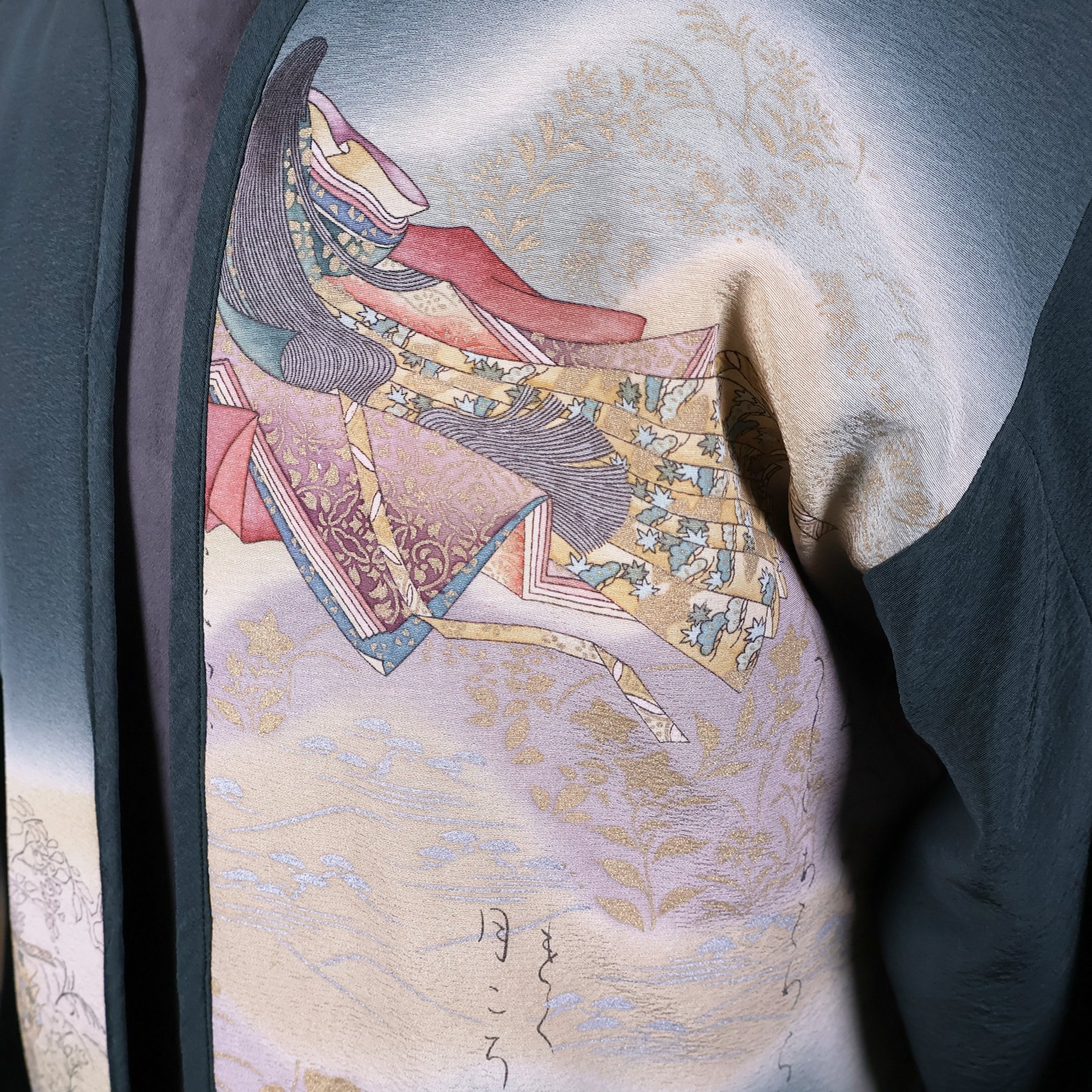
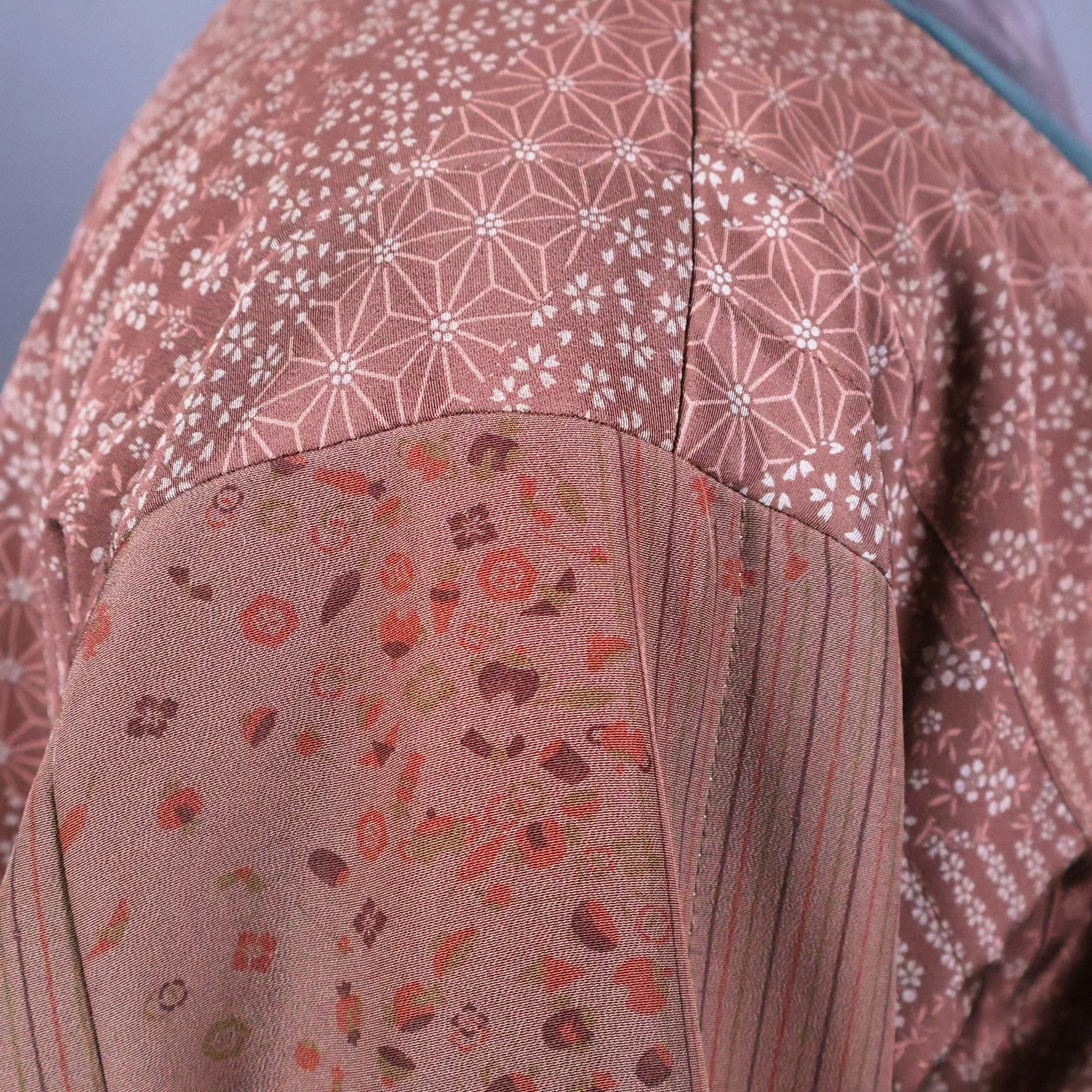
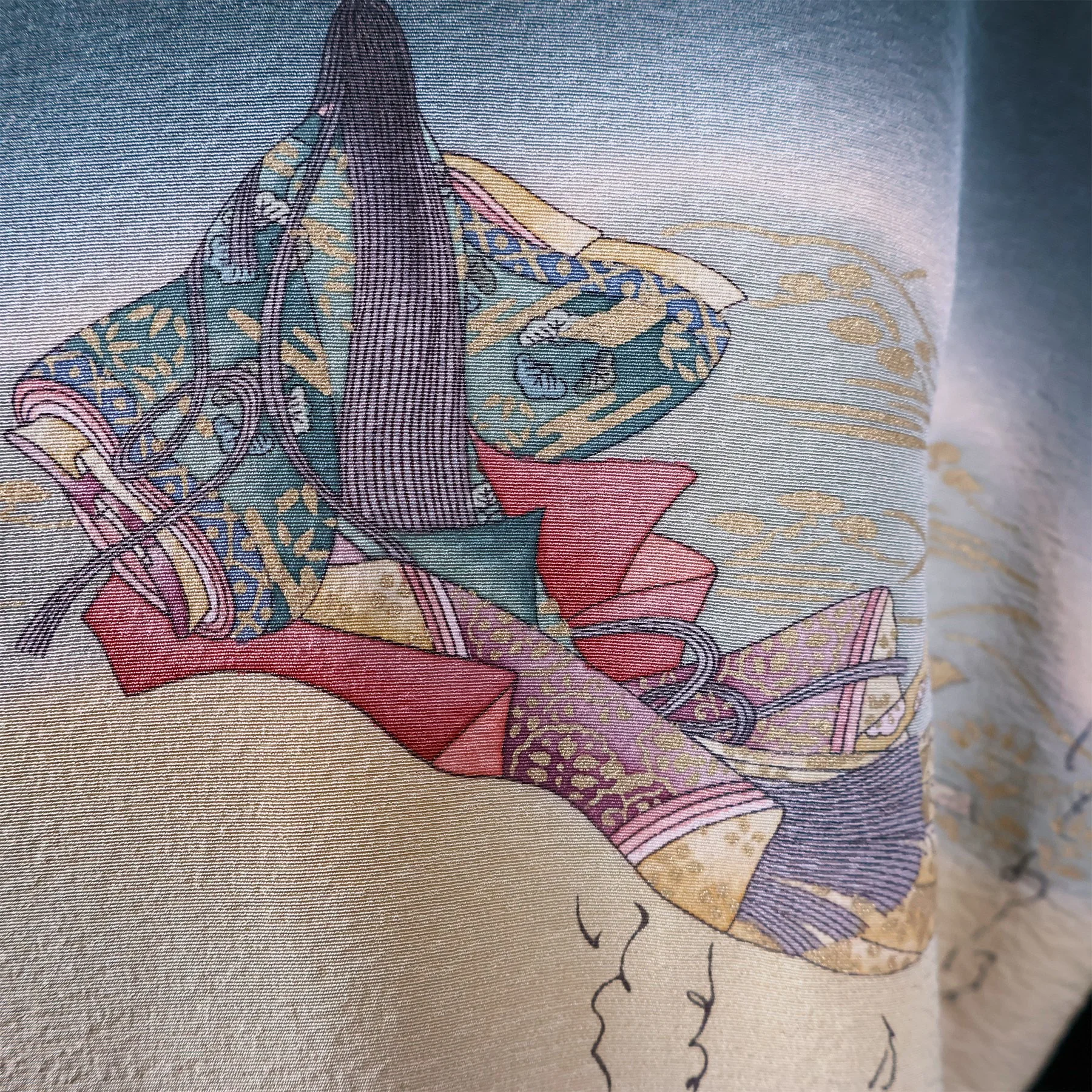
For the exterior of this jacket, I repurposed silk from a rare tomesode kimono featuring vignettes from The Tale of Genji, Japan's most famous book, and one of the world's first novels. The author is depicted wearing voluminous, layered kimonos in the style of a Heian-era noblewoman. The caligraphy script quoting famous passages is stenciled with dye and not written with an ink brush. These pictorial motifs originally adorned the bottom hem of the kimono, but I was able to reposition them around the torso. And I placed the signature of the artist responsible for this masterful piece of Japanese textile art on an interior pocket. The lining is comprised of stenciled komon silks from two different kimonos I deconstructed. One combines a geometric pattern with tiny flowers, and the other combines stripes with children's toys.
The dress form has a size 40 chest, and the sizing is equivalent to a medium-large.
J25 - $2,200
John’s Notes:
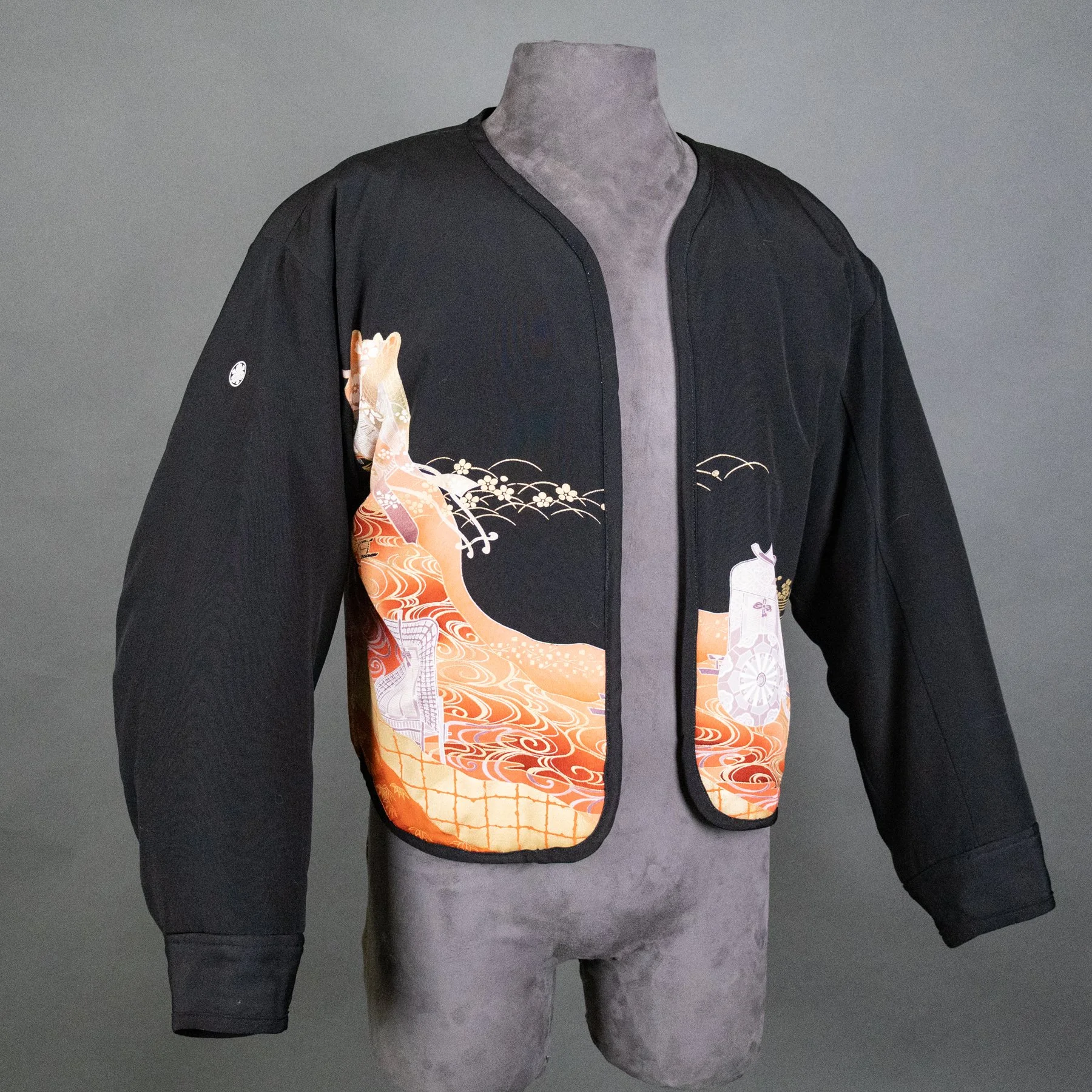
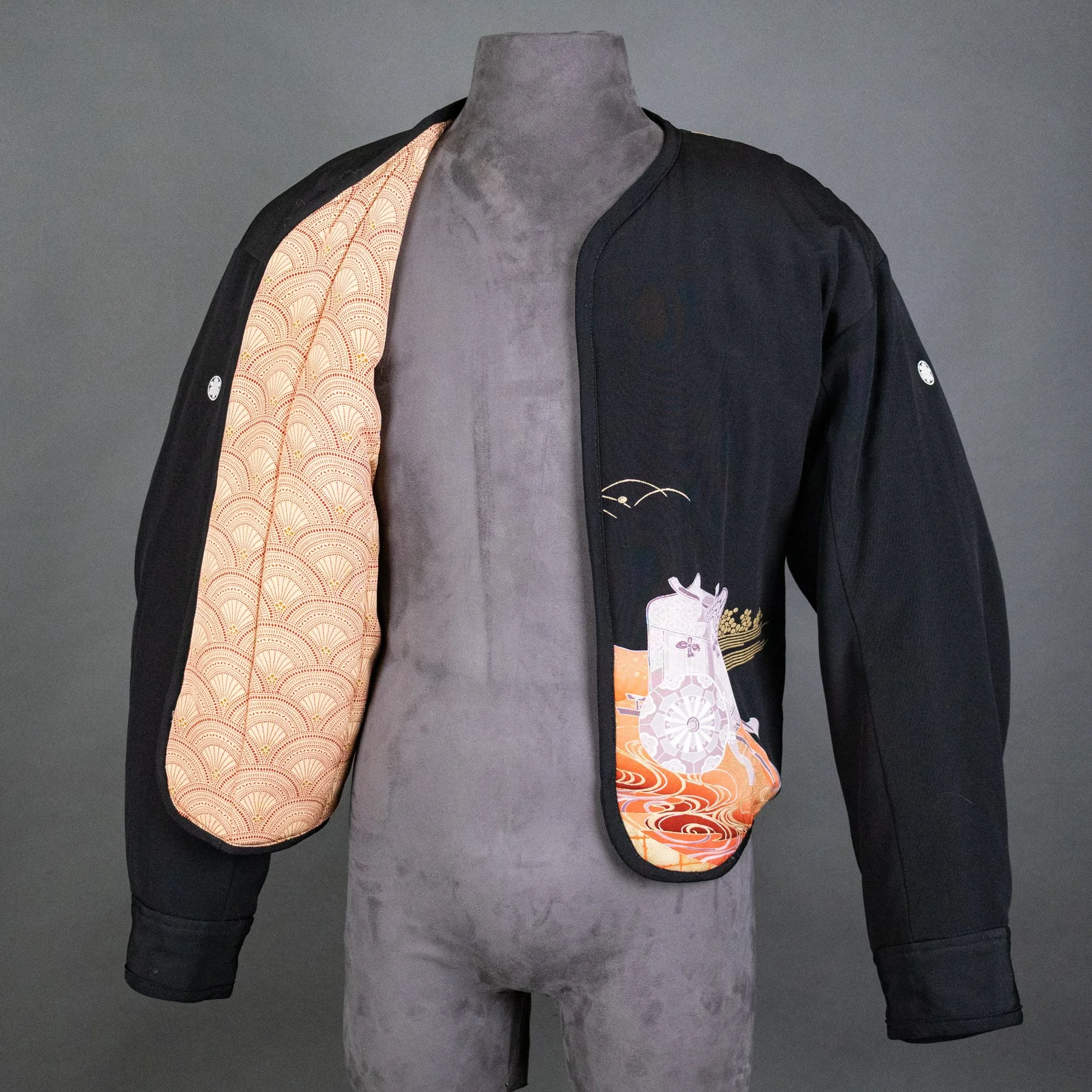
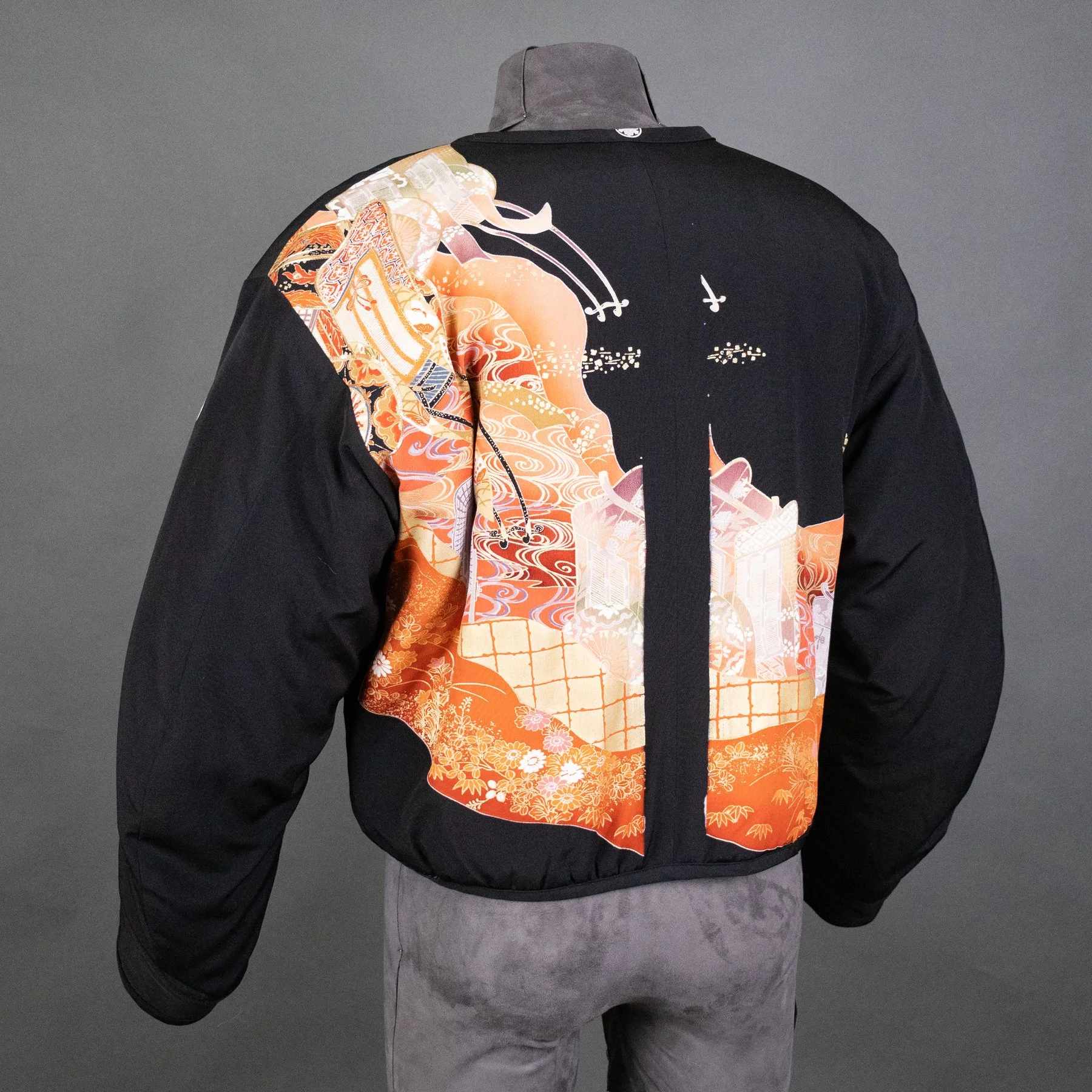
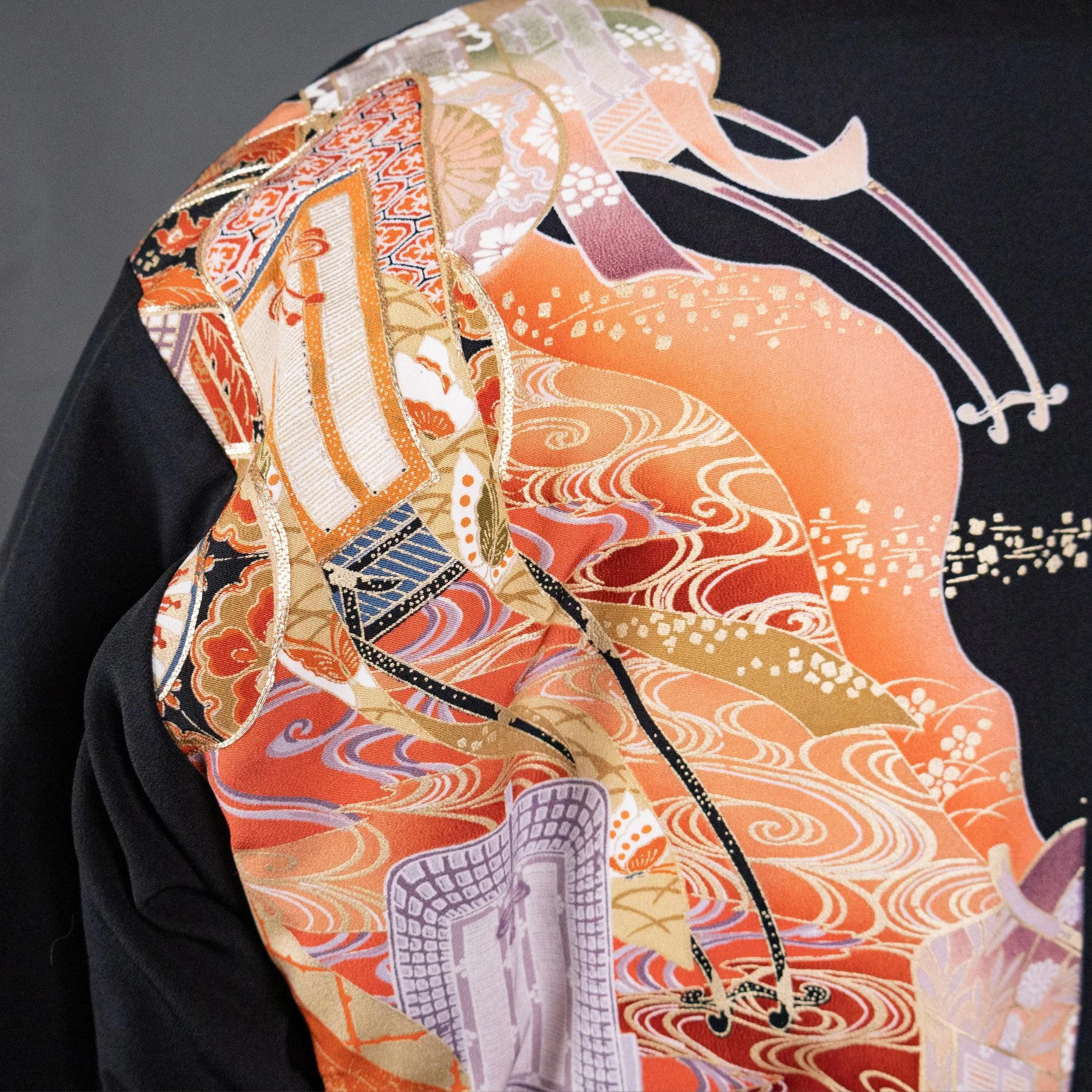
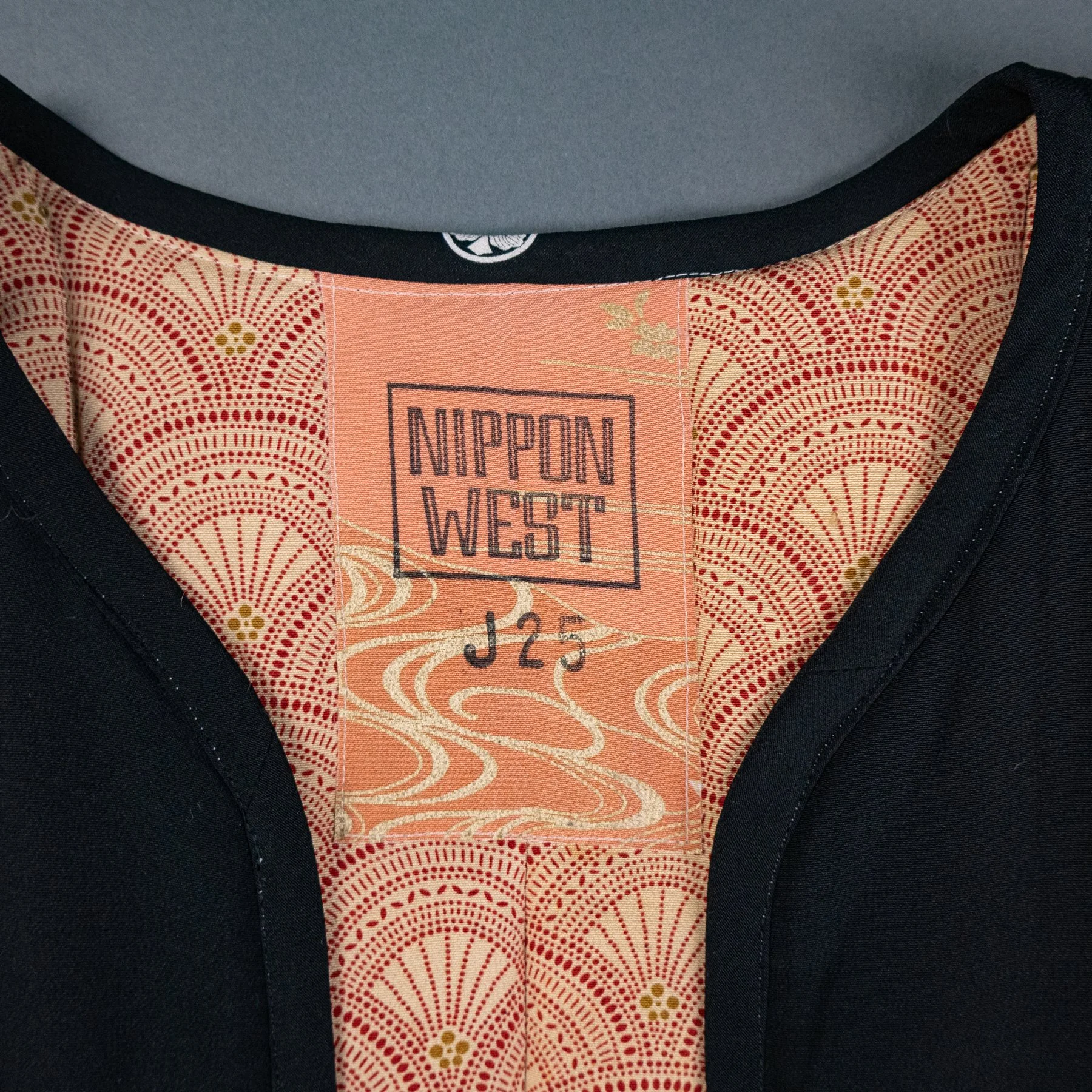
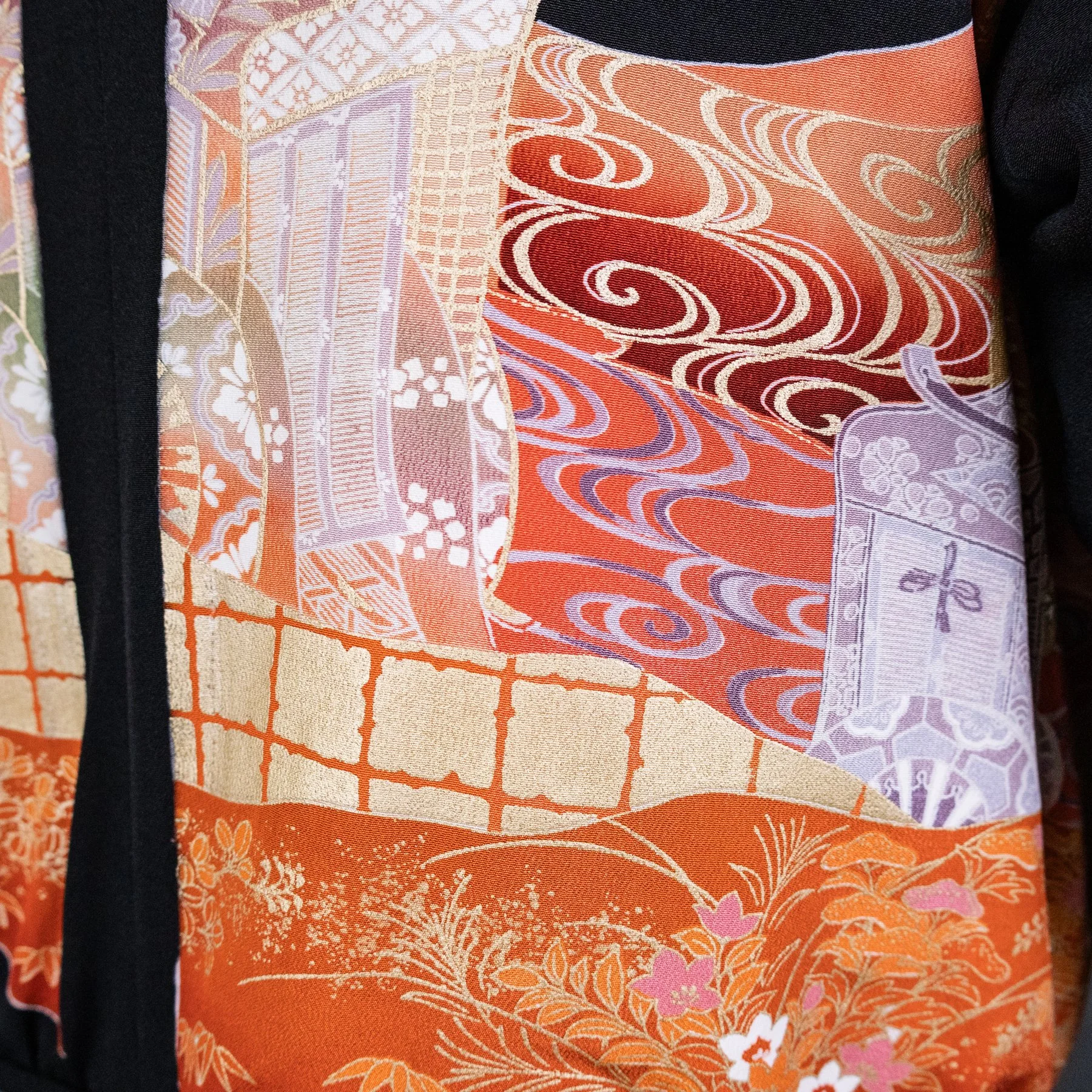
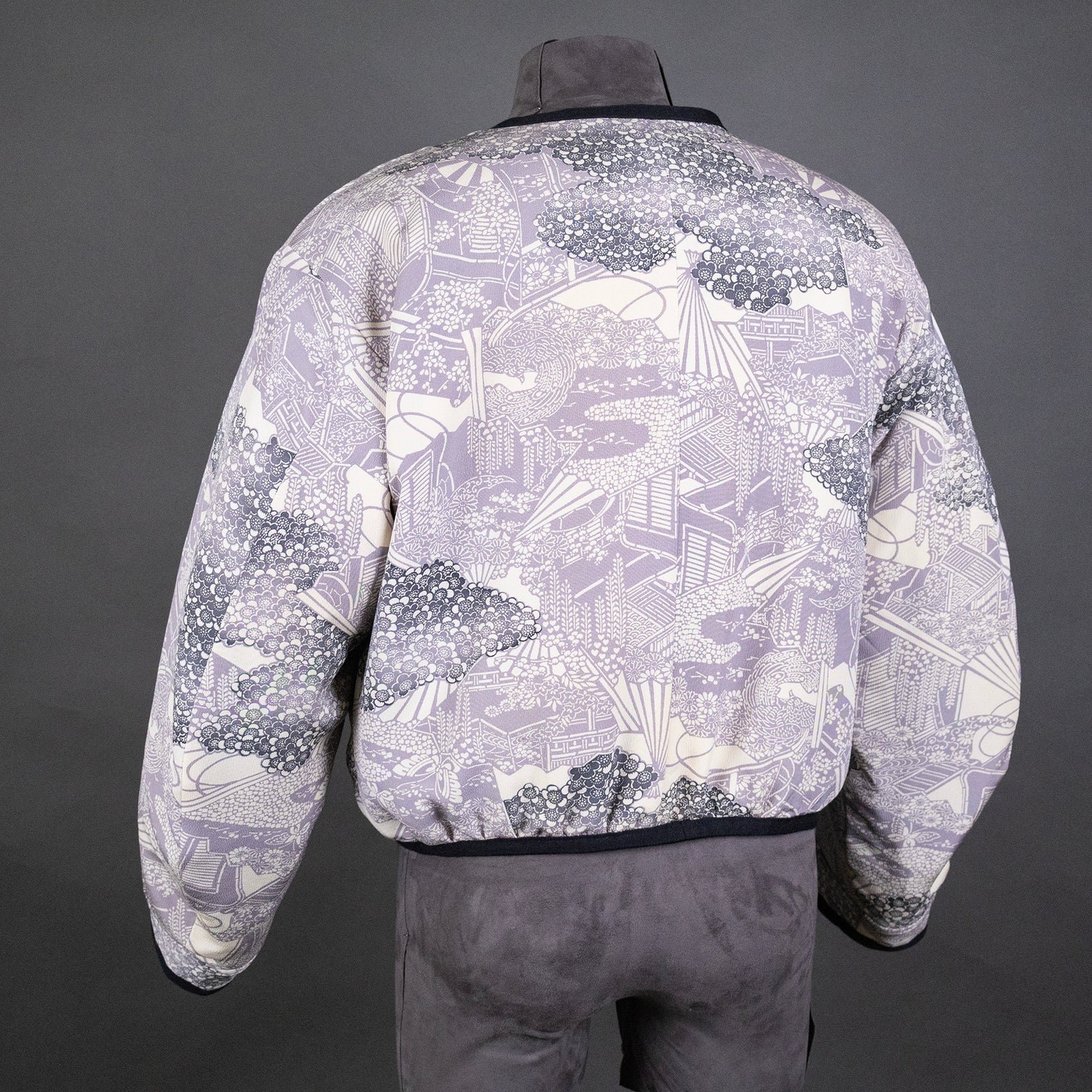
I made this jacket from a vintage tomesode kimono that I disassembled. A very formal, special occasion kimono, tomesode feature five family crests and a non-repeating design that cascades from the hips to the ground. This one also incorporates gold thread embroidery.
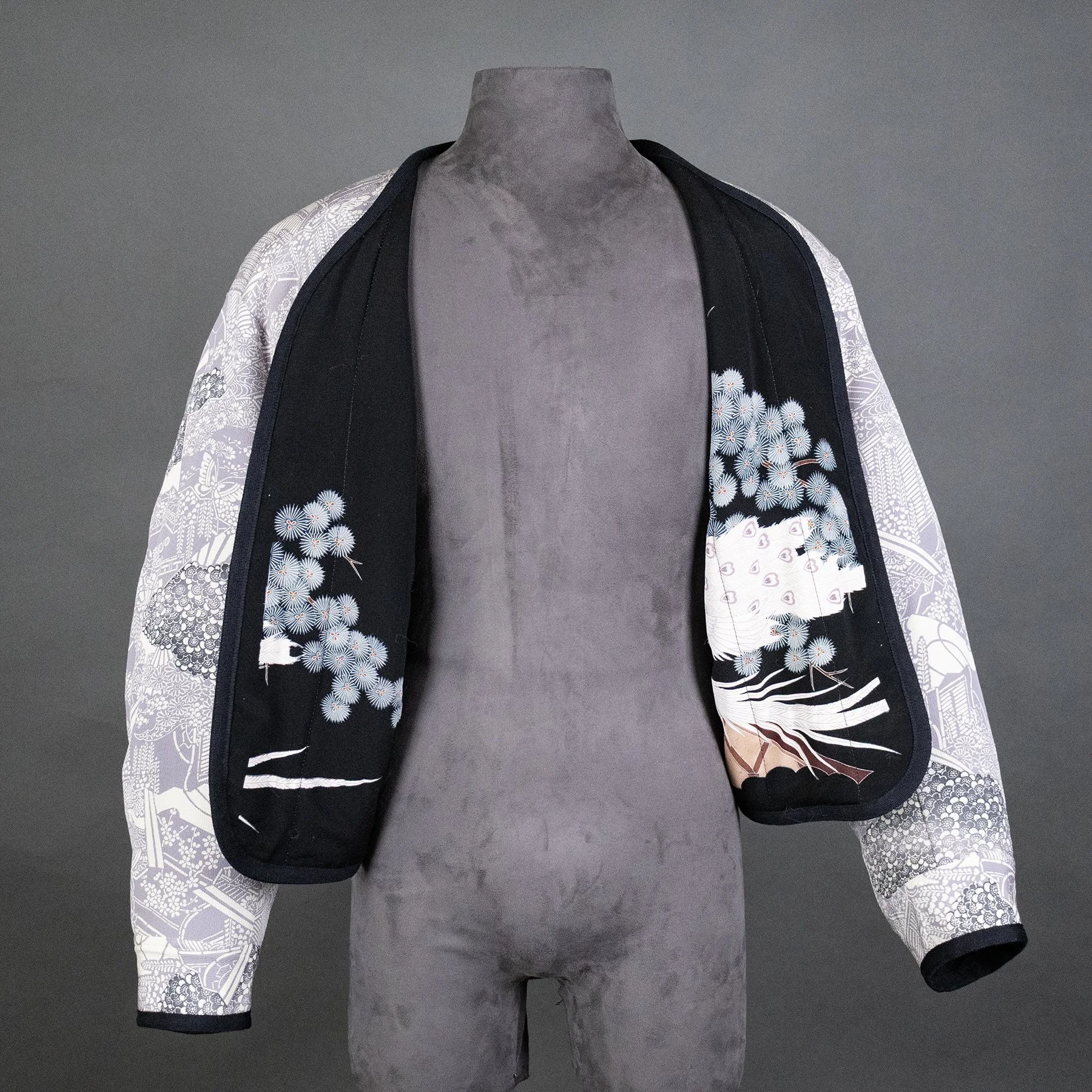
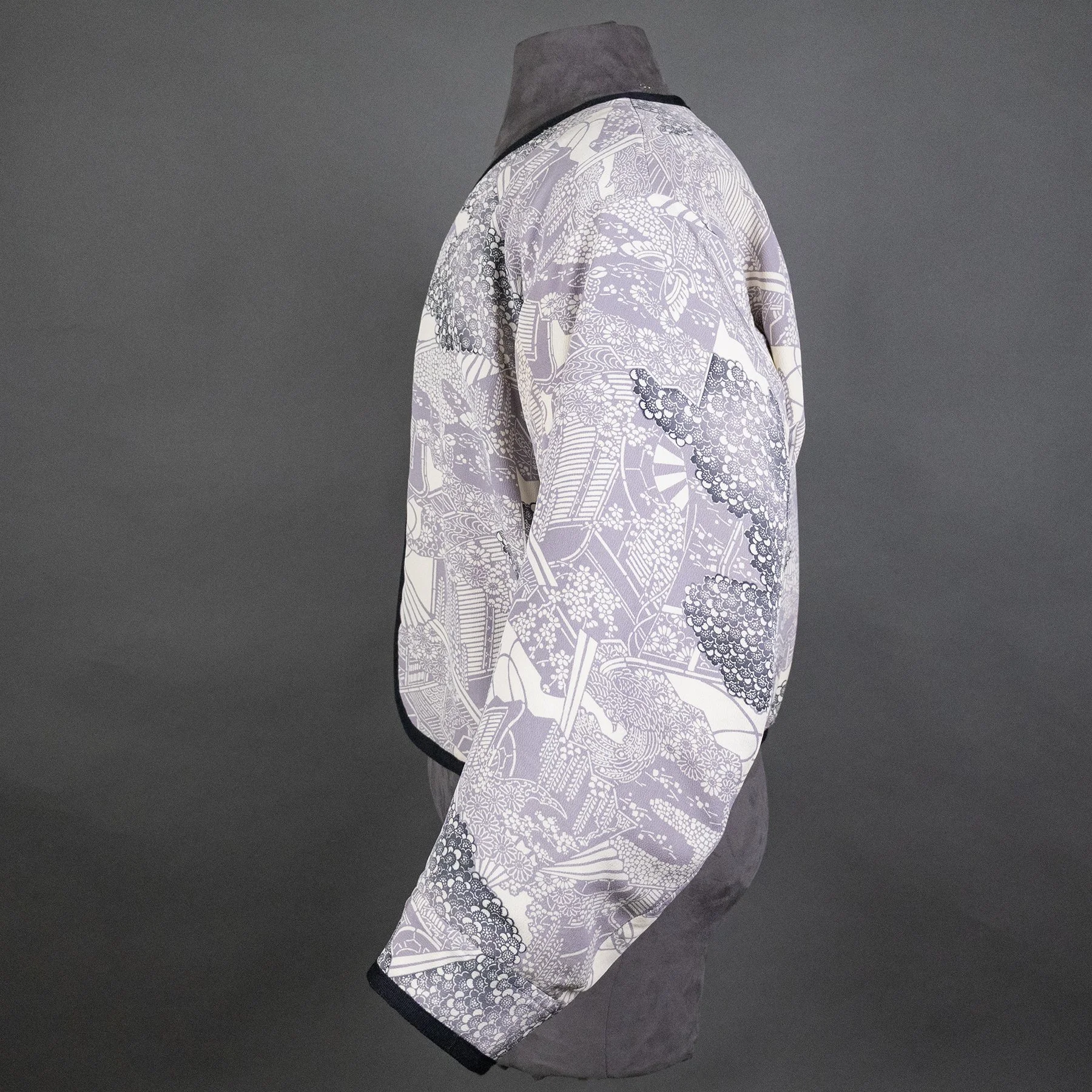
The lavish scenes of an imperial cart in an autumn landscape now appear on the torso of this bomber jacket, and I was able to repurpose three of the family crests: two on the sleeves and one on the back collar. The back of the jacket shows almost the entirety of the fabric width and how the design motifs overlapped when painted and dyed to allow for a perfect join when seaming. The stenciled silk crepe on the lining comes from another vintage kimono I took apart. I quilted it with all natural wool batting and silk habotai backing.
The neckline to the back hem measures 22"; the neckline to the sleeve hem measures 31"; and armpit to armpit measures 26."
J26 - $2,900
John’s Notes:
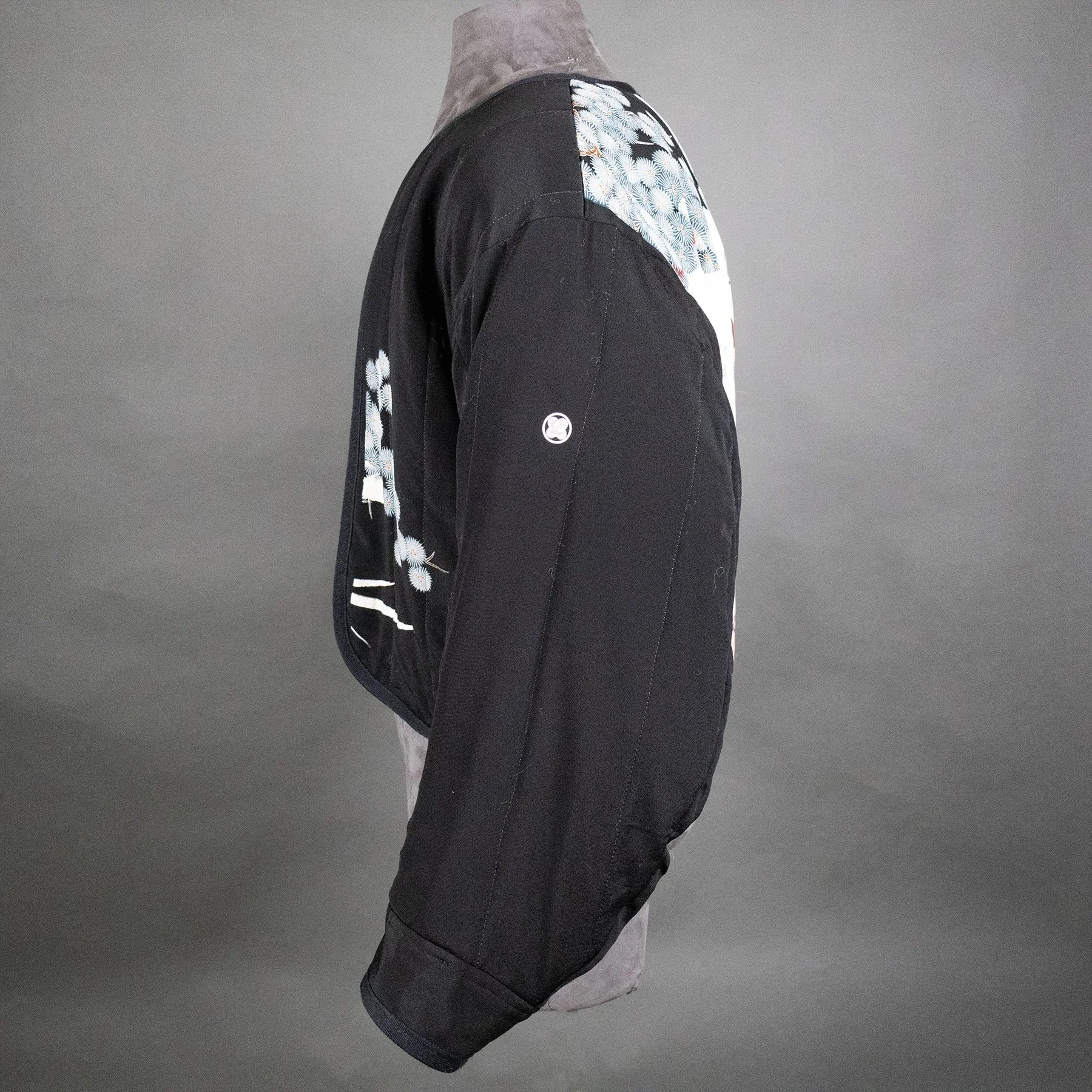
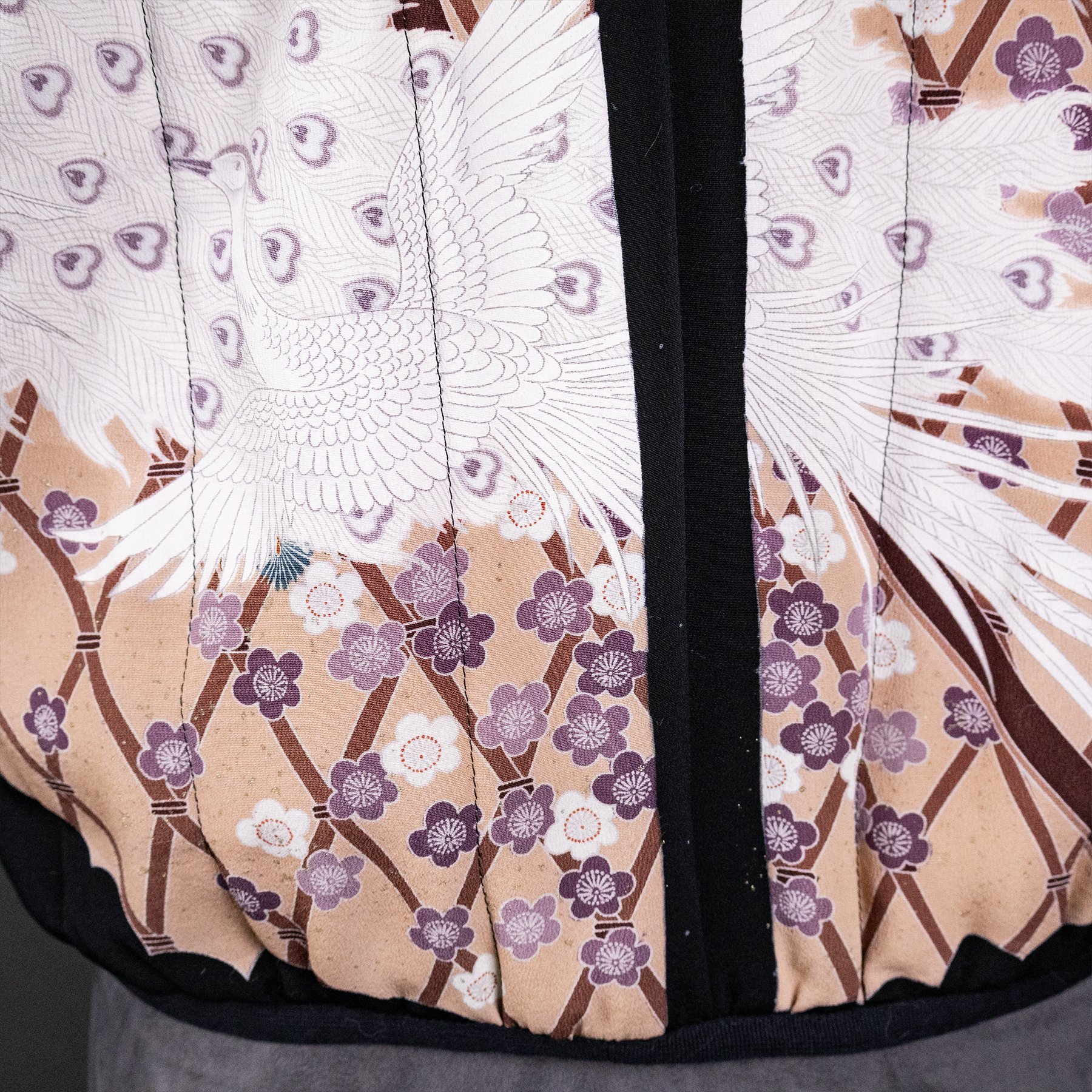
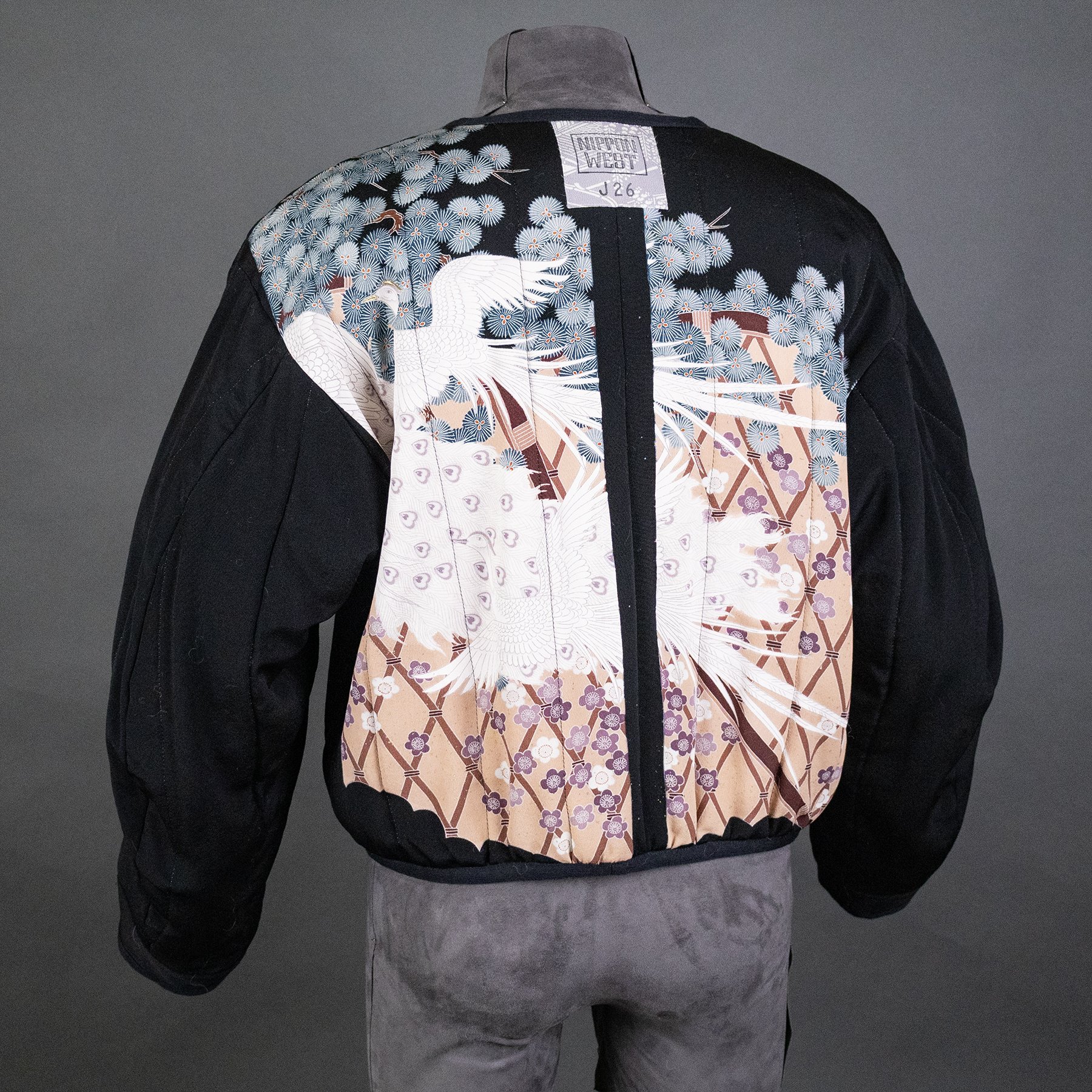
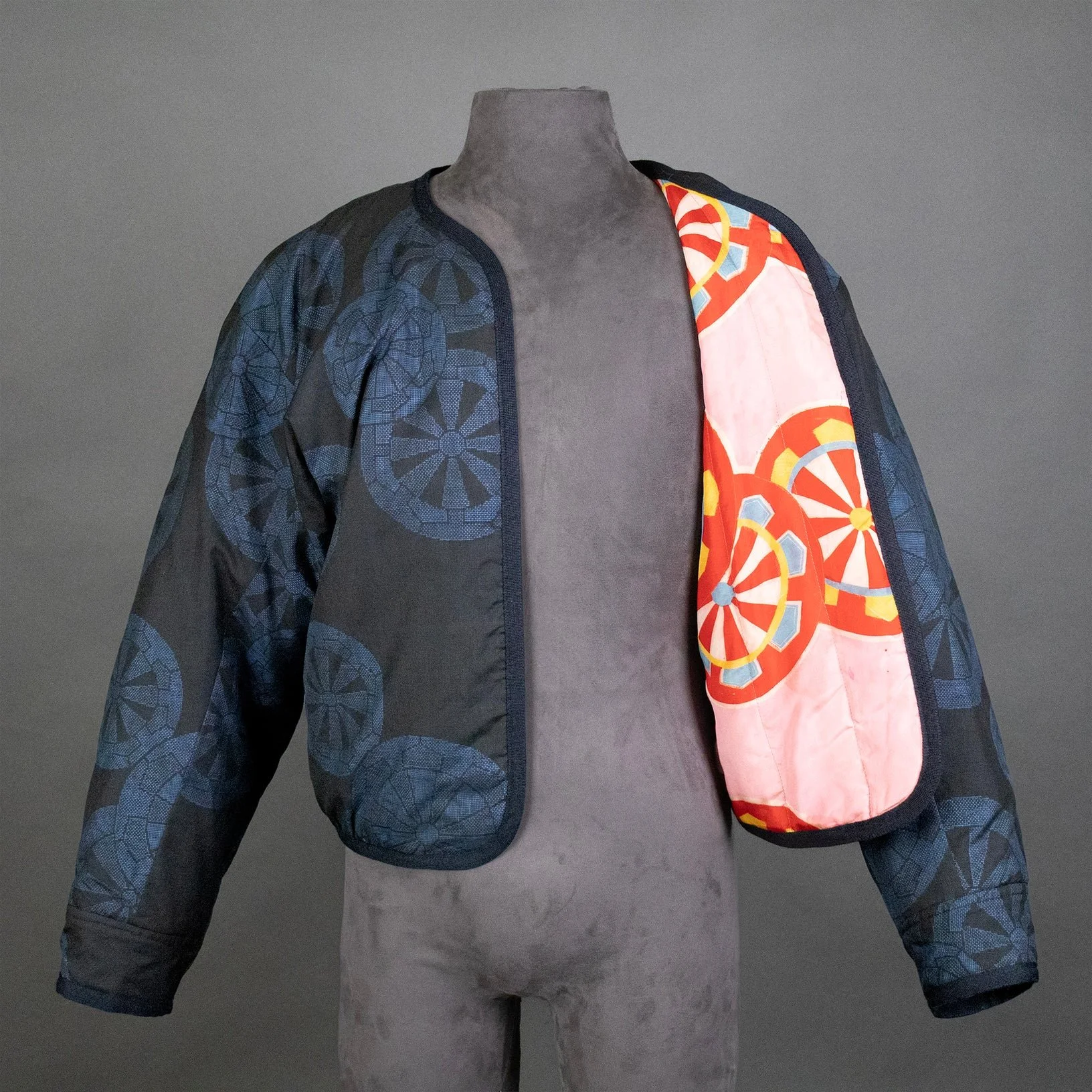
I repurposed the silk crepe for this bomber jacket from two vintage kimonos. The fabric for the outer layer is stenciled with a complex pattern including fans, butterflies, carts, wisteria, chrysanthemums, and hand-dyed cherry blossoms. And I made the quilted, inner lining from a formal visiting kimono depicting white peacocks, latticework, pines, and more cherry blossoms. The lining also features family crests of the patron who commissioned this elaborate kimono.I used unbleached, wool batting for the quilting and the edge tape is wool.
The back measures 22" from neckline to bottom hem and 26" armpit to armpit. The arm measure 30" from neckline to hem.
J27 - $1,800 - Sold
John’s Notes:
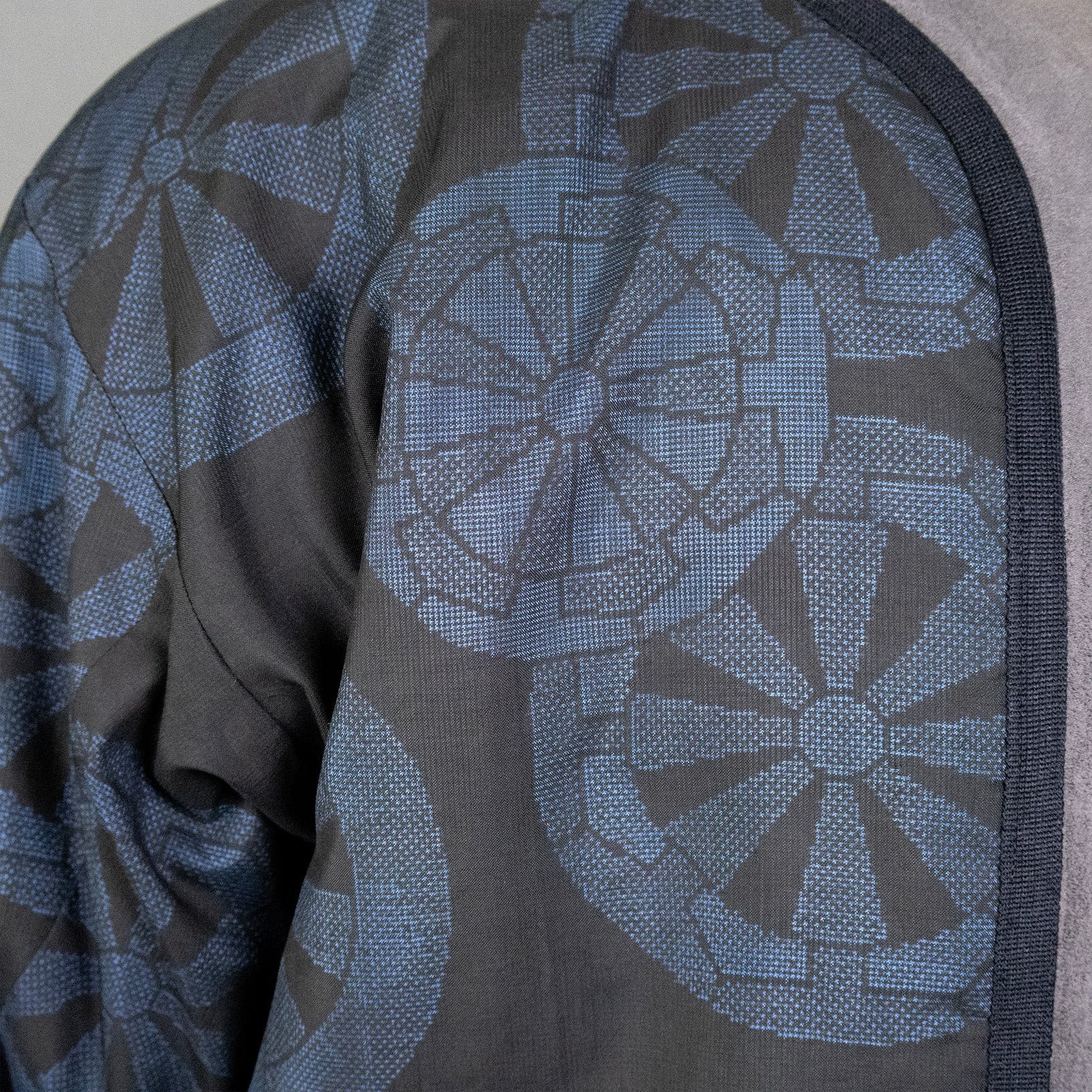
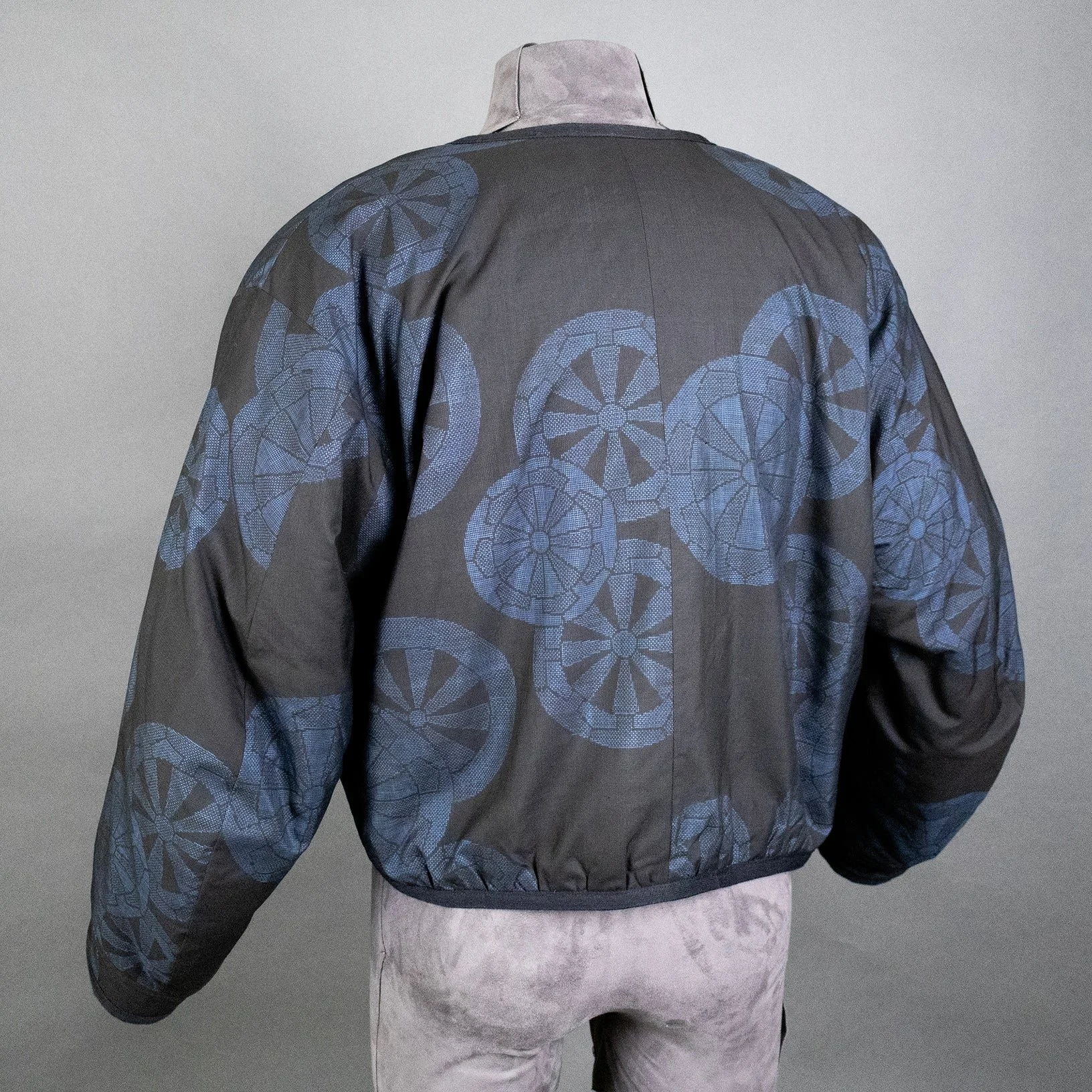
Wooden cart wheels are a recurring motif in traditional Japanese design, and this jacket includes two very different versions. I made the shell of this bomber jacket from a woven tsumugi kimono that I disassembled with an overlapping cart wheel design. The lining is made from silk kimono fragments that also depict cart wheels – though stenciled in vivid pink, red yellow and blue.
I quilted the interior panels with undyed wool batting and a silk habotai substrate. From the neckline to the rear hem measures 22" and from the neckline to the sleeve edge measures 31." The armpits are 26" in distance.
J28 - $2,100
John’s Notes
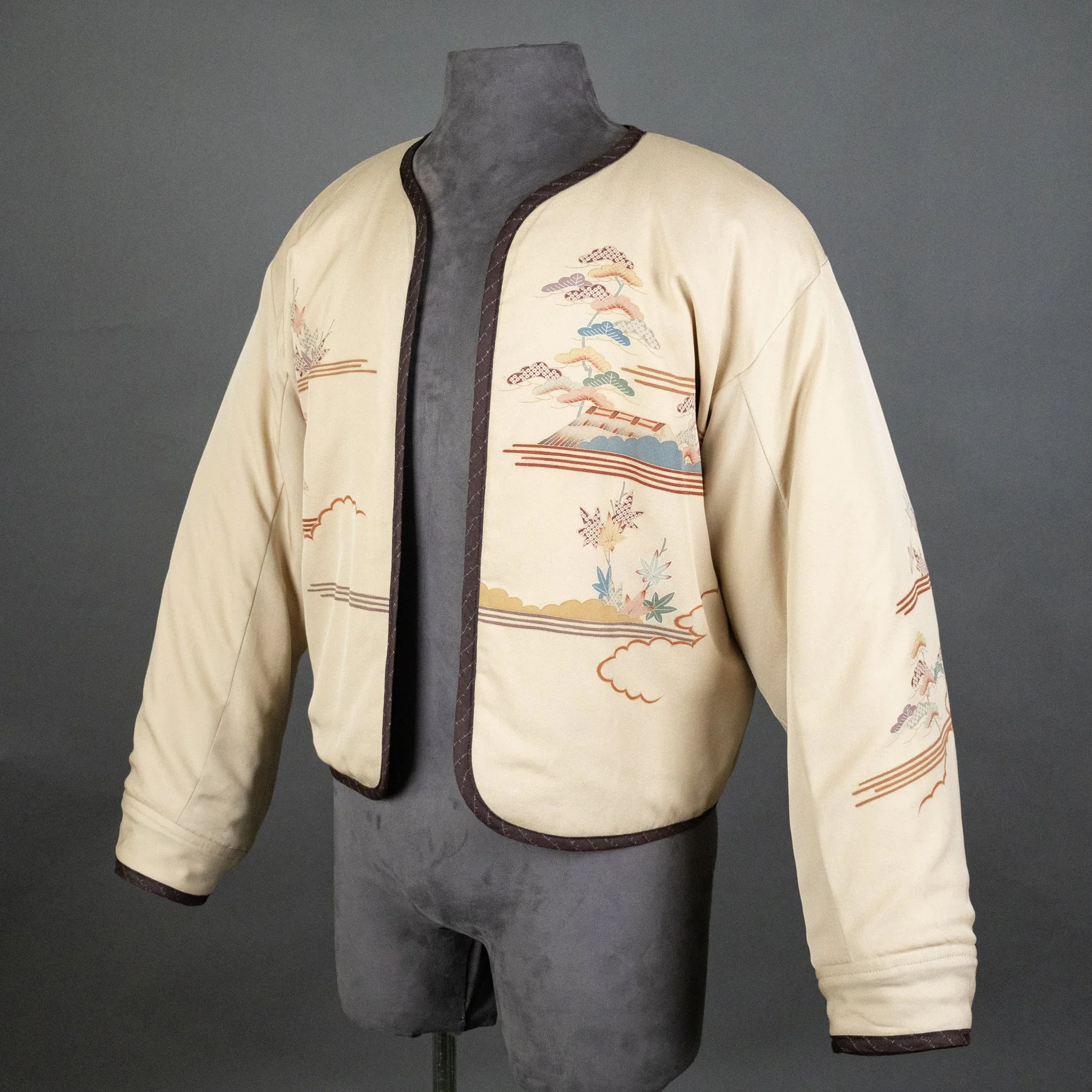
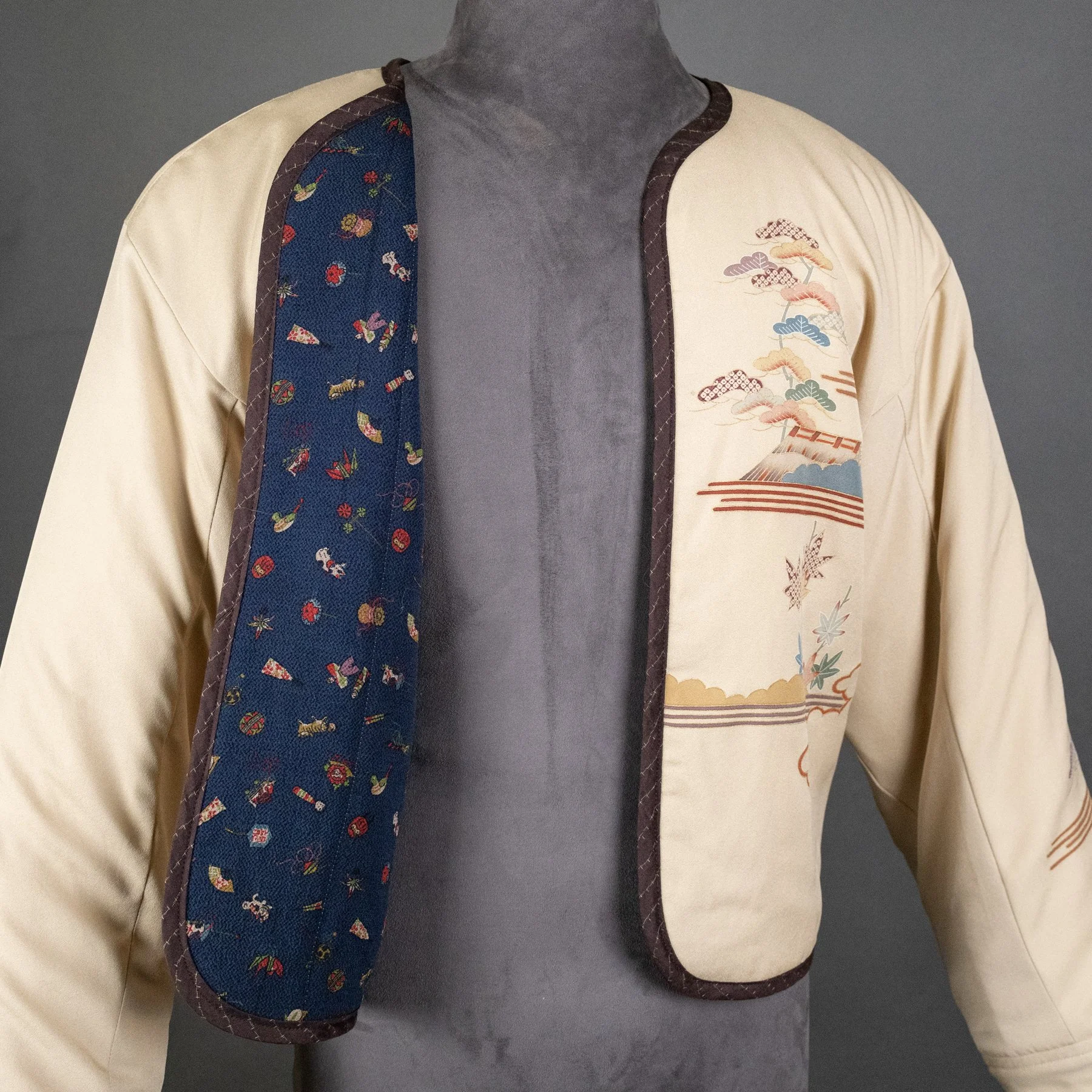
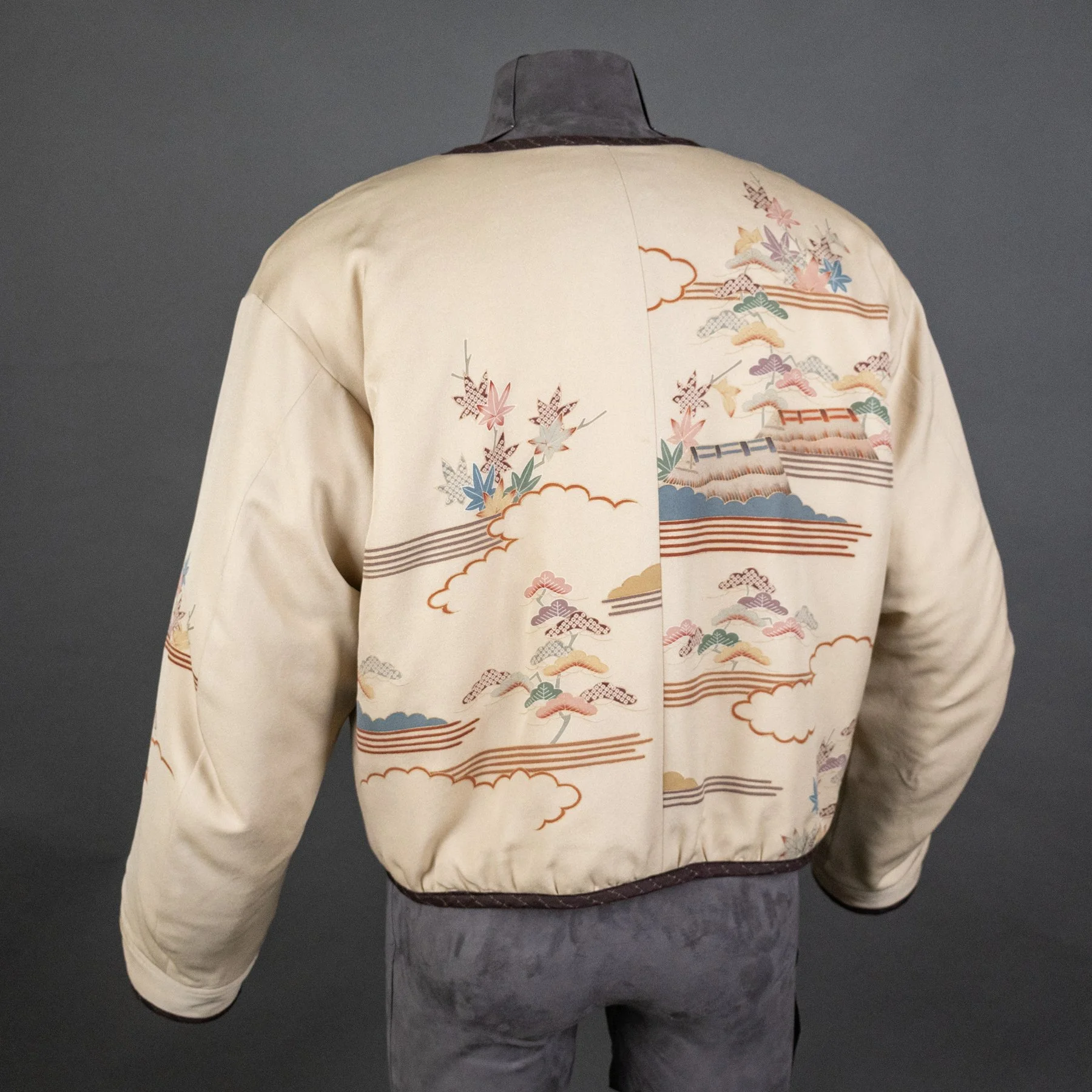
This bomber jacket features a landscape design that sums up everything I love about Japanese surface design: abstracted symbols of nature, cropped vistas with partial reveals, bold organizational geometry, and large swaths of emptiness. I am particularly happy that I was able to align the pattern on the left sleeve with the horizontal motifs on the rest of the jacket. Narrow Japanese silks are not always so amenable.
I made the lining from another vintage kimono that I deconstructed. It's a heavyweight silk crepe stenciled with a variety of children's playthings.
The back measures 22" from neckline to bottom hem and 26" armpit to armpit. The arm measure 30" from neckline to hem.
J29 - $2,400
JOHN’S NOTES
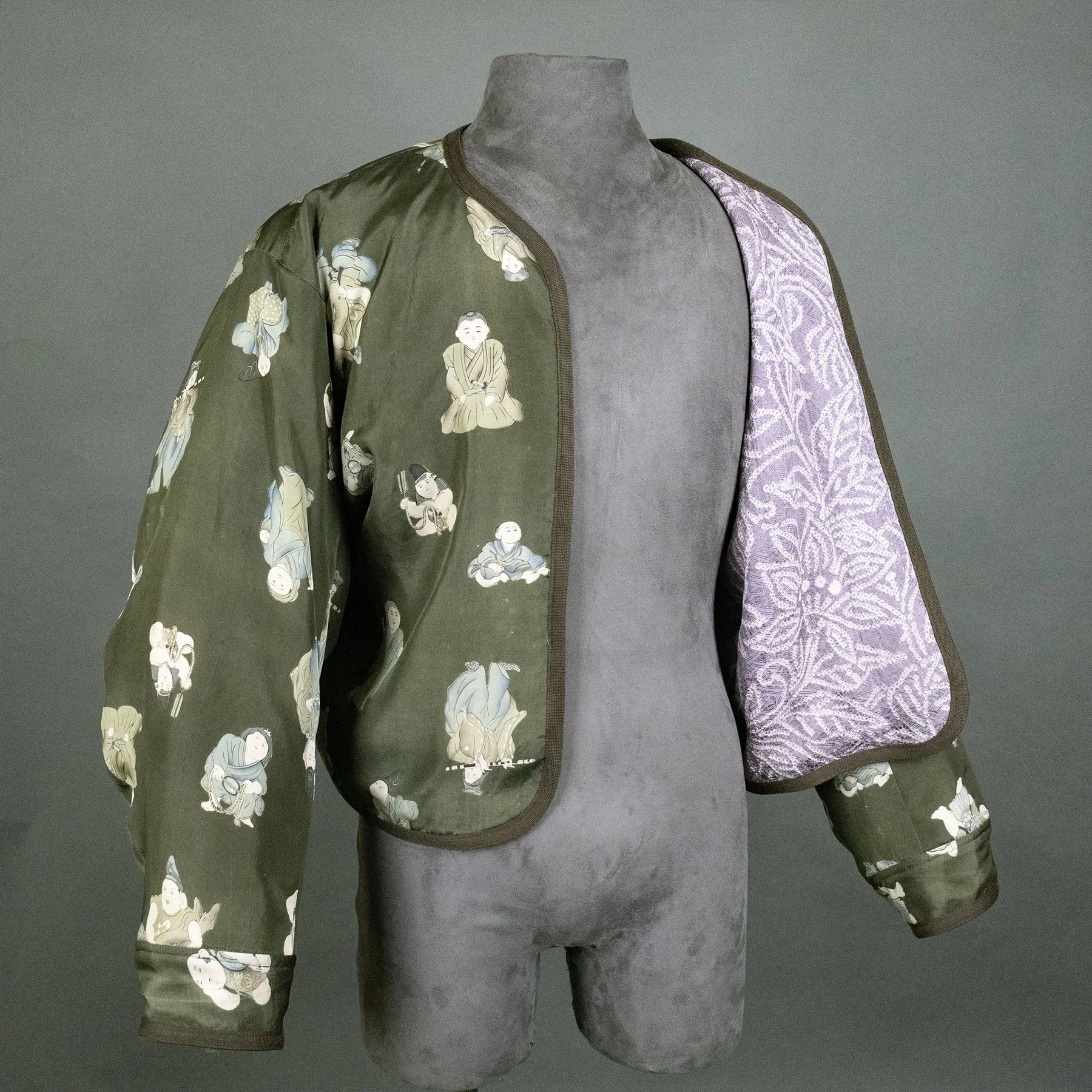
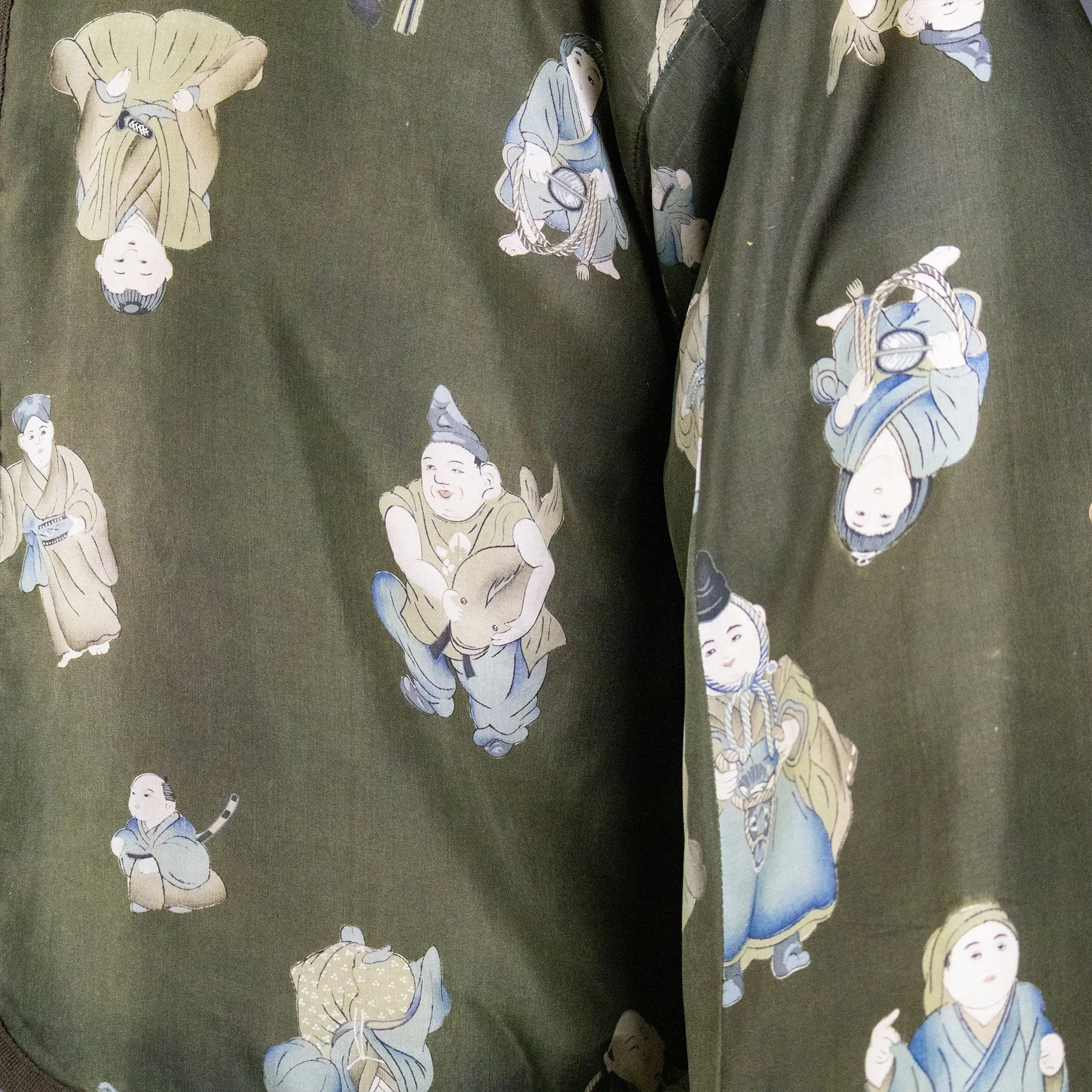
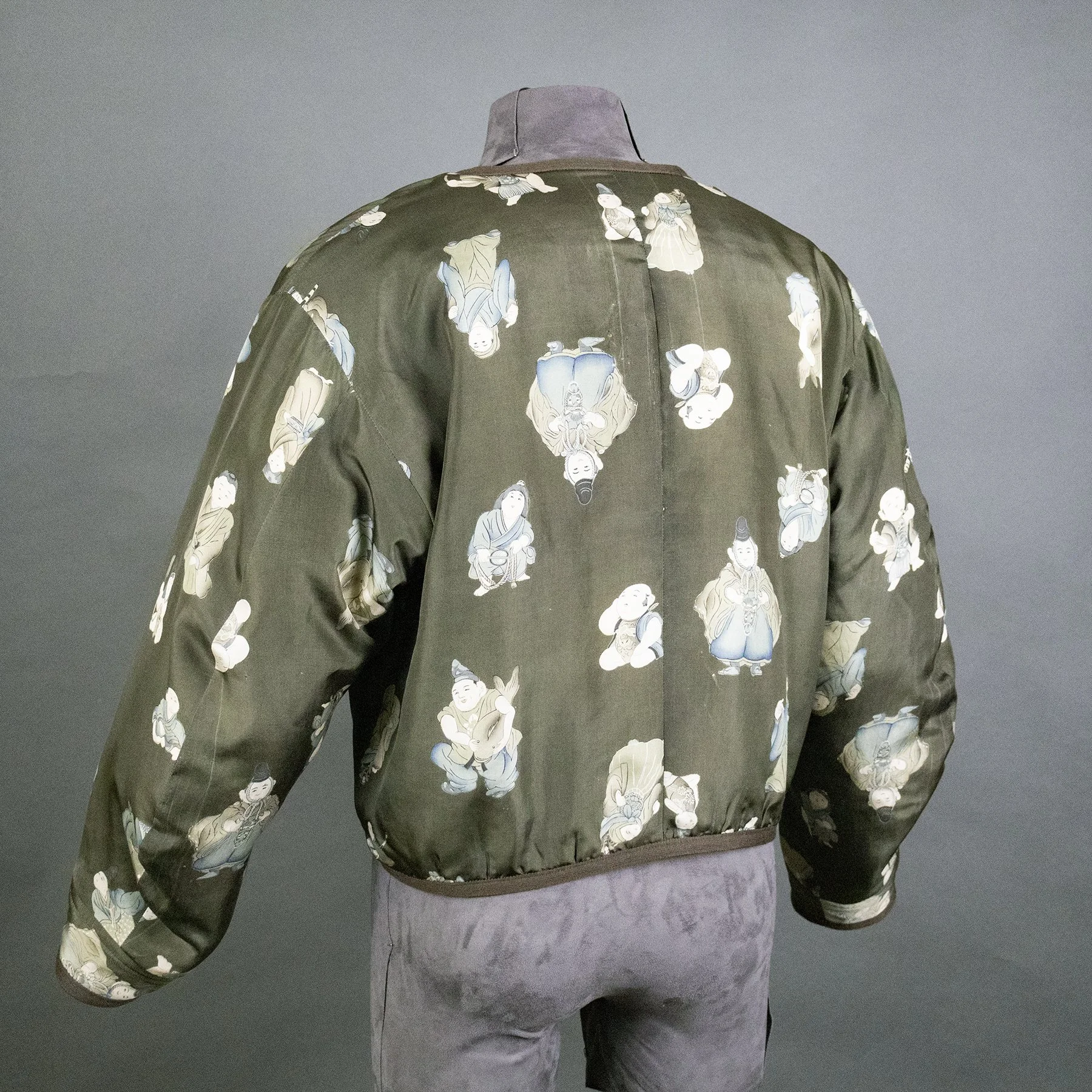
The shell of this jacket comes from a very old nagajuban (a lightweight, unlined silk kimono worn as an undergarment or loungewear) that I took apart. Numerous hand-stitched repairs and reinforcements were made to the original garment, and one features prominently on the back seam. Normally nagajuban feature strong geometric patterns, birds of prey, and/ or craggy mountains, but this one is unusual in its playful depiction of frolicking children and infants.
I made the lining from another very old kimono fabric: fragments of silk damask with a shibori-dyed floral pattern from my collection. I quilted it with all natural wool batting and silk habotai backing.
The sizing is medium-large. From the neckline to the back hem measures 22." From the neckline to the sleeve hem measures 31." And from armpit to armpit measures 26."
J30 - $3,400
John’s Notes:
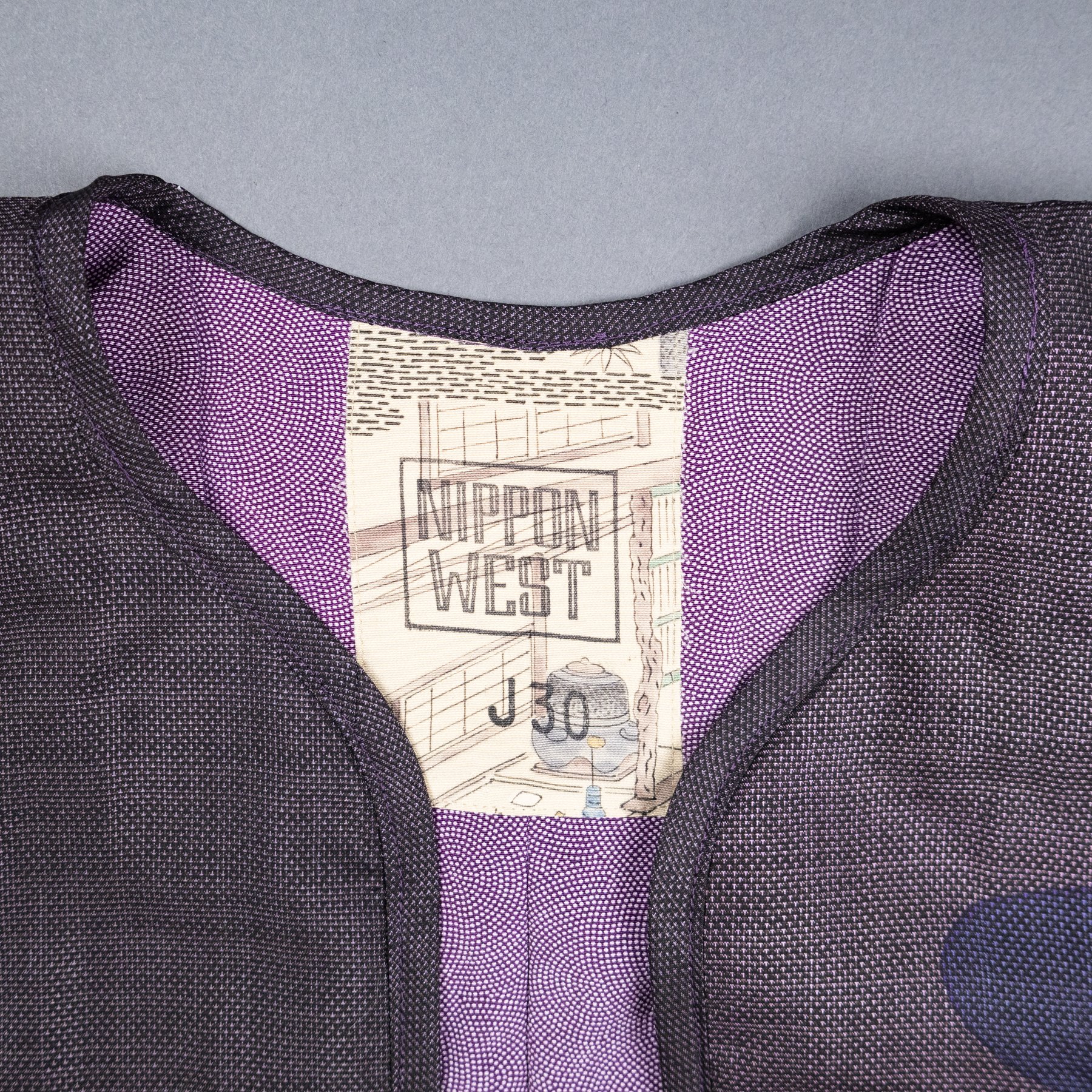
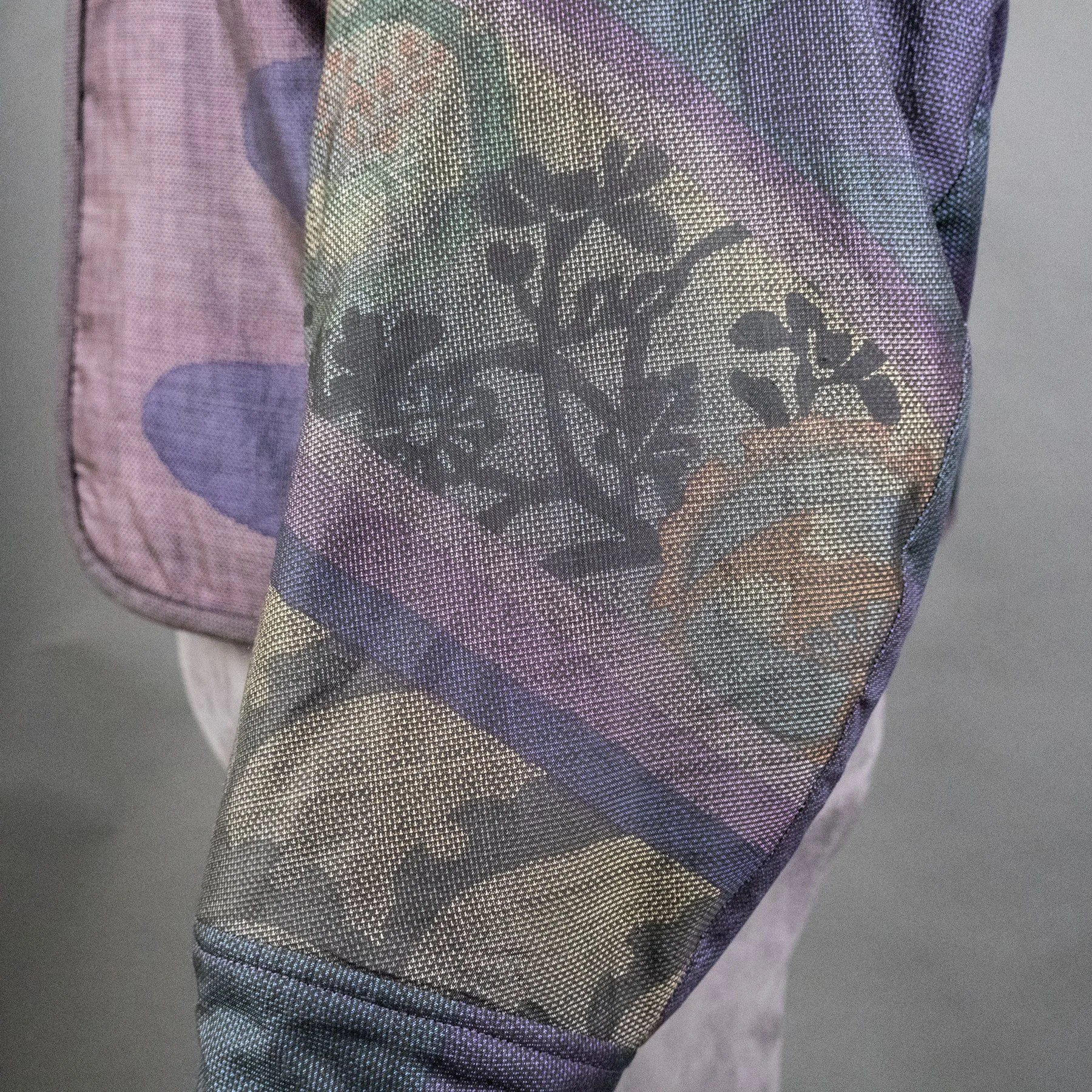
The fabric for the shell of this jacket comes from a vintage tsumugi kimono that I was able to acquire in 2024. The huge palette of thread colors and the delicate shading achieved during the weaving process make it quite exceptional. Not surprisingly, it came with bolt ends indicating the workshop that created it. The sweeping diagonals, extensive use of negative space, and clever asymmetry embody some of my favorite qualities of Japanese art. And I spent a lot of time planning how best to map the diverse motifs from a columnar kimono silhouette onto a shaped jacket with large, engineered sleeves. The lining is a silk crepe stenciled with a traditional sharkskin pattern that comes from a vintage kimono I deconstructed.
Neckline to hem in the back is 22" armpit to armpit is 26" and neckline to sleeve hem is 31." The dress form has a size 40 chest, and the size is equivalent to a medium-large.
J31 - $1,800
JOHN’S NOTES:
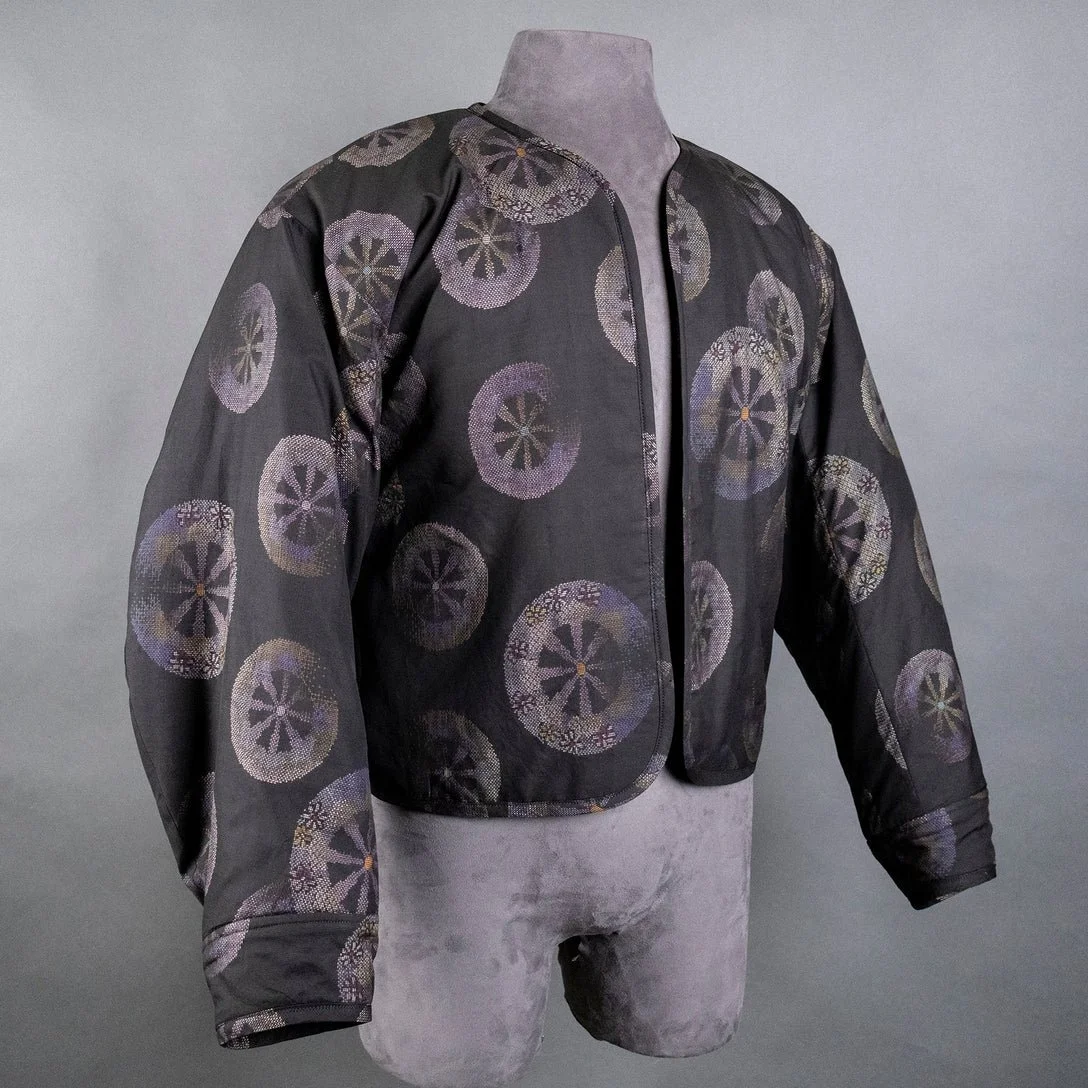
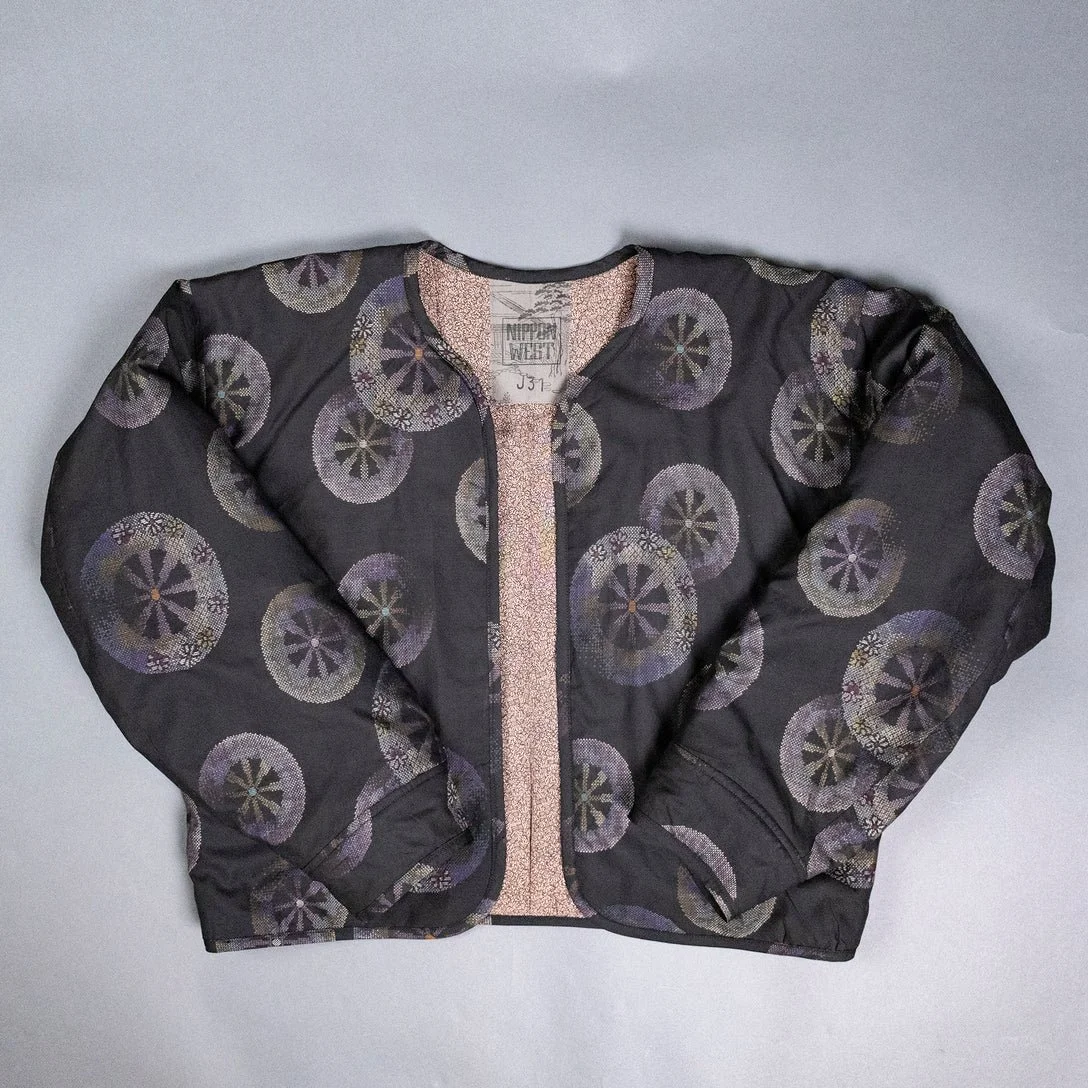
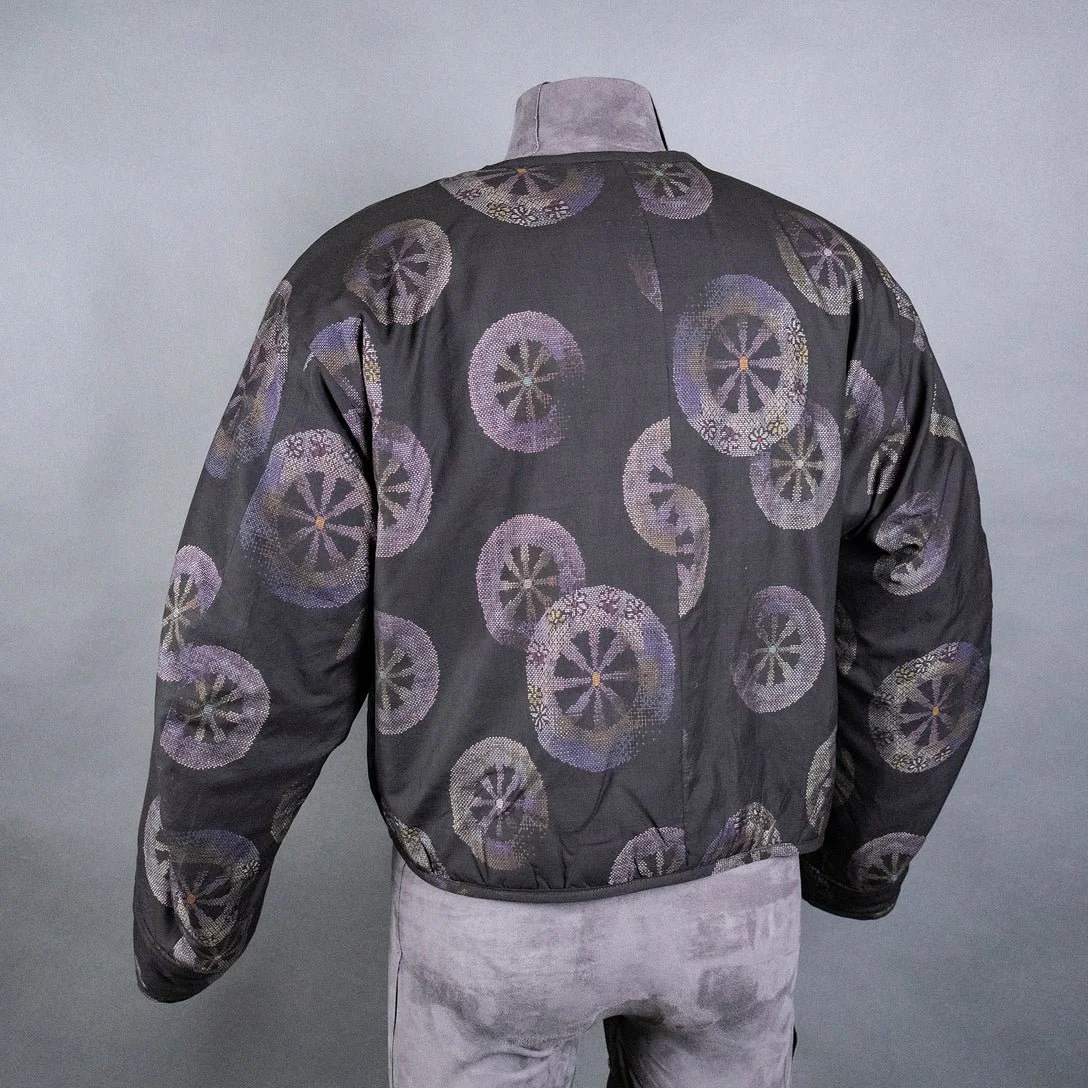
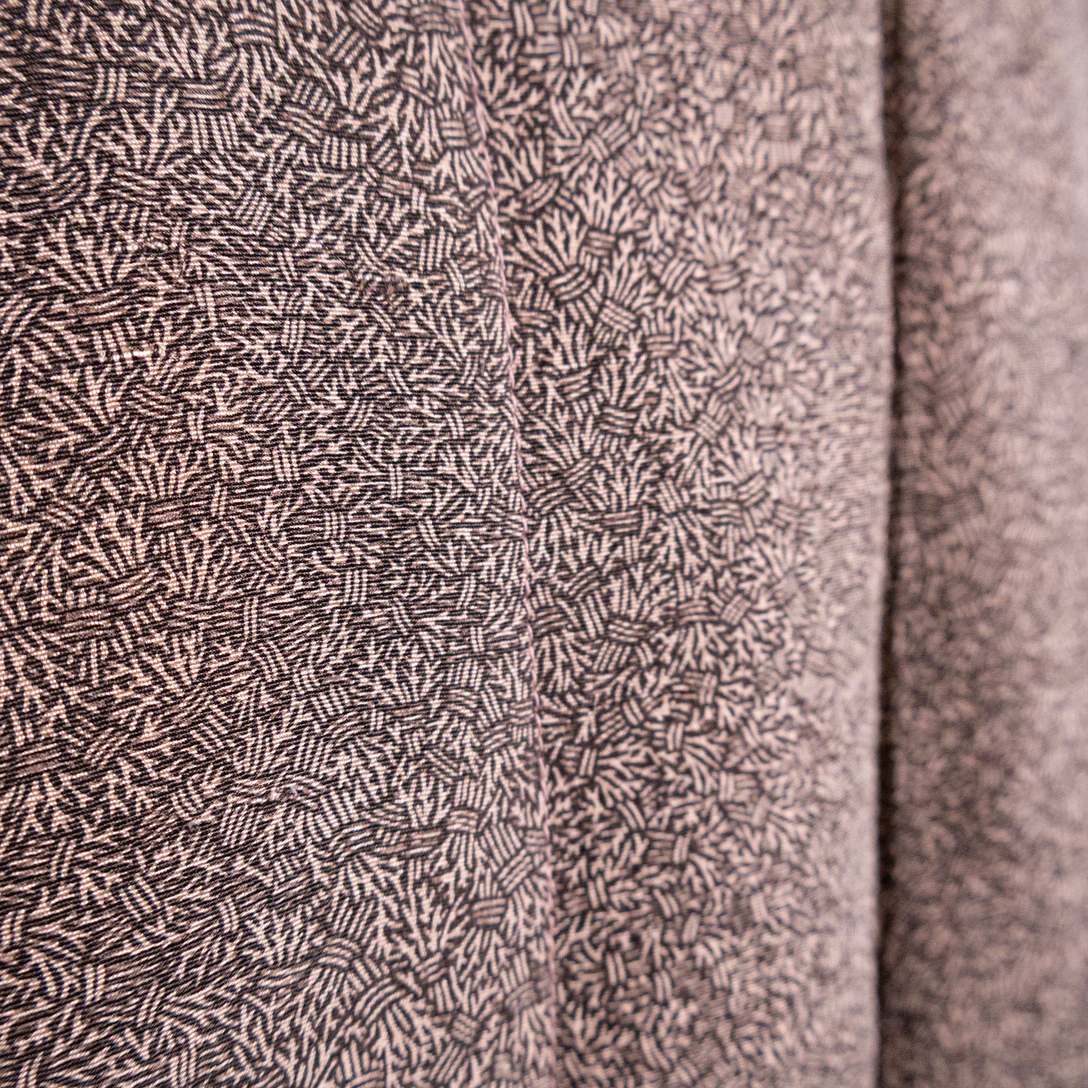
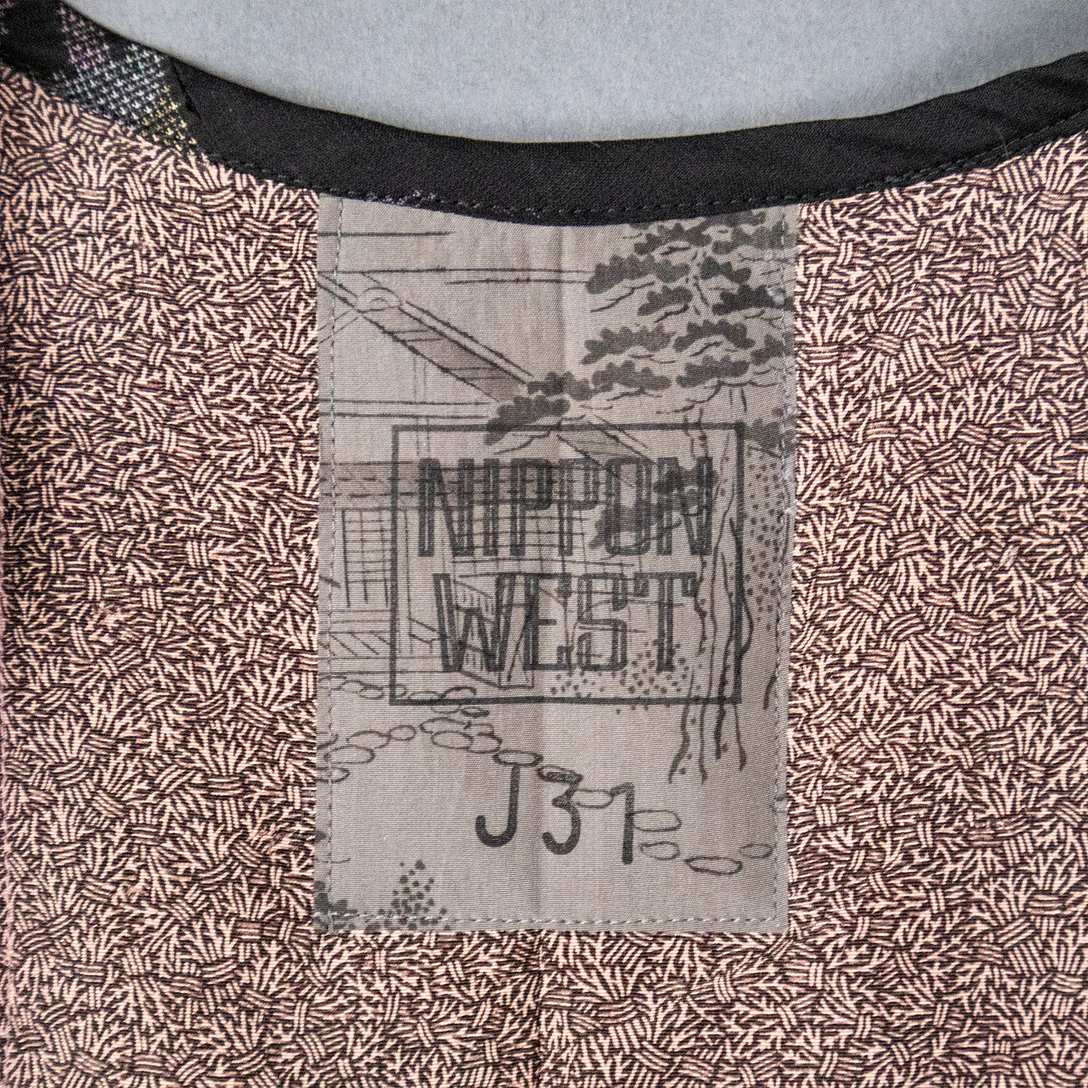
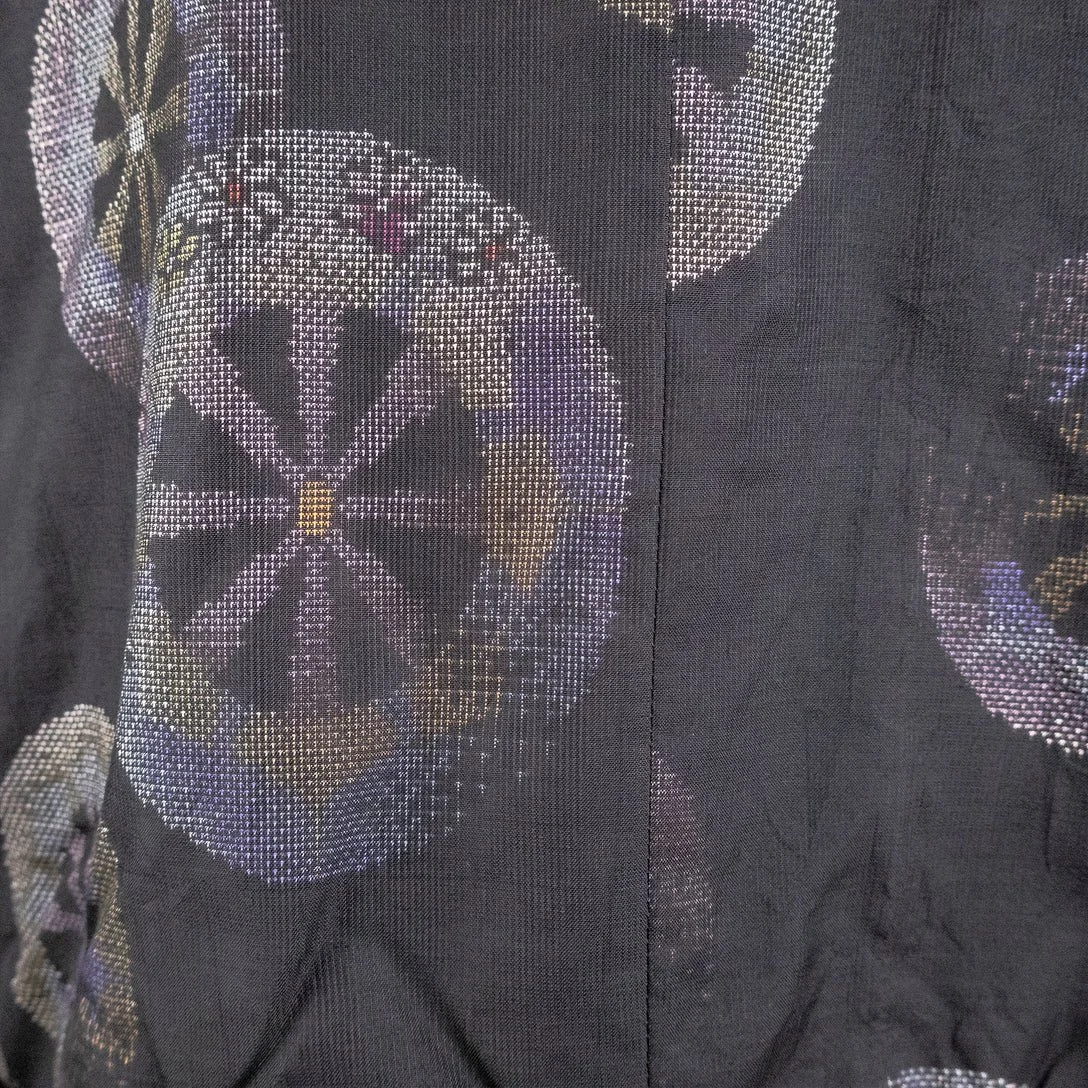
The shell of this bomber jacket comes from a vintage tsumugi kimono that I dissasembled. The pattern depicts traditional Japanese cart wheels, used on imperial carriages as well as festival floats. Intricate shading creates an overlapping effect, and vibrant coloring, along with interlaced flowers, adds a joyful note. The lining is a silk crepe komon pattern stenciled with bundles of twigs that comes from another kimono I deconstructed. I find that Japanese artists excel at transforming mundane objects of daily life into elegant and delightful patterns.
The sizing is medium-large. The jacket measures 23.5" from neckline to the bottom of the back hem, 27" from pit to pit, and 31" from neckline to sleeve hem. The dress form has a 40" chest.
J33 - $1,900
John’s Notes:
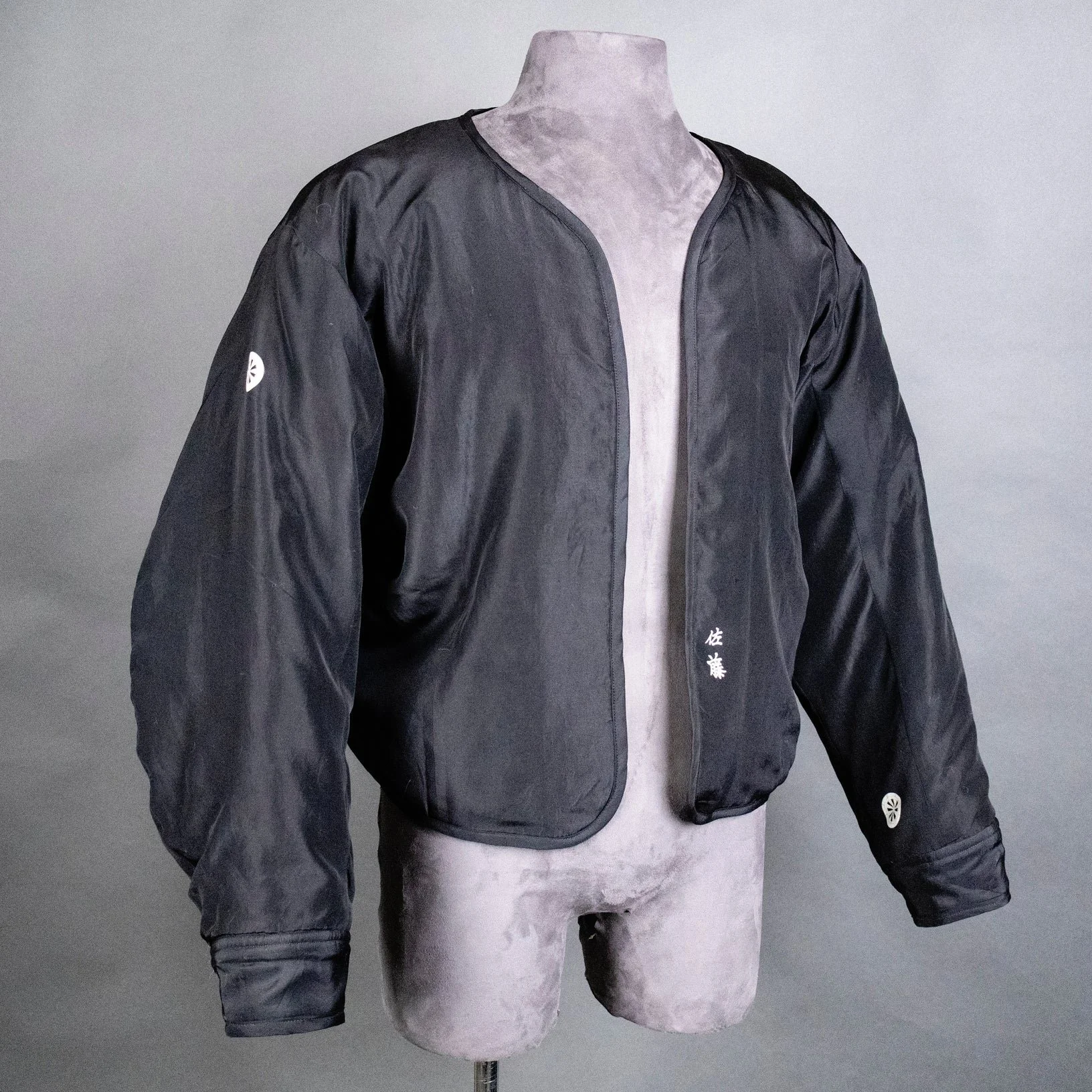
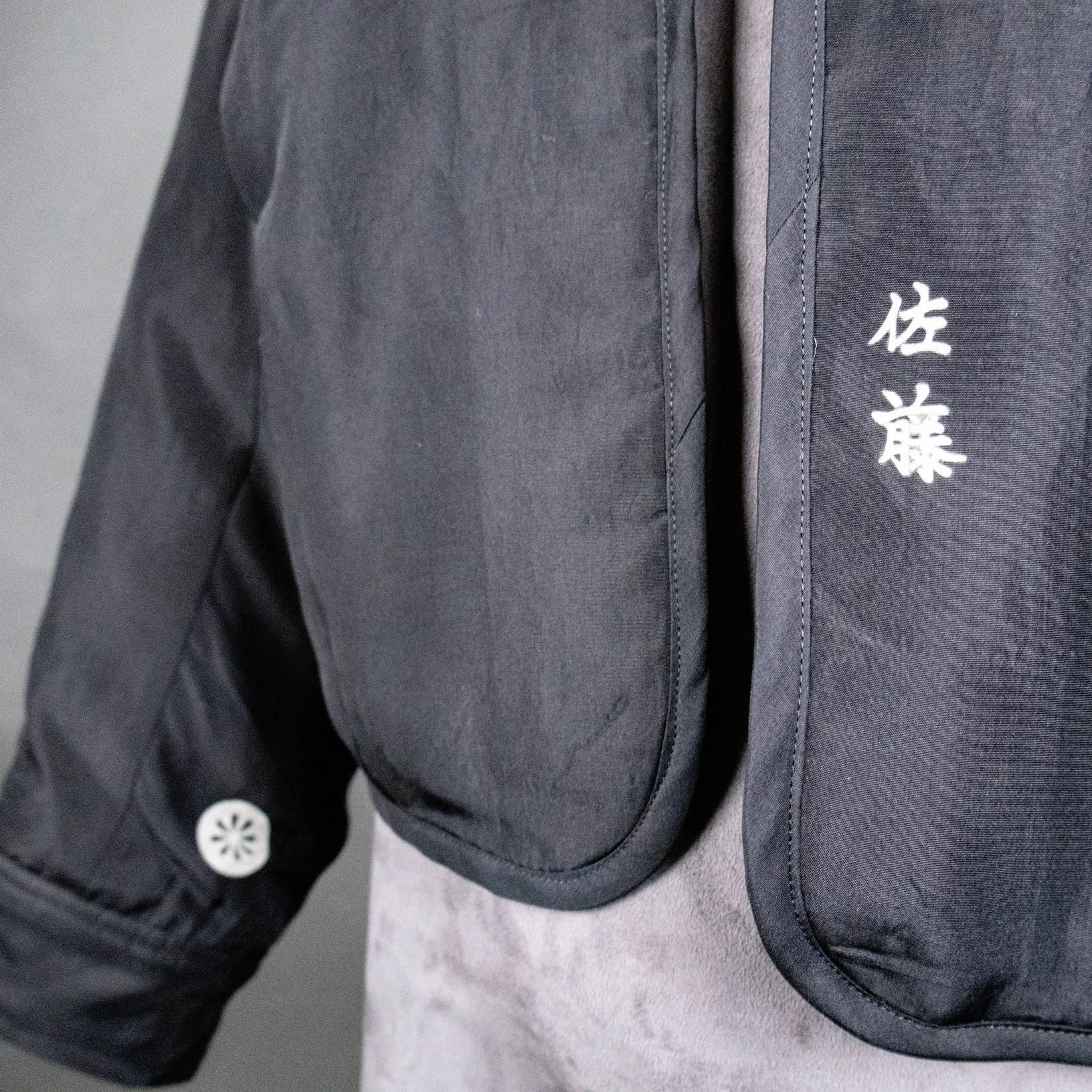
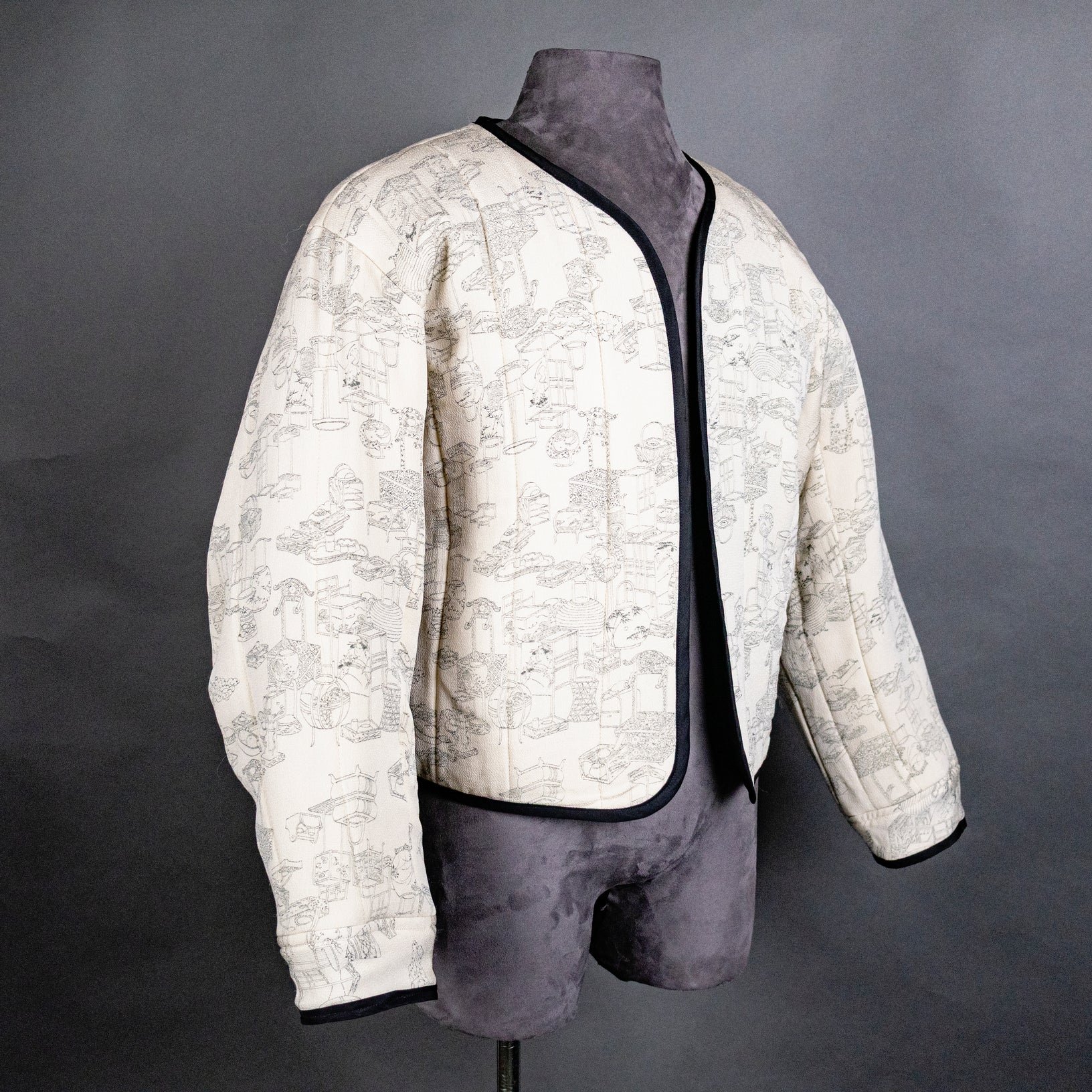
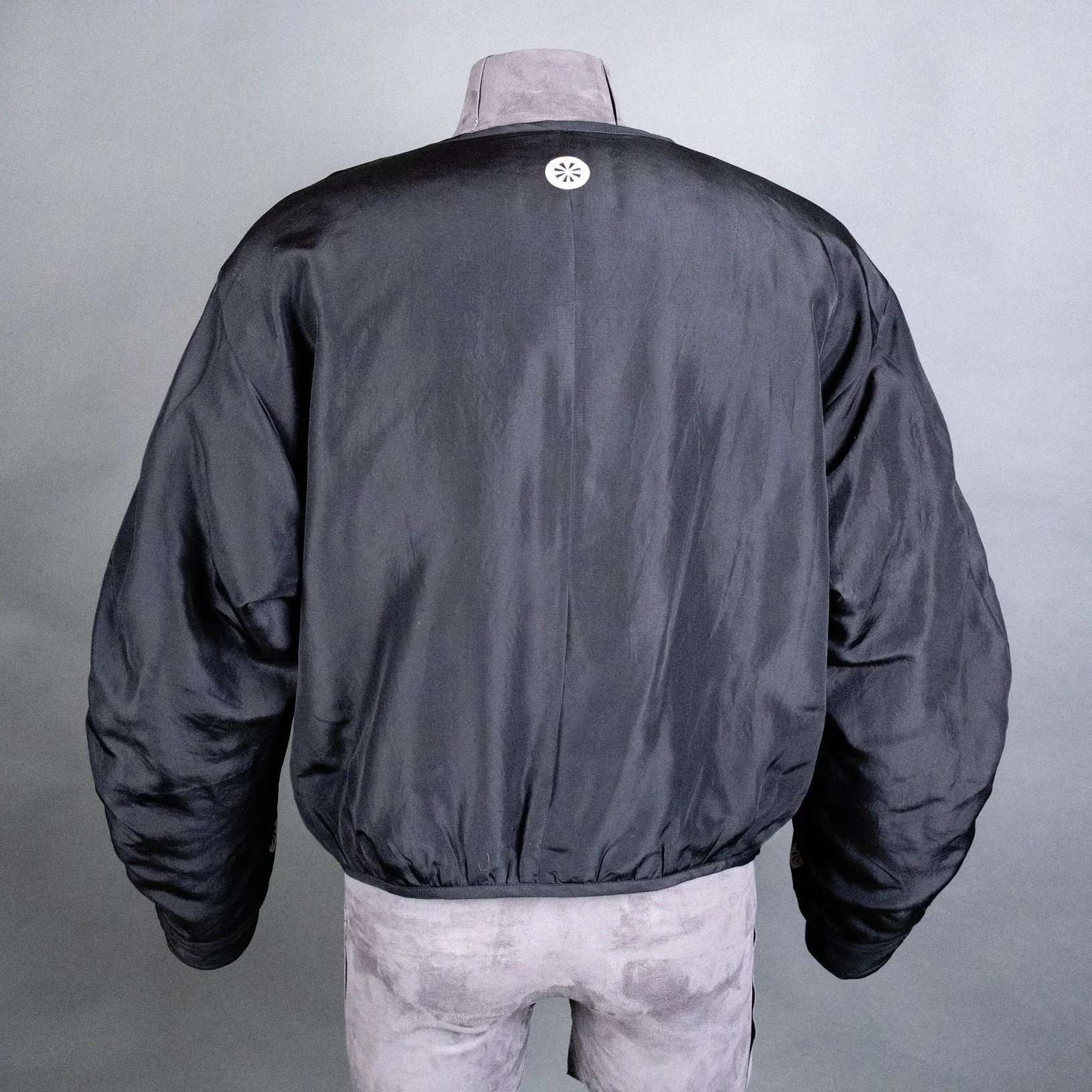
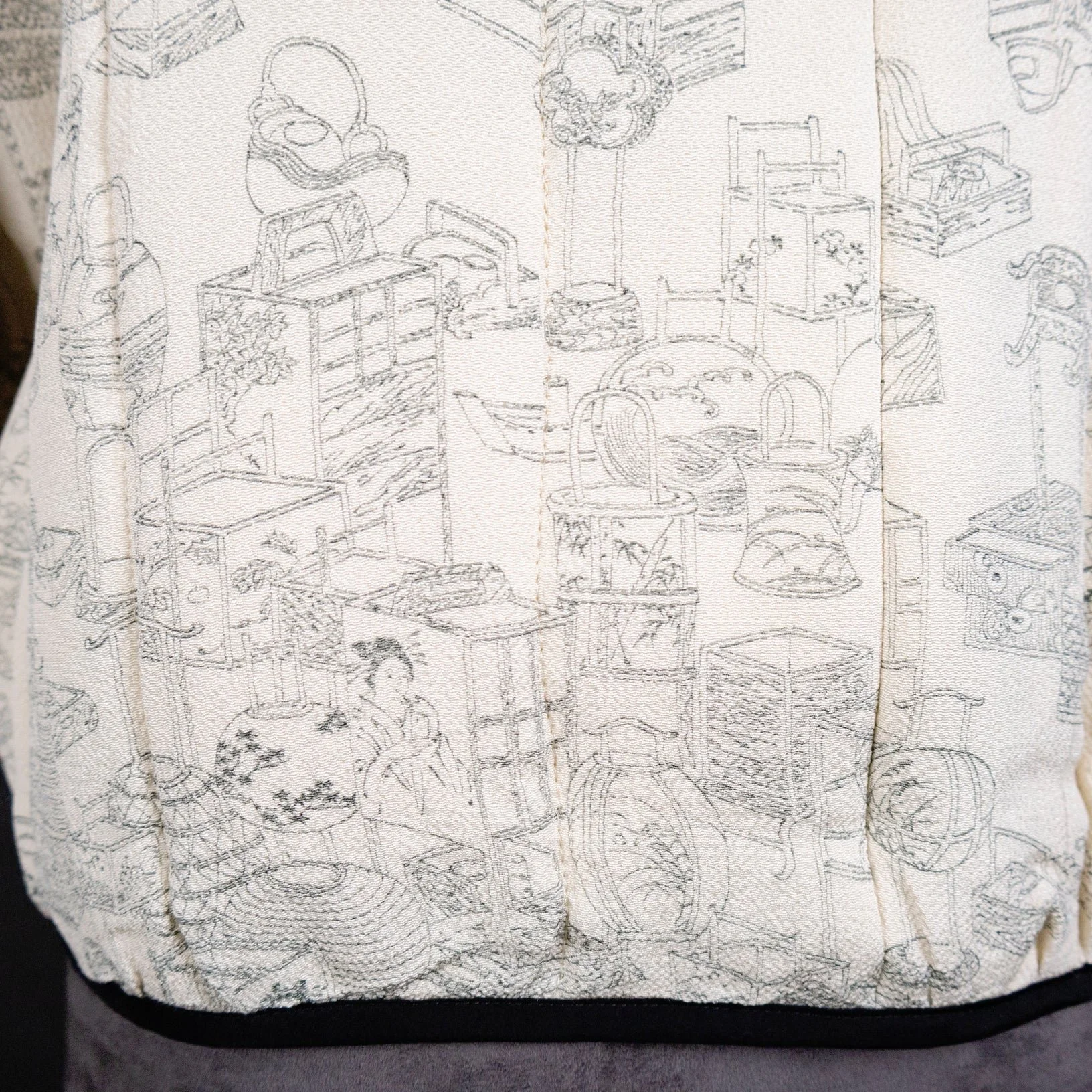
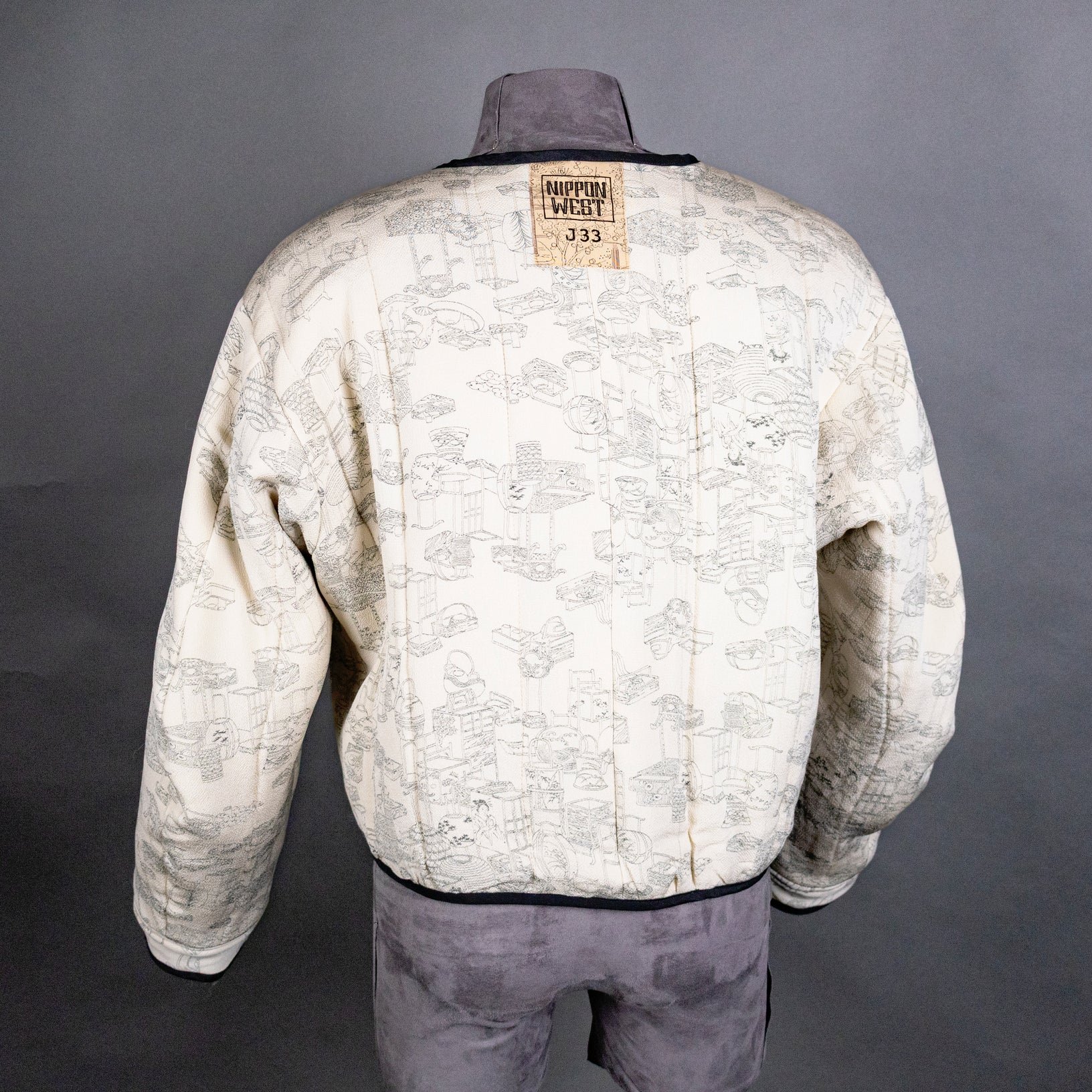
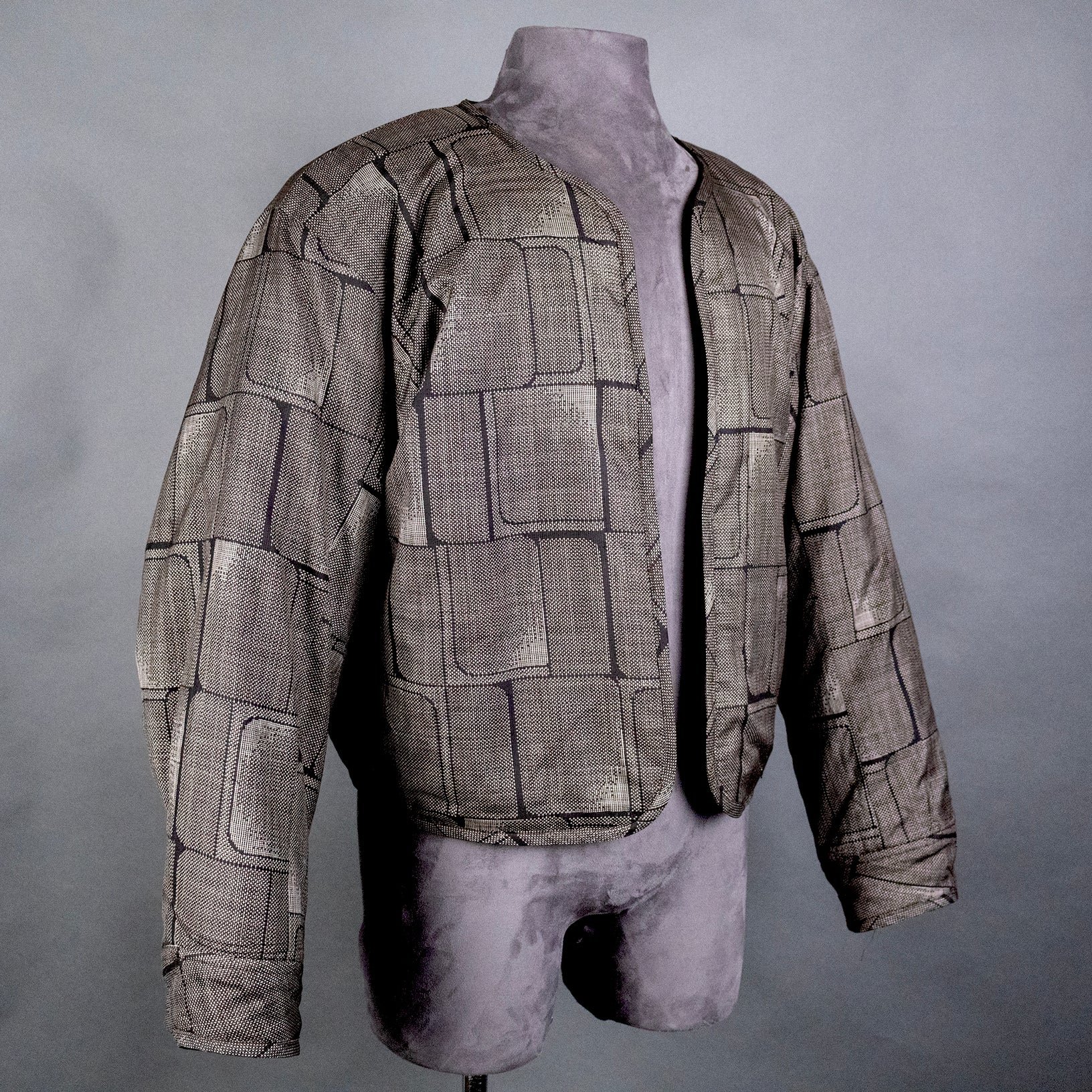
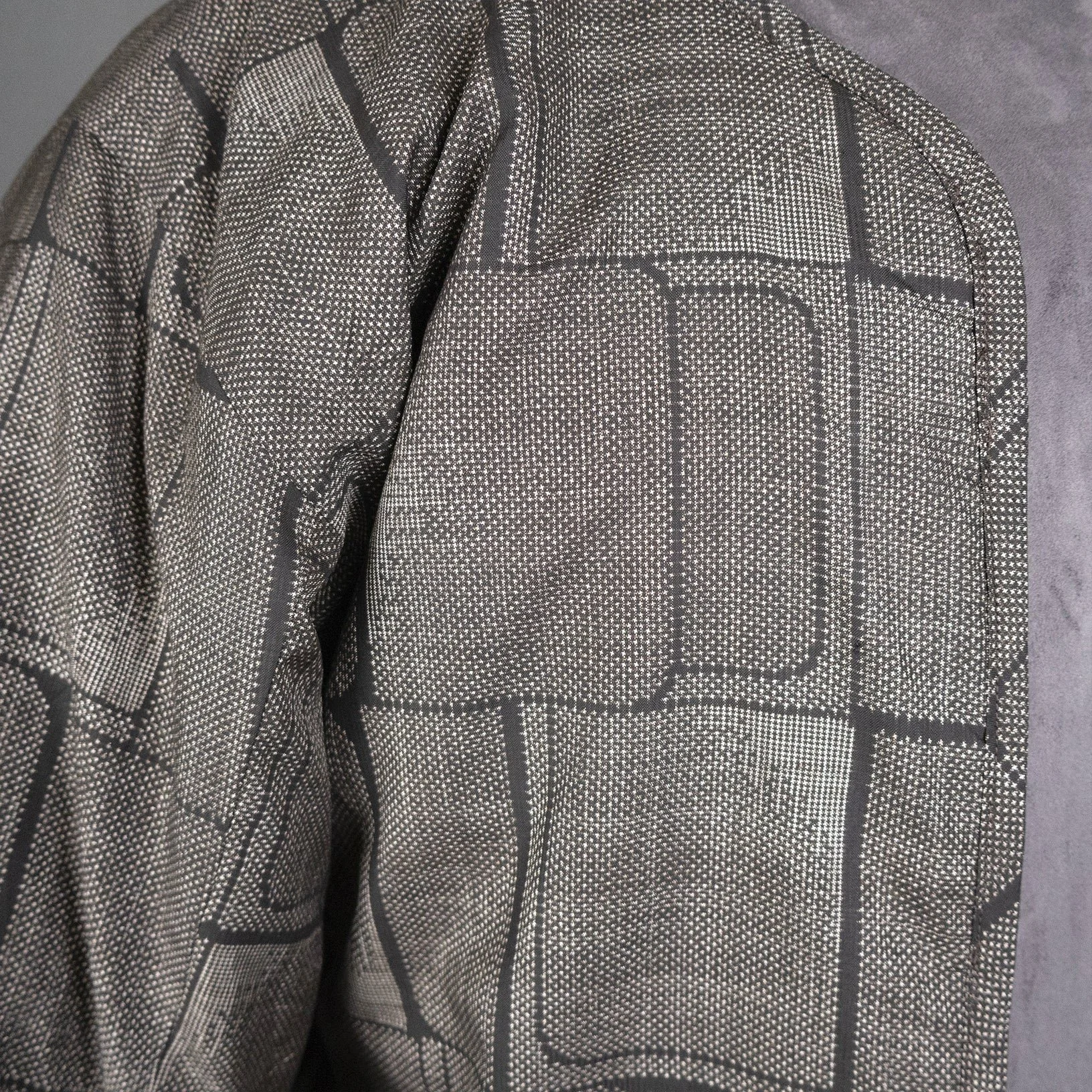
The shell fabric for this bomber jacket came from an antique Japanese kimono I took apart. A formal kimono, it had five family crests, and I was pleased that I was able to repurpose all of them. The interior fabric is a stenciled silk crepe that came from another kimono I disassembled. It features a bi-directional pattern depicting courtesans and traditional furnishings in a dressing area.
The size is large-extra large. The neckline to the lower hem measures 23"; the neckline to the sleeve hem measures 31"; and armpit to armpit measures 27." The quilted batting is 100% new wool sourced in the US.
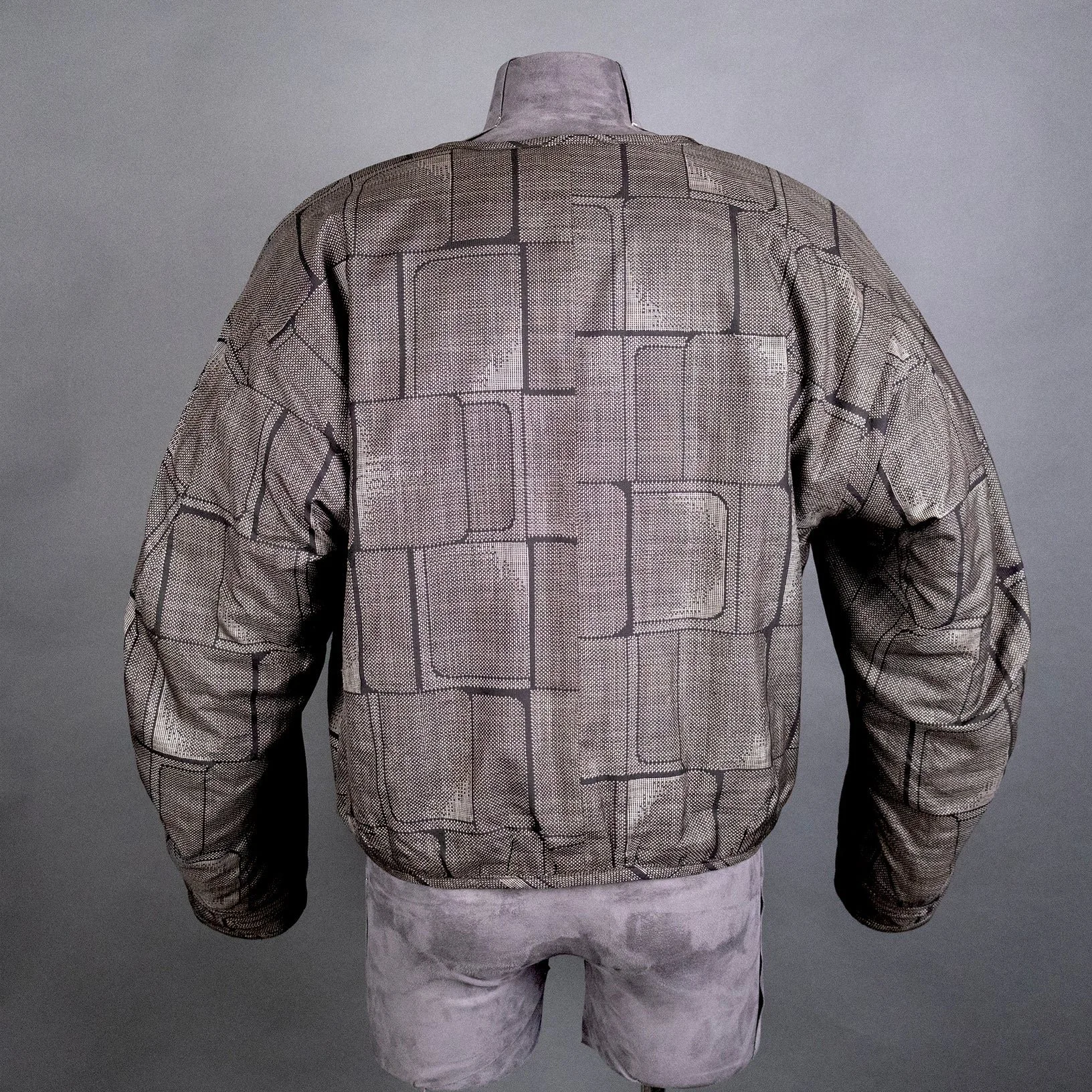
j34 - $2,300
jOHN’S nOTES:
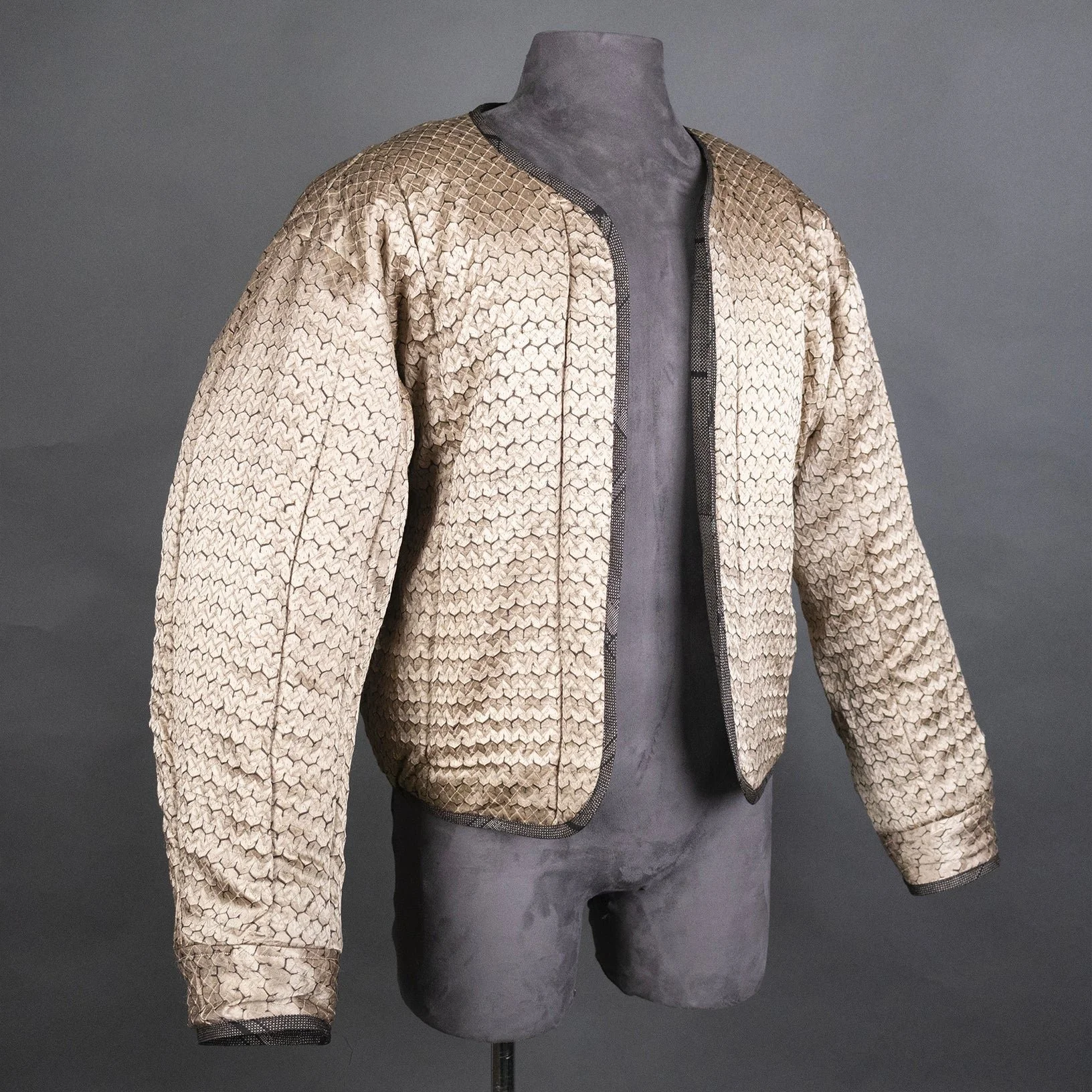
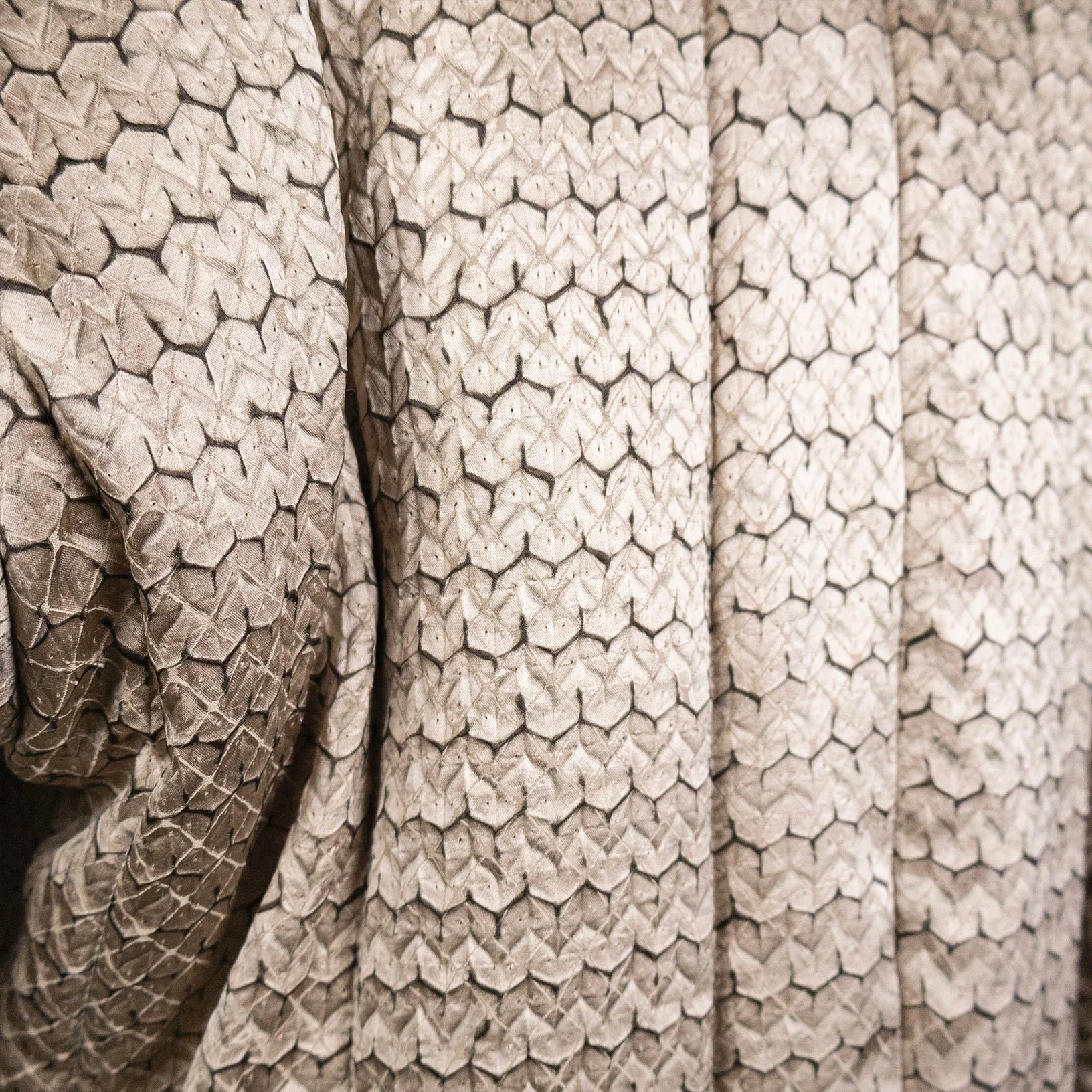
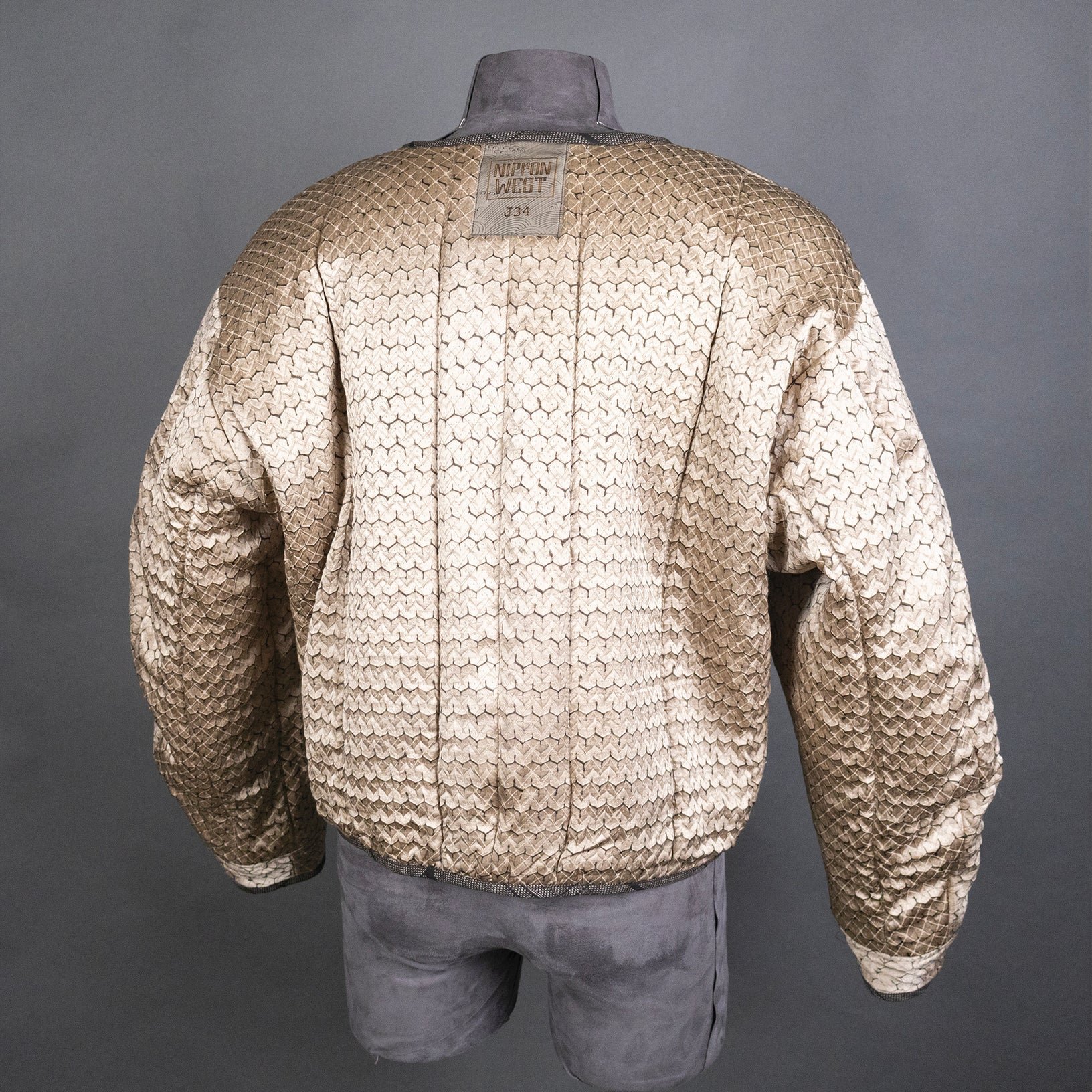
I made this bomber jacket from two vintage kimonos that I deconstructed. The shell features a woven geometric pattern with shaded elements, and the lining features an interlocking geometric pattern dyed using shibori technique.
The size is medium-large. The back measures 23.5" from neckline to bottom hem and 27" from pit to pit, and the sleeves are 31" from neckline to sleeve hem. Use only dry cleaners experienced with shibori fabrics, as the texture of the lining is easily lost.
j35 - $2,200
jOHN’S nOTES:
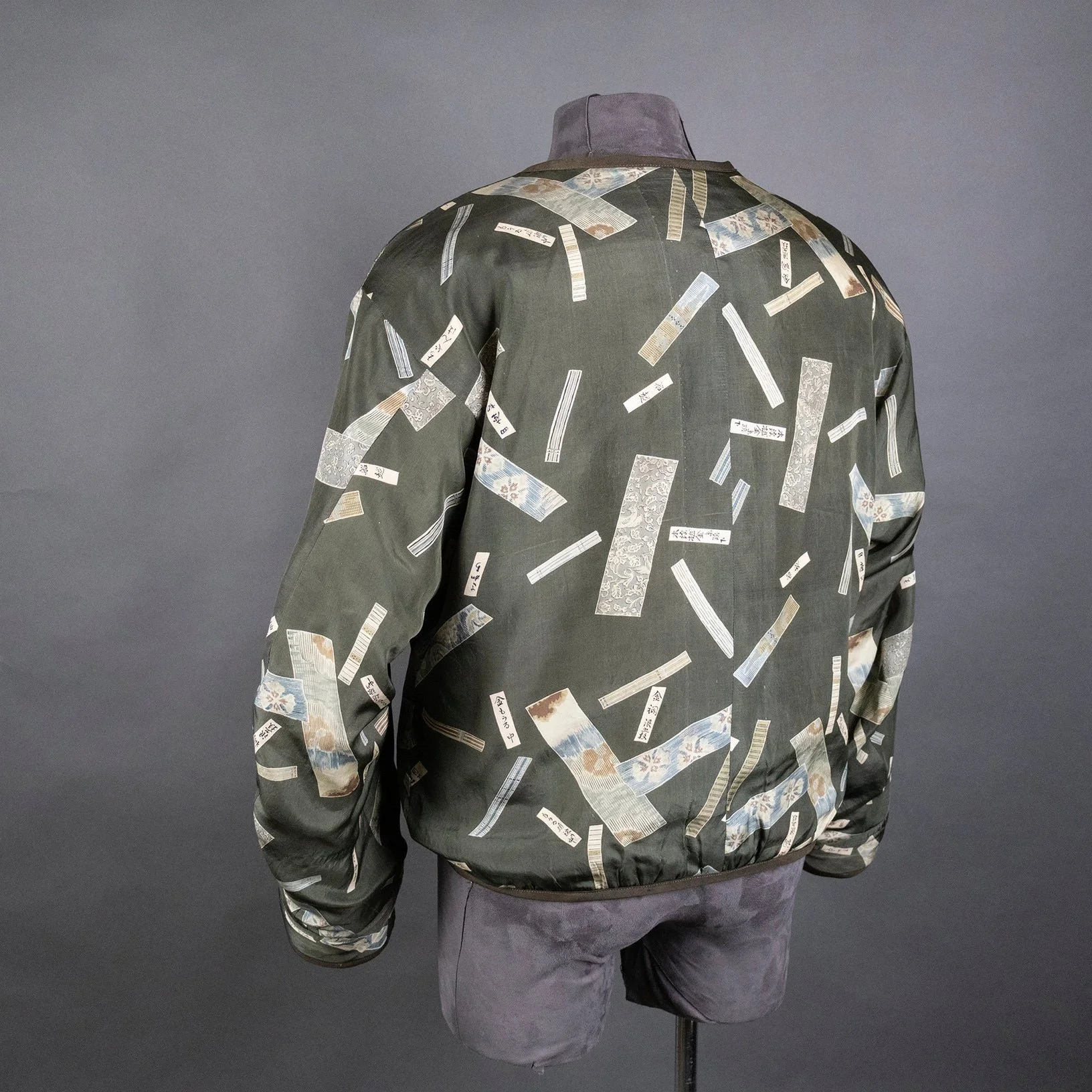
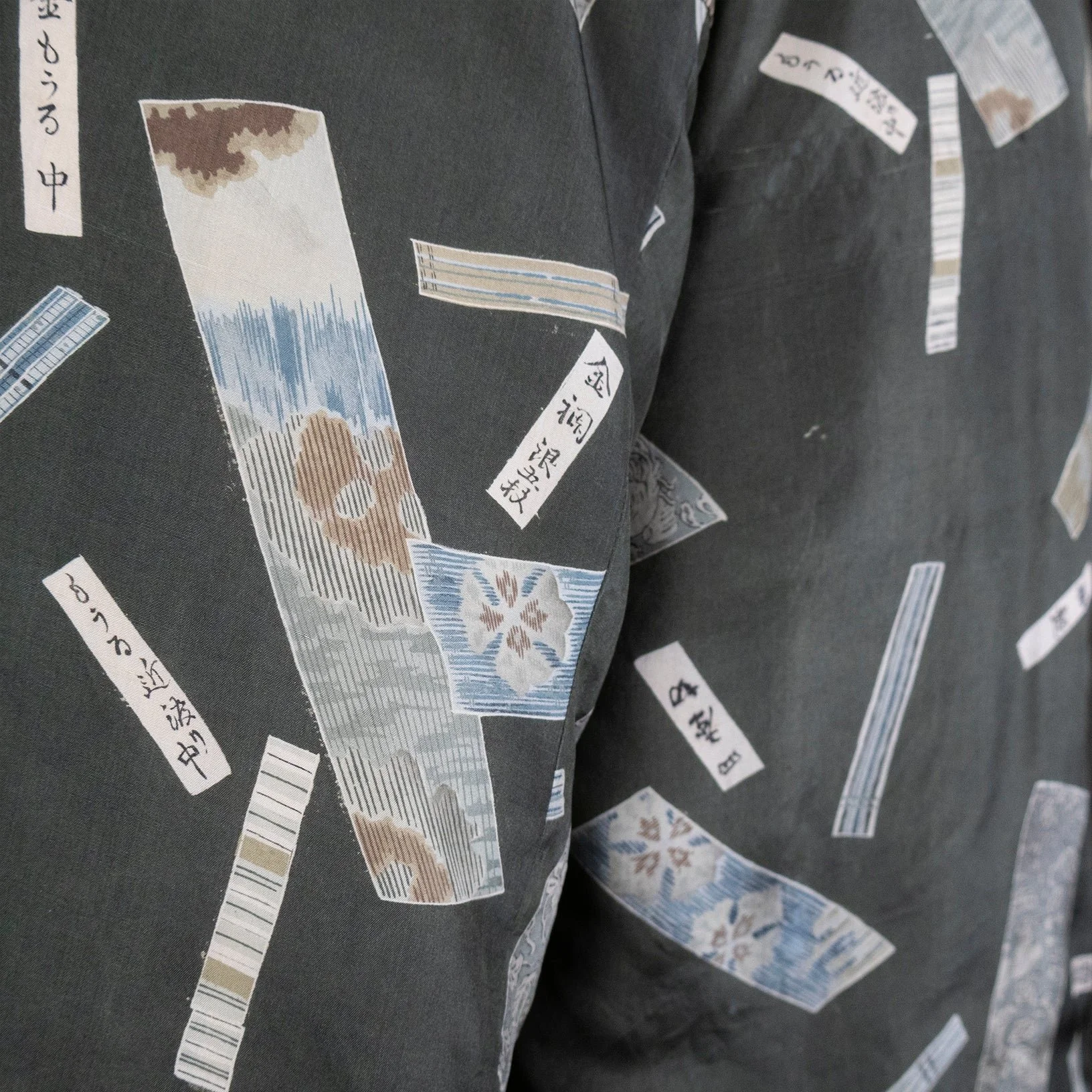
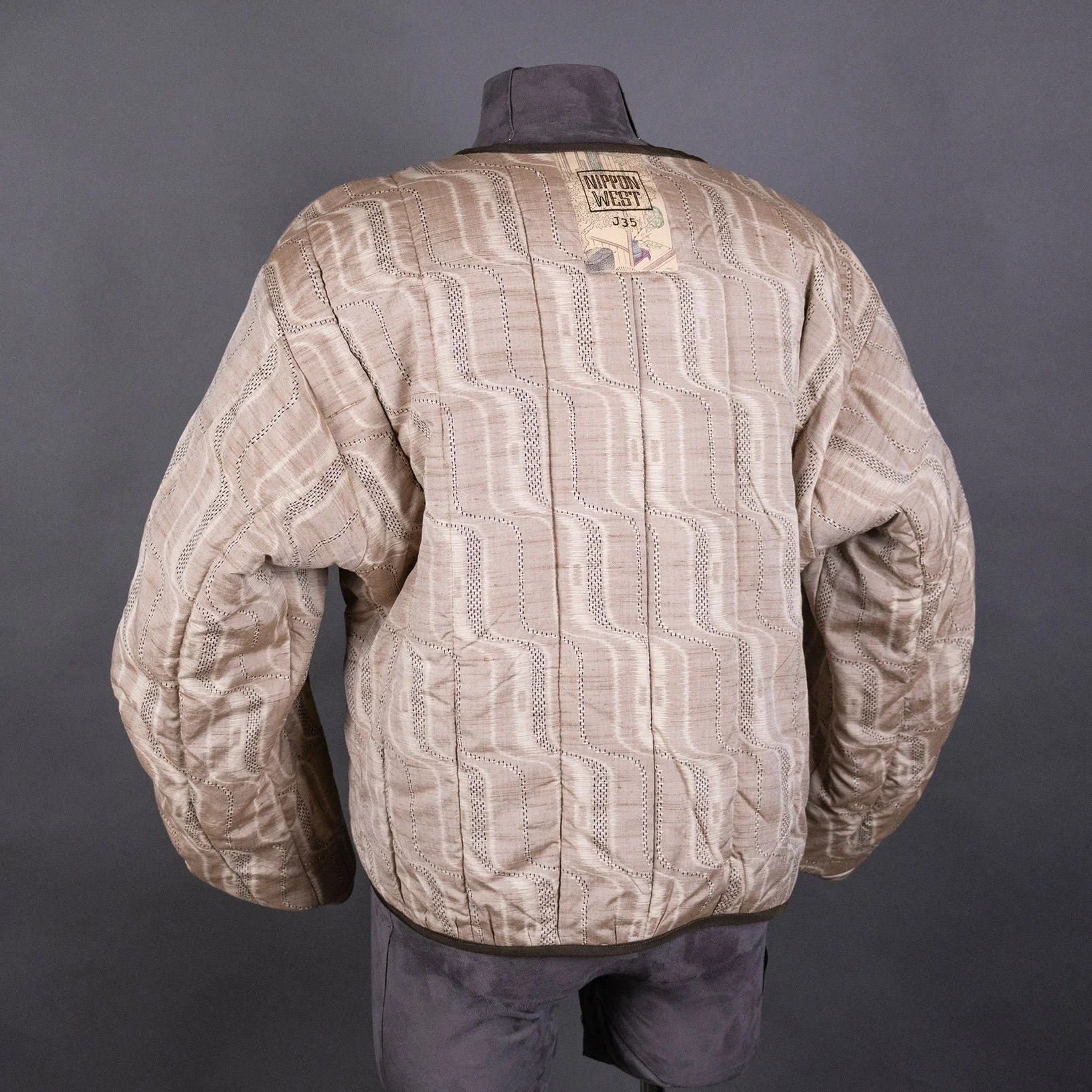
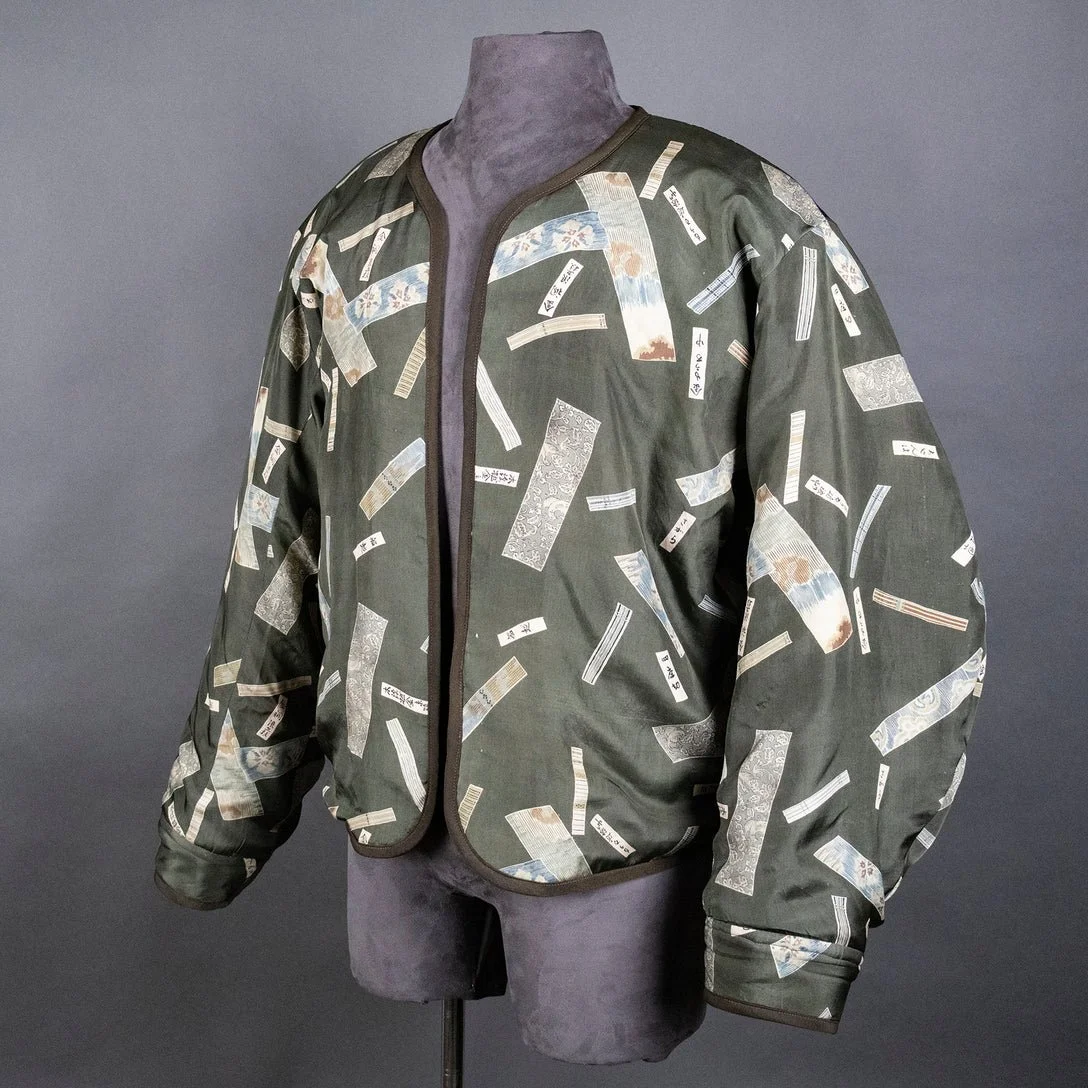
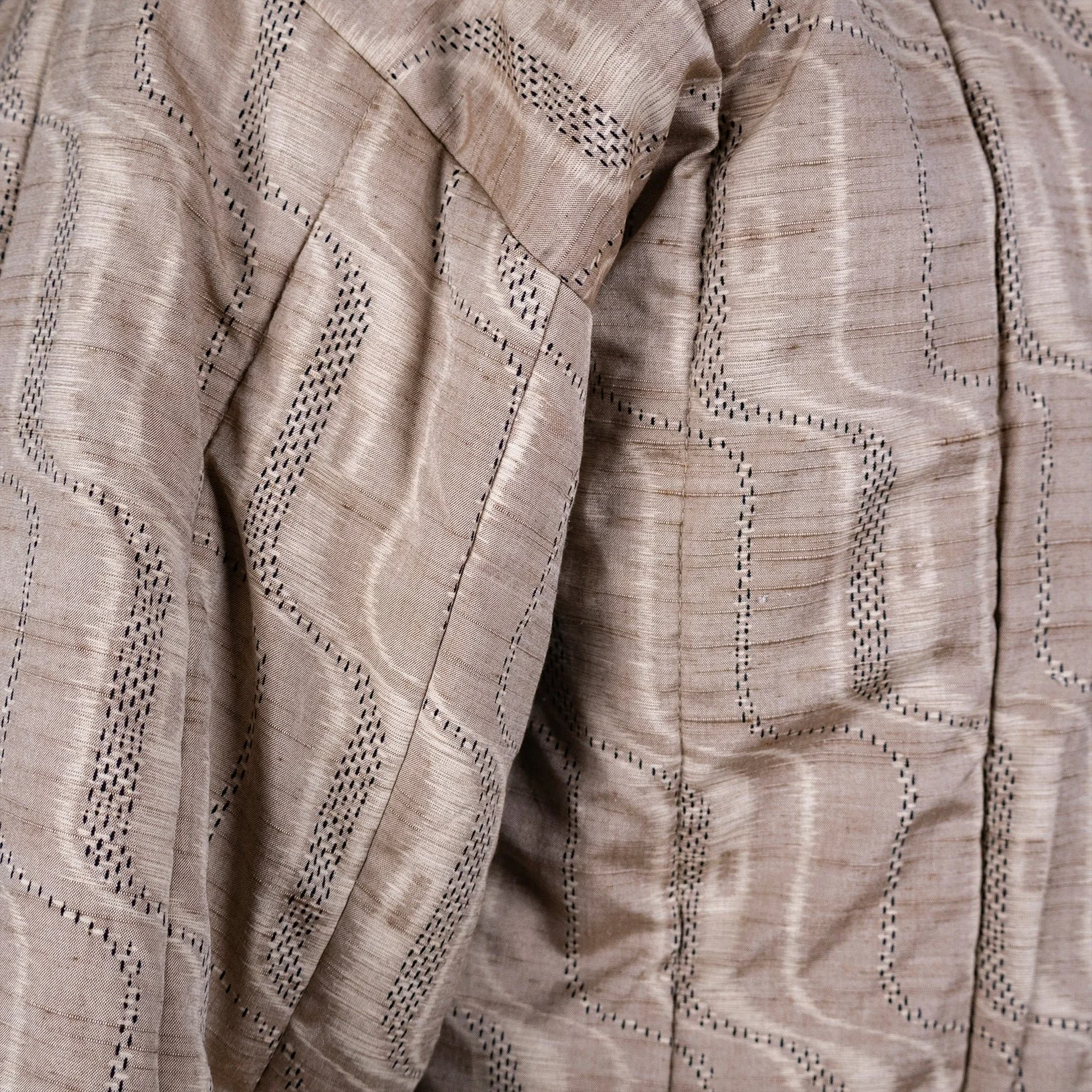
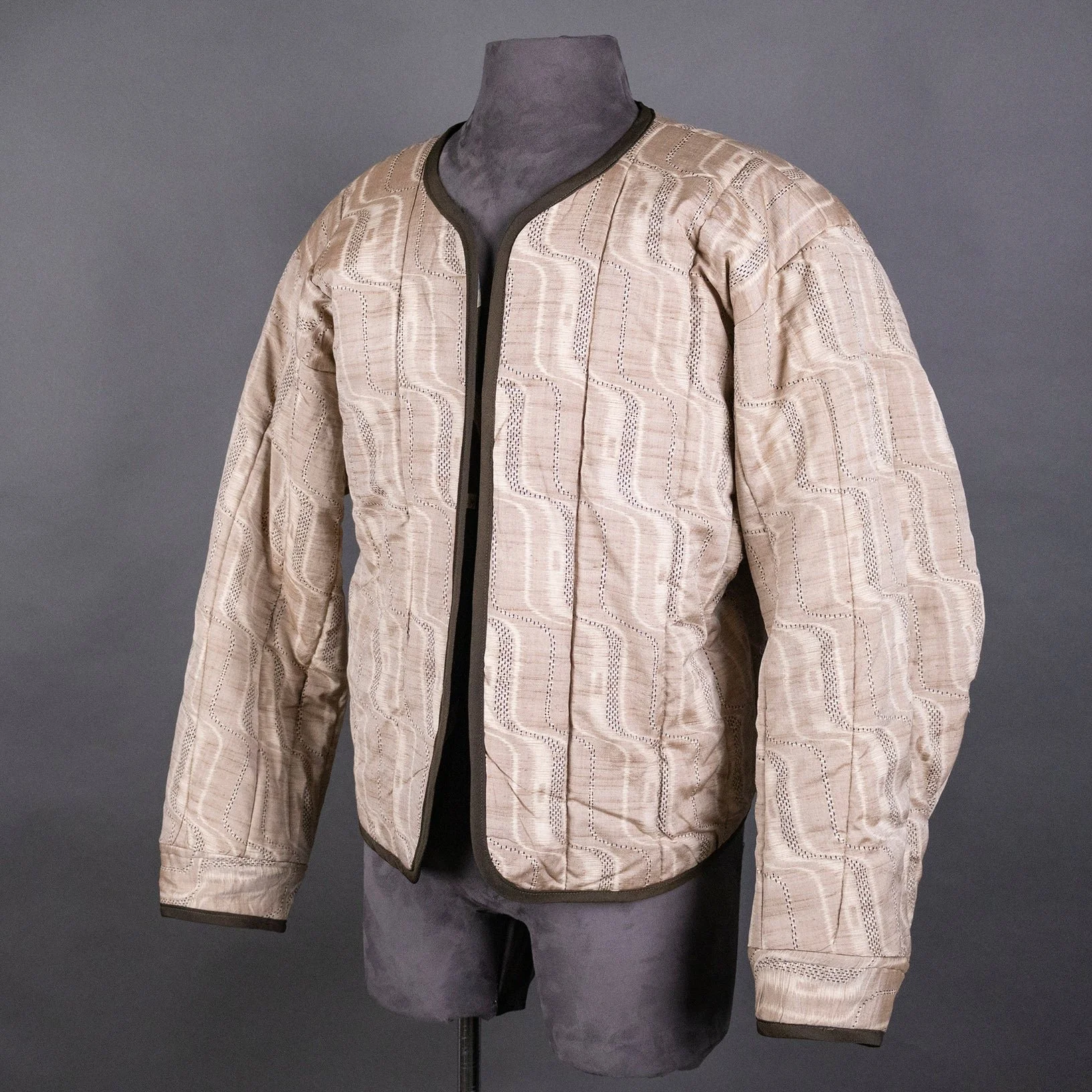
The shell for this jacket comes from a Japanese man's nagajuban, or under-kimono, that I took apart. The antique silk is woven from very fine polished yarns, and it shows its age in many spots. This scatter pattern is unusual for a nagajuban, which usually has a strong geometric plaid or stripe, and was likely commissioned by a literary gentleman. The lining comes from a heavier, woven raw silk kimono that I also deconstructed.
The size is equivalent to an extra long L or XL. The back measures 25" from the neckline to the bottom hem and 27" from armpit to armpit. The sleeves measure 35" from the neckline to the cuff edges. The quilted batting is 100% new wool sourced in the US.